
What is phlebology and why it matters in aesthetic practice
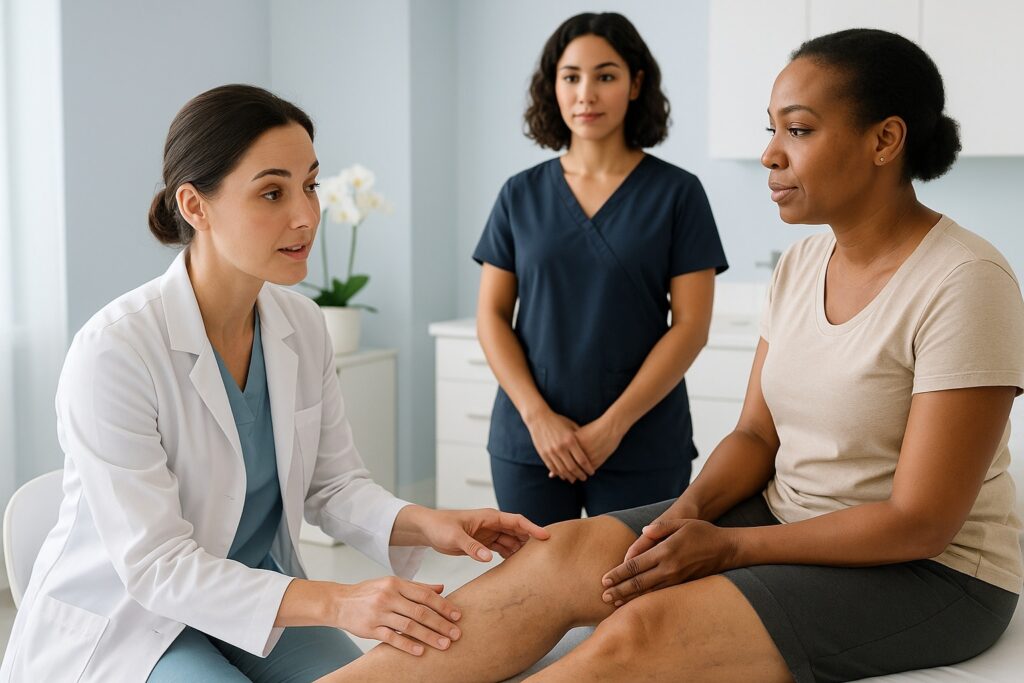
- Phlebology is the area of medicine focused on veins, including spider veins, varicose veins, and chronic venous insufficiency.
- In aesthetic settings, visible veins may look cosmetic, but some concerns can overlap with broader venous health issues.
- Spider veins and varicose veins are not the same, and confusing them can lead to poor communication or delayed referral.
- Aesthetic professionals do not diagnose venous disease, but they should understand when a concern may need medical evaluation.
- Basic phlebology awareness supports safer consultations, clearer boundaries, and more responsible patient communication.
Visible veins are a common reason people ask about leg appearance in aesthetic and medical aesthetic settings. Sometimes the concern is primarily cosmetic. Other times, the conversation may point to a broader issue involving venous function.
That is where phlebology becomes relevant.
For professionals working in med spas, aesthetic clinics, or physician-led cosmetic practices, understanding the basics of phlebology can improve communication, strengthen scope awareness, and help identify when referral may be appropriate. It does not turn an aesthetic professional into a vein specialist. It does, however, support better judgment around a topic that often sits between appearance and health.
What phlebology means
Phlebology is the branch of medicine concerned with the venous system. In practical terms, it focuses on how veins function, what happens when they do not function well, and how venous conditions are evaluated and managed.
This may include concerns such as:
- Spider veins
- Varicose veins
- Chronic venous insufficiency
- Other vein-related circulation concerns
The key point is simple: phlebology is broader than cosmetic appearance. A visible vein may be an aesthetic concern, but phlebology looks beyond appearance alone and considers what may be happening in the venous system.
What phlebology studies
Phlebology is concerned with more than whether a vein is visible. It involves understanding:
- The structure and function of veins
- Blood flow back toward the heart
- Venous valve function
- Common vein disorders and their progression
- The difference between superficial appearance and deeper clinical relevance
For aesthetic professionals, that broader perspective matters. It helps explain why two patients with visible veins may not need the same conversation, the same expectations, or the same next step.
Why phlebology matters in aesthetic practice
Aesthetic professionals regularly work with concerns that are highly visible and appearance-driven. That naturally includes skin tone, texture, redness, pigmentation, and sometimes superficial veins.
But visible veins are not always just a cosmetic issue.
A patient may ask about “getting rid of” small leg veins because of appearance. Another may mention aching, swelling, or heaviness along with visible veins. Those are very different situations, even if the concern first comes up in an aesthetic environment.
Basic phlebology awareness helps aesthetic professionals:
- Communicate more clearly about visible vein concerns
- Avoid oversimplifying a potentially medical issue
- Recognize when symptoms go beyond appearance
- Refer appropriately when something falls outside aesthetic scope
- Maintain safer, more professional boundaries
In short, it supports responsible practice.
Spider veins vs varicose veins: why the distinction matters
One of the most important basics in this topic is understanding that spider veins and varicose veins are not the same thing.
Spider veins are usually smaller and more superficial
Spider veins, also called telangiectasias, are typically small superficial vessels that may look like red, blue, or purple threads or web-like patterns. They are often seen on the legs, though they can appear in other areas.
In many cases, spider veins come up in cosmetic conversations because of how they look rather than how they feel. That said, appearance alone still does not tell the whole story in every case.
Varicose veins are usually larger and more prominent
Varicose veins are generally larger, more visible veins that may appear bulging, twisted, or rope-like. Some people also report symptoms such as heaviness, discomfort, or swelling.
This is where the conversation moves more clearly into medical territory. While aesthetic concerns may still be part of the discussion, varicose veins can be associated with underlying venous dysfunction and may warrant formal medical assessment.
Why visual appearance has limits
Aesthetic professionals often rely on visual pattern recognition. That is useful, but visible veins are a good example of why appearance alone has limits.
A small superficial vein pattern may be cosmetic in one person and part of a larger venous picture in another. A prominent vein may be noticeable without serious symptoms, while a less dramatic-looking concern may still deserve medical attention based on what the patient reports.
That is why phlebology matters in aesthetics: it reinforces that not every visible vein concern should be treated as a simple appearance issue.
When visible veins may warrant medical evaluation
Aesthetic professionals do not diagnose venous disease, but referral awareness is part of safe practice.
Visible vein concerns may deserve medical evaluation when they are accompanied by issues such as:
- Leg swelling
- Pain, aching, or heaviness
- Sudden worsening of symptoms or appearance
- Skin discoloration or other skin changes near the affected area
- Recurrent irritation associated with visible veins
- Concern that the issue may reflect a broader circulation problem
These signs do not confirm a diagnosis. They do, however, suggest that the conversation should not stay purely cosmetic.
In an aesthetic setting, the safest role is not to interpret the cause, but to recognize when a licensed medical evaluation may be appropriate.
Scope of practice in an aesthetic setting
Phlebology is relevant to aesthetic education because it helps professionals understand what falls within their role and what does not.
What aesthetic professionals can do
In most aesthetic environments, helpful responsibilities may include:
- Noticing visible vein concerns during consultation or intake
- Listening for symptoms that suggest the issue may not be purely cosmetic
- Using neutral, observation-based language
- Encouraging the patient to seek evaluation from a licensed clinician when appropriate
- Following workplace protocols and state-specific scope requirements
This is especially important for estheticians, medical aesthetic assistants, front-office coordinators in clinical settings, and other support professionals who may be the first to hear a patient’s concern.
What falls outside aesthetic scope
What usually falls outside aesthetic training or authority includes:
- Diagnosing venous disease
- Determining whether symptoms reflect venous insufficiency
- Recommending a medical treatment plan
- Presenting cosmetic services as a substitute for medical vein care
- Minimizing symptoms because the concern “looks cosmetic”
Scope of practice rules vary by state and by professional license. In physician-led environments, supervision requirements may also differ. That makes role clarity especially important.
How phlebology supports better patient communication
One of the most practical benefits of understanding phlebology is better communication.
Patients often describe visible veins in everyday language. They may say they dislike the look of their legs, feel self-conscious about “broken veins,” or wonder whether a vein is serious. Aesthetic professionals do not need to provide a diagnosis to respond well. They do need language that is accurate, calm, and within scope.
Use observation-based language
A stronger approach is to describe what you see without labeling it as a medical condition.
For example, instead of sounding definitive, a safer response might be:
“Visible veins can have different causes. Some are mainly cosmetic, while others may need medical evaluation. Because of that, it may be helpful to speak with a licensed clinician before making assumptions about treatment.”
That kind of language does three things well:
- It avoids diagnosing
- It respects professional limits
- It keeps the patient informed without creating false reassurance
Set expectations without overstepping
Patients may assume that anything visible on the skin can be handled as an aesthetic issue. That is not always the case.
When aesthetic professionals understand the basics of phlebology, they are better prepared to explain that:
- Some vein concerns are discussed in cosmetic settings
- Some vein concerns are evaluated medically
- The right next step depends on the nature of the concern, not appearance alone
This helps protect both patient trust and professional credibility.
How vein treatments fit into the conversation
Vein treatments are sometimes discussed in aesthetic contexts, especially when the patient is focused on appearance. But treatment decisions for vein-related concerns should be based on qualified medical evaluation when appropriate.
That matters because “vein treatment” is a broad phrase. It can refer to concerns that are primarily superficial and appearance-based, or to issues that require a more clinical workup.
For aesthetic professionals, the important takeaway is not how to treat venous conditions. It is how to understand the category well enough to:
- Avoid oversimplification
- Respect the medical side of vein care
- Know when physician-directed evaluation belongs in the process
Why this topic belongs in aesthetics education
Aesthetics education is strongest when it includes adjacent medical awareness, not just cosmetic technique. Phlebology is a good example of that kind of knowledge.
Professionals do not need deep specialty training in vein disease to benefit from this topic. They benefit because it improves day-to-day judgment in real patient interactions.
Phlebology awareness supports:
- Better recognition of professional limits
- Better referral awareness
- More accurate communication
- Safer handling of visible vein concerns
- Stronger interdisciplinary understanding in clinical settings
That is especially valuable in modern medical aesthetics, where patients often expect cosmetic teams to understand not just appearance, but when appearance may overlap with health.
Build stronger clinical awareness in aesthetics
Eduasthetics offers educational resources designed to help aesthetic professionals understand high-value adjacent topics, communicate more responsibly, and work within safe professional boundaries. Explore training that supports better judgment in real-world aesthetic practice.
Sources and references
- Society for Vascular Surgery and American Venous Forum. Clinical practice guidance on varicose veins and chronic venous disease.
- National Heart, Lung, and Blood Institute. Varicose veins.
- MedlinePlus. Varicose veins.
FAQS
What is phlebology?
Phlebology is the area of medicine focused on veins and venous disorders. It includes the evaluation and management of concerns such as spider veins, varicose veins, and chronic venous insufficiency.
Is phlebology the same as vascular surgery?
Not exactly. Phlebology focuses specifically on venous conditions, while vascular surgery addresses a broader range of blood vessel issues. In practice, vein care may involve different types of licensed medical professionals depending on the setting and the condition.
Are spider veins and varicose veins the same thing?
No. Spider veins are usually smaller and more superficial, while varicose veins tend to be larger and more prominent. The distinction matters because varicose veins may be more closely associated with underlying venous dysfunction.
Are spider veins always just cosmetic?
Not always. Many spider veins are discussed primarily as appearance concerns, but visible veins should not automatically be treated as purely cosmetic without context. Symptoms, skin changes, and progression can change the conversation.
Can estheticians or aesthetic assistants treat venous disease?
No. This type of professional role is about awareness, communication, and referral within scope, not diagnosing or treating venous disease. Treatment authority depends on licensure, setting, supervision, and applicable state regulations.
When should a visible vein concern be referred for medical evaluation?
Referral awareness is important when visible veins are accompanied by swelling, pain, heaviness, sudden change, or skin changes. These signs do not diagnose a condition, but they may indicate that the issue deserves medical assessment rather than a cosmetic-only discussion.
Are all vein treatments considered aesthetic procedures?
No. Some vein concerns may be discussed in appearance-focused settings, but others involve medical evaluation and physician-directed care. The category is broader than aesthetics alone.
Related posts
Visible veins and leg heaviness: treatment options and when medical evaluation matters
Lymphatic drainage: what it is, benefits, and key facts for aesthetic professionals
Stay Updated
About de author
