
How to attract premium clients in a medical aesthetic clinic
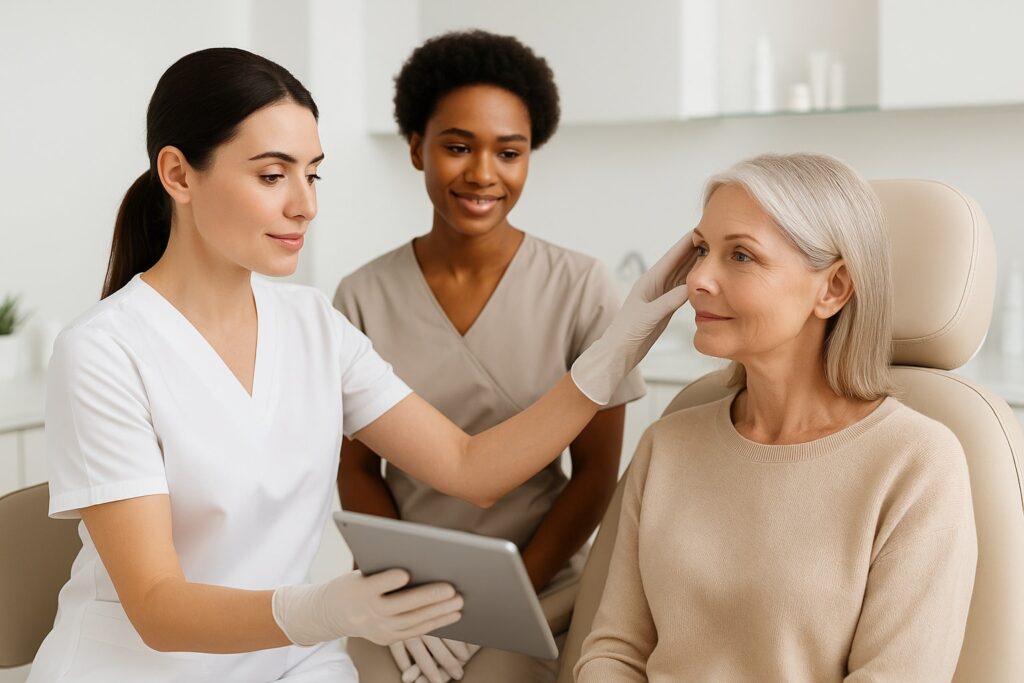
- Clinics that compete mainly on treatments and discounts often attract price-sensitive patients, not loyal long-term patients.
- A skin longevity approach shifts the conversation from quick fixes to long-term skin health, personalization, and professional guidance.
- Premium patients typically respond to clear education, realistic expectations, natural-looking outcomes, and a strong consultation experience.
- Consistent messaging across your website, consultations, follow-up, and support staff helps build trust and strengthens retention.
- The goal is not to offer more treatments. It is to create a more strategic, credible, and higher-value patient relationship.
Many medical aesthetic clinics assume premium growth comes from adding more services, more devices, or more promotions. In practice, the bigger differentiator is often how the clinic is positioned and how the patient experience is framed.
If your clinic looks like a menu of interchangeable treatments, patients are more likely to compare prices. If your clinic is presented as a trusted source of long-term skin guidance, patients are more likely to value expertise, continuity, and personalization.
That is where the shift from “anti-aging” to skin longevity becomes commercially meaningful. It is not just a change in language. It is a change in how patients understand value.
Why some aesthetic clinics attract premium patients while others compete on price
A clinic does not usually attract higher-value patients by accident. It does so by sending clear signals about what it stands for.
When the marketing message focuses on wrinkles, instant improvement, and limited-time offers, the clinic may attract patients who are shopping for the fastest visible result at the lowest possible price. That can create several challenges:
- weaker loyalty
- unrealistic expectations
- more transactional consultations
- more resistance to long-term planning
- more pressure to discount
By contrast, clinics that attract premium patients usually communicate something different. They emphasize expertise, thoughtful planning, and a measured approach to care. Their value is not built on volume. It is built on trust.
In a medical aesthetic setting, premium positioning is rarely about luxury branding alone. It is more often about:
- clinical credibility
- consistency in communication
- personalized treatment planning
- professional restraint
- an experience that feels informed rather than sales-driven
Why skin longevity resonates with higher-value patients
The term “anti-aging” is still widely recognized, but it can create a narrow and sometimes outdated frame. It often suggests correction, urgency, and visible reversal. For some patients, that language can also imply overly aggressive treatment goals.
Skin longevity offers a more modern and more sophisticated positioning. It centers on preserving skin quality over time rather than chasing rapid change. That distinction matters.
Skin longevity is about preservation, not just correction
Patients who are willing to invest at a higher level often want a plan that feels measured and sustainable. They may be less interested in a high-frequency treatment schedule and more interested in questions like:
- How can I support skin quality over time?
- What will look natural in the long run?
- What approach makes sense for my skin and lifestyle?
- How do I avoid doing too much?
This kind of patient is often looking for judgment, not just access to treatments.
It supports a more credible patient conversation
A skin longevity framework allows a clinic to talk about broader concepts that many patients find meaningful, including:
- skin quality
- barrier support
- cumulative effects of lifestyle and environment
- gradual improvement
- maintenance and prevention
- natural-looking results
That makes the clinic sound less like a treatment seller and more like a long-term partner in care.
It helps reduce commoditization
When every clinic appears to offer the same categories of services, price becomes the easiest comparison point. A skin longevity position changes the comparison.
Instead of asking, “How much is this treatment?” patients are more likely to ask, “Who do I trust to guide my long-term plan?”
That is a stronger place to compete.
How to reposition your clinic around strategy instead of treatment menus
A premium clinic experience starts before the patient arrives. It is built through language, structure, and consistency.
Stop leading with the treatment
One of the most common positioning mistakes is making the treatment the headline.
For example, if your clinic messaging starts with a peel, laser, injectable, or microneedling package, the patient may view the consultation as a price-and-options discussion. That can weaken the perceived value of clinical judgment.
A stronger frame is to lead with assessment, goals, and long-term planning. The treatment becomes one part of a broader strategy, not the strategy itself.
Make education part of the value
Premium patients often want to understand the reasoning behind a recommendation. They do not necessarily want a highly technical explanation, but they do want clarity.
Educational conversations may include:
- why skin quality changes over time
- why the skin barrier matters
- why inflammation and irritation can affect outcomes
- why not every concern should be treated aggressively
- why pacing matters in aesthetic care
When patients understand the “why,” they are more likely to appreciate a measured plan and stay engaged over time.
Personalize the plan and explain the rationale
Standardized packages may be efficient operationally, but they rarely feel premium. Patients who are investing at a higher level generally expect an individualized approach.
That does not mean making every consultation long or overly complex. It means making the plan feel specific, clinically reasoned, and appropriate to the individual.
Even simple changes can improve perception:
- summarize the patient’s priorities clearly
- explain what is being prioritized now and what can wait
- outline what success may look like over time
- avoid recommending more than can be justified
Personalization builds confidence when it feels thoughtful, not theatrical.
Do not oversell treatment frequency
Higher-value patients do not always equate more treatment with better care. In many cases, the opposite is true. Overly aggressive plans can reduce trust, especially when the patient is seeking a natural result.
A more premium approach often includes restraint. That may mean focusing on timing, recovery, maintenance, and skin behavior over time rather than maximizing short-term intervention.
This is also one reason the skin longevity model can support retention. Patients are more likely to return when they feel their clinic is making recommendations in their best interest, not simply increasing volume.
What premium patients expect during the consultation journey
A premium patient experience is shaped by every point of contact, not just the provider’s recommendations.
Clear, calm communication from the first interaction
Patients often start forming judgments before they step into a treatment room. Tone, responsiveness, and clarity all influence whether the clinic feels premium.
They tend to notice:
- whether communication is polished and consistent
- whether questions are answered clearly
- whether the clinic sounds educational rather than promotional
- whether expectations are set realistically
Confusing or inconsistent communication can quickly undermine credibility.
Realistic expectations, not fast promises
One of the fastest ways to damage trust is to overpromise. Premium patients may be especially cautious about messaging that sounds exaggerated or rushed.
A stronger approach is to frame progress honestly:
- visible change may be gradual
- natural-looking improvement often takes planning
- maintenance matters
- not every concern should be treated at once
This kind of communication often signals maturity and professionalism.
A plan that feels curated, not standardized
Patients who value expertise want to feel that the clinic sees the bigger picture. Even if the recommendation is simple, it should feel intentional.
That includes helping the patient understand:
- the current priority
- the likely sequence of care
- what may be optional
- what the clinic is choosing not to recommend and why
Sometimes the most trust-building recommendation is a conservative one.
Common mistakes that prevent clinics from attracting premium clients
Many clinics unintentionally weaken their premium positioning through everyday marketing and consultation habits.
Competing on price too often
Discount-driven marketing can increase inquiries, but it can also set the wrong tone. Patients who enter through price promotions may be less likely to value a strategic, long-term relationship.
This does not mean a clinic can never discuss price. It means price should not be the core of the brand promise.
Using “anti-aging” as a simplistic promise
The term itself is not automatically a problem, but if it is used as a shortcut for dramatic correction, it can create the wrong expectations.
Patients increasingly respond to language around healthy aging, skin quality, natural outcomes, and long-term care. That shift tends to support a more credible and less transactional brand.
Recommending too much, too soon
Over-treatment is not only a clinical concern. It is also a trust issue. Patients who feel pushed into a heavy plan may hesitate to return, even if they initially accept it.
A premium consultation often feels selective. It reflects judgment and prioritization.
Failing to educate the patient
When a patient does not understand the reasoning behind the plan, the recommendation can look arbitrary or expensive. Education helps patients connect the cost to the value.
Even brief, clear explanations can improve perceived expertise and decision confidence.
Inconsistent messaging across the team
If the provider, assistant, front desk, website, and social content all communicate different priorities, the clinic can feel fragmented.
Premium positioning depends on alignment. The patient should hear the same philosophy throughout the journey.
The role of medical aesthetic assistants in premium patient conversion
In many clinics, assistants and patient-facing support staff play a much larger role in premium growth than owners realize.
They often help shape:
- first impressions
- consultation flow
- patient confidence
- treatment preparation and follow-up
- consistency of educational messaging
A well-trained assistant does more than support logistics. They reinforce the clinic’s philosophy.
They help translate the clinic’s value
Patients may not remember every technical detail, but they do remember whether the team made the plan feel clear and coherent.
Assistants can help by reinforcing key ideas such as:
- the clinic’s focus on long-term skin health
- why the plan is personalized
- why pacing and consistency matter
- what the patient should expect from a staged approach
That consistency can increase trust without creating a sales-heavy environment.
They support retention through continuity
Premium patients are often looking for continuity, not just a single appointment. Assistants help create that continuity through follow-up communication, education, and a consistent tone of care.
In that sense, they contribute directly to both patient experience and practice growth.
The business impact of a skin longevity model
A skin longevity approach does not guarantee premium growth on its own. However, it often supports stronger business fundamentals when implemented well.
Potential advantages include:
- improved patient retention
- stronger perceived expertise
- less reliance on discounts
- higher average patient value over time
- more aligned expectations
- a clearer and more defensible brand position
It can also support the clinical culture of the practice by encouraging more careful planning and more disciplined communication.
That matters because premium positioning is not only a marketing decision. It is an operational one.
Who should consider this approach
This strategy may be especially relevant for:
- medical aesthetic clinic owners refining their market position
- providers who want to move away from discount-heavy growth
- estheticians working within a medically directed practice
- medical aesthetic assistants involved in consultations and patient education
- teams that want to strengthen retention, trust, and brand consistency
For clinics that want to attract patients who value judgment over volume, the shift is often less about adding more and more about communicating better.
Build a more strategic aesthetic practice
If you want to strengthen your clinic’s positioning, consultation quality, and patient communication, Eduasthetics offers educational resources built for modern medical aesthetics. Explore training that supports more credible messaging, stronger patient relationships, and a long-term skin health approach.
Sources and references
- American Academy of Dermatology Association. Guidance on skin aging and skin care.
- National Institute on Aging. Skin care and aging skin guidance.
FAQS
How do you attract premium clients to a medical aesthetic clinic?
Start by positioning the clinic around expertise, personalization, and long-term skin planning rather than discounts or treatment menus. Premium patients are often drawn to clear education, realistic expectations, and a professional experience that feels thoughtful and consistent.
What does skin longevity mean in medical aesthetics?
Skin longevity refers to a long-term approach focused on preserving skin quality, supporting skin health, and making measured treatment decisions over time. It typically emphasizes maintenance, prevention, and natural-looking outcomes rather than rapid correction alone.
Do premium aesthetic patients want fewer treatments?
Not always, but many prefer treatment plans that feel selective and well justified. They often value quality, judgment, and long-term results more than treatment frequency for its own sake.
Should a clinic stop using the term anti-aging?
Not necessarily. The issue is less about banning the term and more about avoiding simplistic or exaggerated messaging. Many clinics benefit from broadening the conversation to include skin health, healthy aging, natural results, and long-term planning.
Why does patient education matter so much in premium positioning?
Education helps patients understand the reasoning behind a recommendation. When the “why” is clear, the plan is more likely to feel credible, personalized, and worth the investment.
Can assistants help convert patients into long-term clients?
Yes. Assistants often reinforce the clinic’s message, support patient understanding, and help maintain continuity throughout the patient journey. Their communication can meaningfully influence trust and retention.
Related posts
Infection control in medical aesthetic clinics: essential safety protocols for estheticians and assistants
How to build a resume for medical aesthetic assistant jobs in the U.S.
How to handle difficult patients in a medical aesthetics clinic
Stay Updated
About de author
