
Infection control in medical aesthetic clinics: essential safety protocols for estheticians and assistants
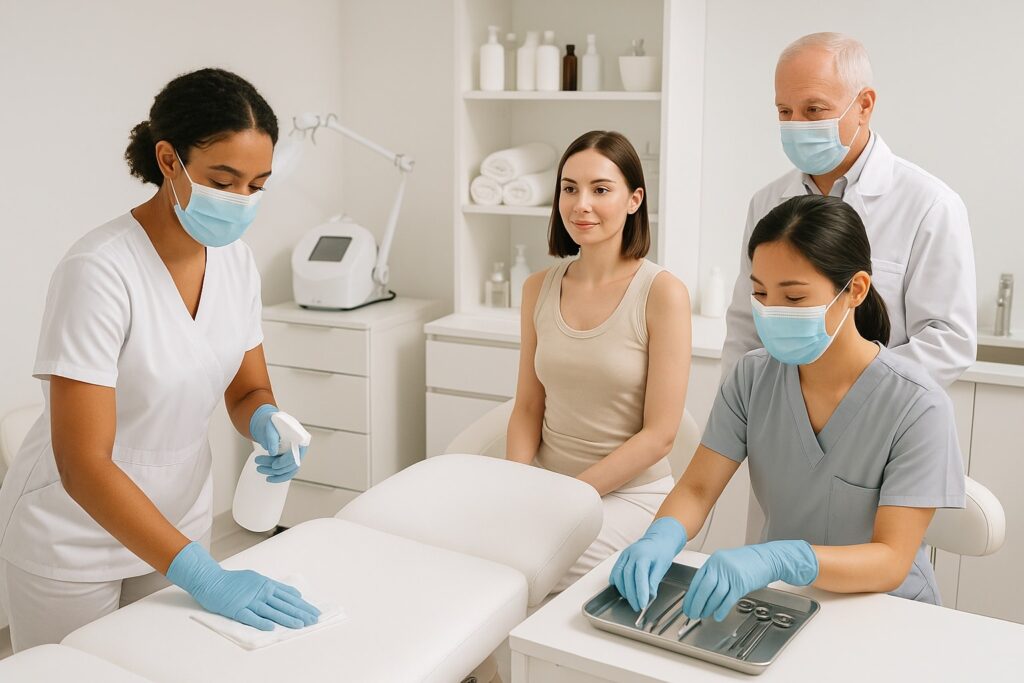
- Infection control in a medical aesthetic clinic is not limited to cleanliness. It includes hand hygiene, surface disinfection, instrument reprocessing, PPE use, waste handling, and consistent documentation.
- Medical aesthetics often involves close skin contact, shared treatment spaces, devices, and sometimes sharps, which makes cross-contamination prevention a daily operational priority.
- Cleaning, disinfection, and sterilization are not the same. Clinics need clear protocols for each step rather than relying on general “sanitizing” habits.
- Common failures include inconsistent room turnover, improper use of disinfectants, reuse of single-use items, and poor staff training.
- Estheticians and medical aesthetic assistants play a central role in maintaining a safe environment before, during, and after treatment.
Medical aesthetic clinics are expected to deliver results in a setting that feels polished, efficient, and safe. But safety in this environment is not just about appearance. It depends on structured infection control protocols that reduce contamination risk, support professional standards, and protect both patients and staff.
For estheticians, medical aesthetic assistants, and clinic leaders, infection prevention should be treated as a core clinical responsibility. Whether the setting is a physician-led cosmetic practice, a med spa, or a specialized skin clinic, strong safety systems help create consistency across every patient encounter.
Why infection control matters in medical aesthetics
Medical aesthetics sits at the intersection of beauty services and healthcare-adjacent care. That makes infection control especially important. Even when a treatment seems low risk, the environment may still involve direct skin contact, reusable tools, shared devices, linens, high-touch surfaces, and workflows that move quickly from one patient to the next.
When infection control breaks down, the consequences can extend beyond a single treatment room.
Why even routine treatments require strong hygiene standards
Not every service is invasive, but many aesthetic appointments still create opportunities for contamination. Risk can increase when there is:
- Repeated contact with skin and treatment surfaces
- Use of devices or accessories across multiple appointments
- Inadequate room turnover between patients
- Poor hand hygiene during transitions
- Improper disposal of contaminated materials
This is why clinics should not reserve strict protocols only for advanced procedures. Safety standards need to be built into the full patient journey.
The clinical and business impact of poor infection control
Weak infection prevention can affect a clinic on several levels:
- Patient safety and healing
- Treatment quality and consistency
- Staff exposure risk
- Compliance and liability concerns
- Reputation, reviews, and patient confidence
In other words, infection control is both a clinical issue and an operational one. A clinic may have excellent technology and strong branding, but inconsistent safety practices can undermine trust quickly.
What infection control means in a medical aesthetic clinic
Infection control is the system of practices used to reduce the spread of microorganisms in a care environment. In medical aesthetics, that system usually includes:
- Hand hygiene
- Environmental cleaning and disinfection
- Proper handling of reusable instruments
- Appropriate use of gloves, masks, and other PPE
- Safe disposal of sharps and contaminated waste
- Clear workflow rules and staff accountability
A strong protocol is not just a list posted on a wall. It should be repeatable, role-based, and realistic for the pace of the clinic.
Cleaning, disinfection, and sterilization are different steps
One of the most common gaps in aesthetic settings is treating these terms as interchangeable. They are not.
- Cleaning removes visible soil and residue.
- Disinfection reduces harmful microorganisms on appropriate surfaces or items.
- Sterilization is a higher-level process used for items that require complete elimination of microbial life.
Understanding the difference matters because using the wrong level of processing can create a false sense of safety. A tool that looks clean may still require disinfection or sterilization based on how it is used, the item itself, and applicable protocols.
Standard precautions should guide daily practice
Many clinics benefit from using standard precautions as the baseline mindset for every patient interaction. In practice, that means not relying on assumptions about who is low risk. Instead, the clinic follows consistent protective behaviors every time.
This approach supports safer workflows and reduces errors caused by rushing, guesswork, or informal habits.
Core infection control protocols every clinic should have
The exact policies in a medical aesthetic clinic may vary based on treatment type, staff roles, equipment, and state requirements. Still, several protocol areas are foundational in nearly every setting.
Hand hygiene
Hand hygiene remains one of the most important safety measures in any patient-facing environment. It should be built into the workflow rather than treated as an afterthought.
In medical aesthetics, this means paying attention to hand hygiene:
- Before and after patient contact
- Before handling clean supplies
- After contact with used instruments, waste, or contaminated surfaces
- During room transitions and treatment setup
Gloves do not replace hand hygiene. They are one layer of protection, not a substitute for proper hand practices.
Treatment room and surface disinfection
A treatment room can look spotless and still fall short of infection control standards. High-touch surfaces, devices, counters, bed rails, trays, and treatment chairs all need consistent attention between patients.
Effective environmental hygiene depends on:
- A clear turnover process for every room
- Appropriate products used as directed
- Attention to high-contact areas, not only visible mess
- Separation of clean and used items during setup and breakdown
When turnover procedures are inconsistent, cross-contamination becomes more likely, especially in busy clinics.
Instrument reprocessing and single-use items
Reusable tools require a defined process that matches their intended use and the clinic’s policies. Staff should understand how instruments move from use, to cleaning, to the next approved step in reprocessing.
Equally important is respecting the purpose of single-use items. Reusing products designed for one-time use can create avoidable safety and compliance issues.
Strong clinics reduce confusion by clearly labeling, storing, and separating:
- Clean items
- Used items awaiting reprocessing
- Disposable items
- Sharps and contaminated waste
Personal protective equipment and exposure prevention
PPE should support the task being performed and the level of exposure risk in that setting. Depending on the treatment environment, that may include gloves, masks, eyewear, or protective clothing.
The most common problem with PPE in aesthetic settings is not just whether it is available, but whether it is used consistently and changed appropriately during workflow transitions.
A clinic’s PPE standards should be practical, specific, and reinforced through training.
Waste handling and sharps disposal
Waste management is easy to overlook until something goes wrong. Clinics need clear systems for handling items that may be contaminated, as well as safe disposal pathways for sharps where relevant.
This is not only about tidiness. Proper segregation and disposal help reduce occupational exposure and support compliance with broader safety policies.
Documentation and accountability
Even the best protocol loses value if no one follows it the same way. Checklists, room logs, equipment records, and clear responsibility assignments can help clinics maintain consistency.
Documentation also makes it easier to:
- Train new staff
- Identify recurring weak points
- Support quality improvement
- Demonstrate that safety processes are being followed
Common infection control mistakes in aesthetic clinics
Many infection control failures in medical aesthetics are not caused by a total lack of knowledge. More often, they come from inconsistency, shortcuts, or poorly defined responsibilities.
Confusing “clean” with “safe”
A visually clean room can still present infection risk. Surface shine, fragrance, or general tidiness does not replace proper disinfection practices.
Inconsistent room turnover
If one staff member follows the protocol closely and another rushes through it, the clinic no longer has a reliable safety system. Consistency matters as much as the protocol itself.
Reusing single-use supplies
This is a serious error. Single-use items are not meant to be repurposed, even when they appear undamaged or only lightly used.
Weak onboarding and refresher training
New hires may arrive with mixed backgrounds from salons, spas, medical offices, or aesthetic practices. Without standardized training, staff may rely on habits from previous environments that do not match the clinic’s expectations.
Ignoring workflow design
Cross-contamination often happens because the environment is poorly organized. When clean supplies, used items, treatment devices, paperwork, and patient traffic all compete in the same space, mistakes become more likely.
The role of estheticians and medical aesthetic assistants
In many clinics, infection control is sustained by the people managing daily flow, not just by the clinician overseeing treatment. Estheticians and medical aesthetic assistants are often central to that process.
Before treatment
These team members may help prepare the environment by:
- Confirming room readiness
- Setting up clean supplies
- Checking that surfaces and equipment are prepared according to clinic policy
- Supporting organized, low-risk workflow
During treatment
Their role may include maintaining an orderly field, minimizing unnecessary contact with clean supplies, supporting PPE compliance, and helping reduce breaks in protocol during a busy appointment.
After treatment
Post-treatment responsibilities may include room turnover support, waste handling, instrument flow, restocking, and helping ensure that the next patient enters a properly prepared space.
When assistants and estheticians are trained well, they become a major strength in clinic safety culture rather than an overlooked operational layer.
How clinics can strengthen safety standards over time
Strong infection control is not built through one training session. It is built through repeatable systems, oversight, and a culture that treats safety as part of professionalism.
Standardize what “good practice” looks like
Every clinic should define its expected workflow clearly. Informal habits are difficult to audit and easy to misinterpret. Written protocols, accessible checklists, and role-based responsibilities create better consistency.
Train by role, not just by topic
A clinic owner, front desk coordinator, esthetician, assistant, and supervising clinician do not interact with infection control in the same way. Training should reflect those differences.
Useful training often includes:
- Core infection prevention principles
- Room turnover expectations
- Handling of supplies and instruments
- PPE use
- Waste procedures
- Incident reporting and escalation pathways
Audit compliance instead of assuming it
Periodic observation and review can reveal gaps that routine work hides. Clinics that check compliance regularly are often better positioned to catch drift before it turns into a larger problem.
Communicate safety clearly to patients
Patients notice whether a clinic feels organized and professional. They may not know every protocol, but they do notice clean workflows, careful preparation, and visible consistency.
That matters because patient trust is shaped as much by process as by outcomes.
Stay within scope and follow applicable rules
Medical aesthetics in the United States is shaped by state laws, facility policies, treatment type, device use, and professional licensure. Clinics should align infection control practices with those requirements, manufacturer instructions, and supervising clinical standards where applicable.
What to look for in infection control training for aesthetic professionals
If you are evaluating educational content or staff training, depth matters more than marketing language. Strong training in this area should help learners understand why protocols matter, not just memorize terms.
Look for training that emphasizes:
- Real-world clinic workflow
- Differences between cleaning, disinfection, and sterilization
- Role-specific responsibilities
- Cross-contamination prevention
- Safety culture and consistency
- Documentation and accountability
- Appropriate regulatory awareness without oversimplification
For estheticians and medical aesthetic assistants, this kind of education supports safer day-to-day practice and stronger professional judgment.
Strengthen your safety knowledge in medical aesthetics
Explore educational resources from Eduasthetics designed to help estheticians, assistants, and aesthetic professionals build stronger clinical awareness, safer workflows, and more confident day-to-day practice.
Sources and references
- Centers for Disease Control and Prevention. Guideline for Disinfection and Sterilization in Healthcare Facilities.
- Centers for Disease Control and Prevention. Hand Hygiene in Healthcare Settings.
- Occupational Safety and Health Administration. Bloodborne Pathogens Standard.
FAQS
Why is infection control important in medical aesthetic clinics?
Because it helps reduce the spread of microorganisms, supports safer treatment environments, and protects patients, staff, and clinic operations. In medical aesthetics, even routine appointments can involve shared surfaces, devices, and close skin contact.
What is the difference between cleaning, disinfection, and sterilization?
Cleaning removes debris and residue. Disinfection reduces harmful microorganisms on appropriate items or surfaces. Sterilization is a higher-level process used when complete elimination of microbial life is required. The right step depends on the item and its intended use.
Are infection control protocols only necessary for invasive treatments?
No. While risk levels vary, noninvasive and minimally invasive services still require structured hygiene and contamination-prevention practices. High-touch surfaces, reusable equipment, and workflow transitions all matter.
What are the most common infection control mistakes in med spas?
Frequent issues include inconsistent hand hygiene, rushed room turnover, misuse of disinfectants, reuse of single-use items, poor separation of clean and used supplies, and inadequate staff training.
How do medical aesthetic assistants support clinic safety?
They often help prepare rooms, organize supplies, support clean workflow, manage turnover steps, and reinforce protocol consistency. Their role can have a direct impact on contamination prevention.
How often should infection control training be reviewed?
Clinics commonly review training during onboarding and repeat it regularly based on role, protocol updates, equipment changes, and internal quality checks. Refresher education is especially important when workflows change or gaps are identified.
Related posts
How to build a resume for medical aesthetic assistant jobs in the U.S.
How to handle difficult patients in a medical aesthetics clinic
Aesthetic device maintenance: safe use and equipment care in med spas
Stay Updated
About de author
