
Can internships help you get a medical aesthetic assistant job?
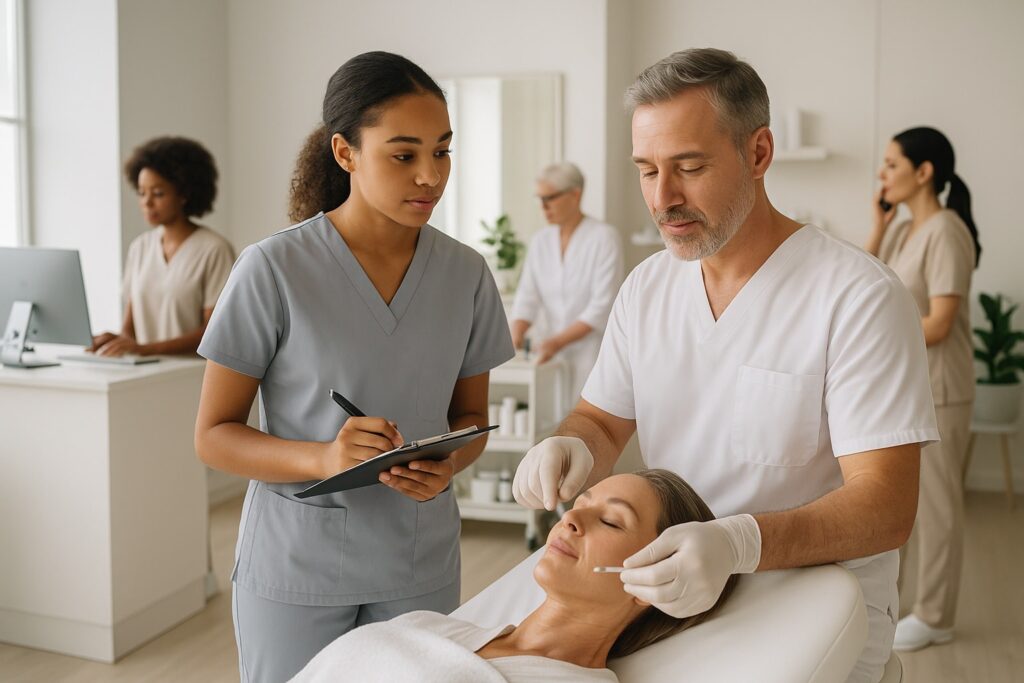
- Internships and externships can help entry-level candidates build practical exposure, stronger resumes, and better interview examples for medical aesthetic assistant jobs.
- Employers often value hands-on familiarity with clinic workflow, treatment room readiness, patient-facing professionalism, and day-to-day operations in aesthetic settings.
- A strong internship may also lead to references, networking opportunities, and awareness of open roles, but it does not guarantee employment.
- If you have no direct experience yet, transferable skills, relevant training, and supervised exposure can still help you compete for support roles in medical aesthetics.
Practical experience can make a real difference when you are trying to break into medical aesthetics. For many entry-level candidates, one of the biggest challenges is not interest or motivation. It is proving that they understand how a real clinic or med spa operates.
That is why internships, externships, and other supervised hands-on experiences often matter. They can help bridge the gap between classroom learning and the expectations of an actual employer. If you are exploring medical aesthetic assistant jobs in the United States, practical exposure may improve your confidence, strengthen your application, and give you a clearer picture of the field.
What a medical aesthetic assistant job usually involves
The title “medical aesthetic assistant” can mean different things depending on the employer. In some settings, it refers to a support role that helps keep the clinic organized and patient-ready. In others, the job may blend front-office and back-office responsibilities.
A medical aesthetic assistant role may involve support tasks such as:
- Preparing rooms between appointments
- Supporting daily clinic flow
- Assisting with intake or patient coordination
- Handling supplies, scheduling, or administrative tasks
- Communicating professionally with patients and staff
The exact scope of a role depends on the practice, the state, and the qualifications required by that employer. That is important because not every clinic uses the same title, and not every position has the same responsibilities.
Why role titles can vary
In the US market, similar entry-level jobs may appear under different names, including:
- Medical aesthetic assistant
- Aesthetic clinic assistant
- Med spa assistant
- Patient care support role
- Clinical support assistant
This matters during a job search. Someone looking for a medical aesthetic assistant job may also benefit from reviewing related job titles, especially when the responsibilities overlap.
Do internships help you get hired in medical aesthetics?
In many cases, yes. An internship or externship can help you become a stronger candidate for an entry-level job in medical aesthetics.
Employers often look for more than coursework alone. Even limited exposure to a real clinic environment may show that you understand the pace, professionalism, and structure of an aesthetic practice. That kind of experience can be especially useful when you are competing against other entry-level applicants.
Internships may help candidates:
- Build relevant experience before their first full-time role
- Add practical exposure to a resume
- Speak more confidently in interviews
- Show familiarity with clinic workflow
- Earn references from supervisors or mentors
That does not mean practical training automatically leads to a job offer. Hiring decisions still depend on the employer, the position, the local market, and the candidate’s overall readiness. Still, hands-on experience is often a meaningful advantage.
How practical training strengthens an application
One of the biggest benefits of an internship is that it gives you something specific to talk about. Instead of speaking only in general terms, you can describe real observations and real responsibilities from a supervised setting.
That can improve your application in several ways:
- Your resume looks more grounded in actual industry exposure
- Your interview answers feel more credible
- You may appear more prepared for professional expectations
- You can show that you understand how aesthetic settings operate day to day
For employers, this may reduce uncertainty when evaluating a newer candidate.
Why internships do not guarantee a job
Internships can help, but they are not a shortcut around every hiring requirement. Employers may still prioritize:
- Communication skills
- Professionalism
- Reliability
- Relevant training
- Cultural fit
- Availability
- Local hiring needs
In some cases, a clinic may value prior customer service or healthcare experience just as much as formal externship exposure. Practical training helps, but it works best as part of a broader job-readiness profile.
Why employers value hands-on exposure
In medical aesthetics, the environment matters. Clinics and med spas depend on smooth operations, patient trust, attention to detail, and strong communication between team members. Employers may see hands-on exposure as a sign that a candidate has already been introduced to that reality.
A supervised internship may help a candidate become more familiar with:
- Appointment flow and timing
- Treatment room setup expectations
- Professional conduct in patient-facing settings
- Team communication
- Documentation and organizational habits
- The rhythm of a busy aesthetic practice
Even when a role is entry level, employers may prefer candidates who understand the basics of a real workplace rather than only the theory behind it.
Experience can matter even in entry-level roles
“Entry level” does not always mean “no preparation needed.” In many aesthetic settings, employers still want someone who can step into a structured environment and learn quickly.
That is one reason internships can matter. They may suggest that a candidate has already seen how a med spa, cosmetic practice, dermatology office, or aesthetic clinic functions on a normal day.
What to look for in a strong internship or externship
Not every internship provides the same value. A meaningful experience is usually one that offers real observation, clear supervision, and exposure to the daily workflow of an aesthetic setting.
If you are comparing options, look for opportunities that appear to offer:
- Supervised learning in a professional environment
- Exposure to clinic operations and patient flow
- Observation of professional communication standards
- Familiarity with treatment room readiness and organization
- Feedback from experienced staff
- A structured learning experience rather than vague shadowing
A strong internship is not just something to list on a resume. It should help you understand how the work actually happens.
Green flags in a practical training opportunity
A stronger opportunity usually has clear educational value. Signs of a quality experience may include:
- Defined expectations
- Professional oversight
- A legitimate clinical or aesthetic setting
- Respect for scope, safety, and professionalism
- Opportunities to observe workflow in a realistic environment
These factors can make the experience more useful when you later explain it to a hiring manager.
Red flags to take seriously
Not every opportunity is worth pursuing. Be cautious if a program or placement seems to rely on hype rather than real learning.
Potential red flags include:
- Unclear supervision
- No defined learning goals
- Pressure to take on duties beyond your training or legal scope
- Promises of guaranteed hiring
- Little actual exposure to the work environment
In a medical setting, professionalism and boundaries matter. A credible training experience should reflect that.
Can internships turn into job opportunities?
Sometimes they can. While outcomes vary, internships may help create pathways to employment in a few different ways.
A practical training experience may lead to:
- Professional references
- Introductions to hiring managers
- Awareness of upcoming openings
- Better understanding of where you fit in the field
- Consideration for future support roles
In some cases, a clinic may not have an immediate opening but may remember a reliable trainee when a role becomes available later. That kind of visibility can be valuable in a competitive job market.
Why networking matters in medical aesthetics
Medical aesthetics is a relationship-driven field. Professionalism, reputation, and consistency often matter just as much as technical interest.
An internship may help you expand your network by connecting you with:
- Clinic managers
- Providers
- Front-office teams
- Coordinators
- Other professionals working in aesthetic settings
For many candidates, this is one of the most overlooked advantages of hands-on training.
What if you have no direct experience yet?
That is common. Many people interested in medical aesthetic assistant jobs start with little or no direct industry experience.
If that is where you are, an internship may be one way to close the gap, but it is not the only one. Employers may still respond well to candidates who can show relevant preparation and transferable strengths.
Helpful assets may include:
- Esthetics or beauty industry experience
- Customer service in high-touch settings
- Front-desk or scheduling experience
- Healthcare office exposure
- Strong communication and organization
- Relevant coursework or career training
The key is to show that you are serious, coachable, and prepared to work in a professional environment.
Transferable skills employers may notice
Even without a formal internship, you may already have experience that connects well to aesthetic support roles.
Skills that may carry over include:
- Patient or client communication
- Professional presentation
- Time management
- Attention to detail
- Teamwork
- Comfort in service-oriented environments
When combined with relevant training, these skills can help support an entry-level application.
How to use an internship strategically in your job search
A hands-on experience is most useful when you can turn it into a clear professional story.
That means being able to explain:
- What type of setting you trained in
- What you observed or supported
- What you learned about clinic workflow
- How the experience prepared you for an entry-level role
You do not need to oversell the internship. In fact, employers tend to respond better to candidates who describe their experience clearly and realistically.
A practical training experience can be especially valuable if it helps you:
- Tailor your resume to aesthetic support roles
- Speak more confidently in interviews
- Request a credible recommendation
- Identify which type of clinic environment fits you best
What to keep in mind before pursuing this path
Medical aesthetics can be an appealing field, but it is important to approach it with realistic expectations. Not every internship is high quality, and not every job opening requires the same background.
Before pursuing a medical aesthetic assistant path, it helps to keep three things in mind:
- Role expectations vary widely by employer
- State rules and workplace requirements may affect what support staff can do
- Practical experience helps most when it is paired with professionalism and relevant training
If your goal is long-term growth in aesthetics, hands-on learning can be a strong starting point. It can help you understand the environment, build confidence, and make more informed career decisions.
Sources and references
- U.S. Bureau of Labor Statistics. Occupational Outlook Handbook: Medical Assistants.
- U.S. Bureau of Labor Statistics. Occupational Outlook Handbook: Skincare Specialists.
- National Association of Colleges and Employers. Internship and Co-op Report.
FAQS
Are internships required for a medical aesthetic assistant job?
Not always. Some employers hire entry-level candidates without formal internship experience, especially when they show relevant training, strong communication skills, and transferable experience. Still, practical exposure can make an application more competitive.
What is the difference between an internship and an externship in medical aesthetics?
The terms are sometimes used interchangeably, but an externship is often tied more directly to a training program and may be shorter or more structured. An internship may be broader. The practical value depends less on the label and more on the quality of supervision and exposure.
Can a recommendation letter help me get hired?
It can. A recommendation from a credible supervisor, clinic leader, or qualified professional may strengthen your application, especially if you are new to the field and need to demonstrate professionalism and readiness.
Can you get hired in medical aesthetics with no experience?
Yes, in some cases. Entry-level candidates may still be considered if they can show relevant education, transferable skills, and a clear understanding of the role. Hands-on training often helps, but it is not the only path into the field.
What should I look for in a quality internship?
Look for a professional setting, clear supervision, realistic exposure to clinic operations, and an experience that respects legal and professional boundaries. A strong internship should teach you how the environment works, not just give you something to list on a resume.
Do medical aesthetic assistant jobs pay more with experience?
Compensation may increase with experience, expanded responsibilities, and the type of employer. Pay structures can vary widely by location, setting, and role expectations.
Can an internship lead directly to a job offer?
Sometimes, but not always. An internship may create useful connections, references, and visibility inside a practice. That can improve your chances, but it should not be treated as a guarantee of employment.
Related posts
Infection control in medical aesthetic clinics: essential safety protocols for estheticians and assistants
How to build a resume for medical aesthetic assistant jobs in the U.S.
How to handle difficult patients in a medical aesthetics clinic
Stay Updated
About de author
