
Can you work in medical aesthetics without being a doctor?
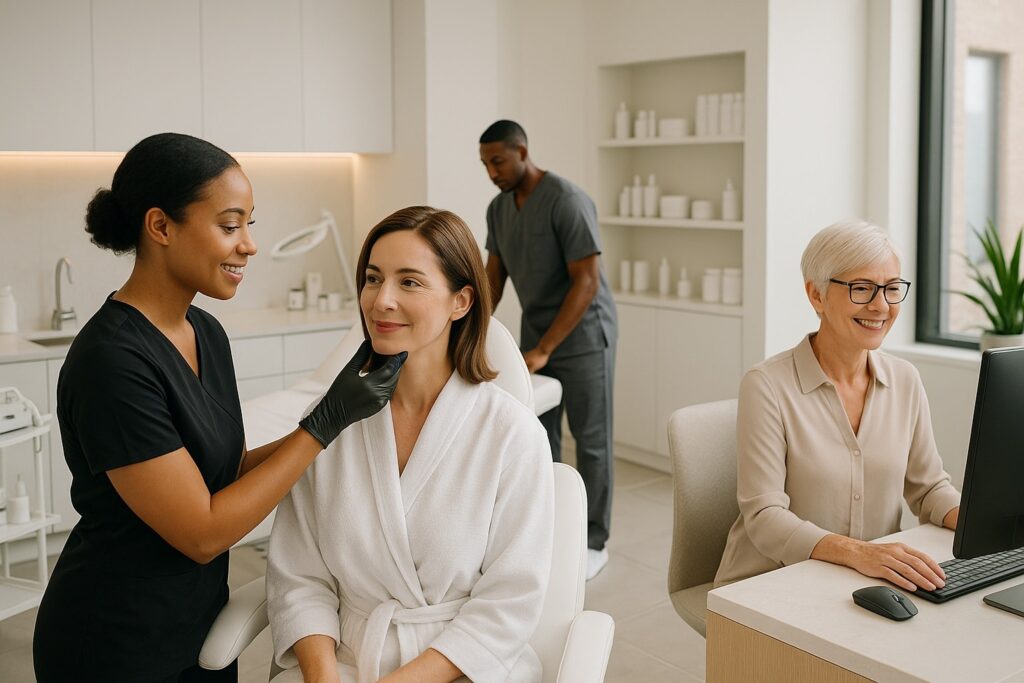
- Yes. Many jobs in medical aesthetics do not require a medical degree, but legal responsibilities depend on licensure, state regulations, and employer policy.
- Common non-physician roles include licensed estheticians, medical assistants, patient coordinators, front-desk staff, and clinic operations professionals.
- Working in an aesthetic clinic is not the same as being authorized to perform medical procedures. Those boundaries vary across the United States.
- Med spas, dermatology offices, plastic surgery practices, and laser-focused clinics all hire team members who support patient flow, communication, and day-to-day operations.
- The safest way to enter the field is to match your training to the role, understand scope-of-practice limits, and pursue education that supports compliant, professional growth.
Many people are drawn to medical aesthetics because it combines skincare, patient experience, and a polished clinical environment. The short answer is yes: you can work in medical aesthetics without being a doctor. What matters most is understanding which roles are open to non-physicians and where legal and professional boundaries begin.
What medical aesthetics work actually includes
Medical aesthetics is a broad field that blends cosmetic services with healthcare-adjacent or medically supervised environments. Depending on the setting, a clinic may offer services related to skin quality, facial aesthetics, laser-based treatments, consultations, and ongoing skincare support.
That does not mean every person on the team performs medical treatments. In most practices, patient care and clinic operations depend on multiple professionals with different levels of training and authority.
The difference between medical services and clinic support roles
This is the key distinction many new job seekers miss.
Aesthetic clinics usually rely on a team structure that may include:
- Physicians
- Nurses or advanced practice clinicians
- Licensed estheticians
- Medical assistants
- Front-desk and patient-coordinator staff
- Practice managers and operations support
Some roles are clinical. Some are administrative. Some are centered on skincare and client experience. A clinic can be medically supervised while still employing many people who are not doctors.
Common career paths in aesthetic clinics that do not require a medical degree
If your goal is to work in the industry without becoming a physician, several pathways may be relevant depending on your background.
Licensed estheticians
Licensed estheticians are often one of the most visible non-physician roles in aesthetics. In the US, estheticians are typically trained in skincare services, skin analysis, sanitation standards, and client care within the limits of their state license.
In aesthetic environments, estheticians may contribute to:
- Skincare-focused services allowed under state law
- Patient preparation and support
- Product education and home-care guidance within their role
- Overall client experience and retention
Their exact responsibilities vary widely by state and by practice type. A role that is acceptable in one location may be restricted in another, especially in medically supervised settings.
Medical assistants in aesthetic settings
Medical assistants can play an important support role in clinics that offer aesthetic services. Their work often centers on organization, patient flow, and operational support rather than independent treatment authority.
Depending on the setting, medical assistants may help with:
- Preparing treatment rooms
- Intake and documentation support
- Scheduling and patient coordination
- Inventory and supply organization
- Assisting licensed providers as permitted by law and clinic policy
Many employers prefer candidates who have completed formal medical assistant training, and some prefer certification through recognized organizations. Just as important, medical assistants are not independent licensed practitioners, so their duties are typically defined by supervision, state rules, and employer protocols.
Front-desk, patient coordinator, and operations roles
Not every career in medical aesthetics is hands-on clinical work. Many successful professionals enter the field through administrative or customer-facing positions.
These roles may include:
- Front-desk coordinator
- Patient care coordinator
- Scheduler
- Practice manager
- Reception or intake specialist
For people changing careers, these positions can be an accessible entry point into the industry. They offer exposure to clinic workflow, patient communication, and the business side of aesthetics without requiring a medical degree.
Where you can work in medical aesthetics
Medical aesthetics is not limited to one kind of employer. Non-physician professionals may find opportunities in several settings, including:
- Med spas
- Dermatology practices
- Plastic surgery offices
- Laser and skin clinics
- Wellness centers with aesthetic services
- Multi-location or franchise-based aesthetic practices
Each environment feels different. A med spa may place more emphasis on the client experience and service flow, while a dermatology or plastic surgery office may feel more medically structured. Job seekers should pay attention to how clinical the setting is, who supervises care, and what responsibilities the role actually includes.
Scope of practice is the deciding factor
The biggest factor in this career path is not interest. It is scope of practice.
In the United States, scope of practice determines what a professional may legally do based on licensure, training, and supervision. This is especially important in aesthetic settings, where the same job title can mean different things depending on the state and the employer.
Why state rules matter
There is no single nationwide rulebook that applies the same way everywhere. States may differ on issues such as:
- Which services are considered medical
- Which professionals may perform certain tasks
- Whether delegation is allowed
- What level of supervision is required
- How esthetics and medical assisting roles are defined
That is why broad online advice can be misleading. A role description that sounds normal in one state may not reflect the legal reality in another.
Why employer policy matters too
Even when something may be legally permitted, a clinic can still set stricter internal standards. Reputable employers usually build policies around compliance, patient safety, documentation, and risk management.
For job seekers, that means two things:
- Do not assume a role in one clinic will look the same everywhere
- Do not confuse exposure to treatments with authorization to perform them
Understanding this distinction protects both your career path and the people you serve.
Skills and qualifications employers often look for
Even when a role does not require a medical degree, employers in aesthetic clinics usually want candidates who can work in a professional, detail-oriented environment.
Common qualities include:
- Relevant licensure or formal training for the role
- Strong communication and customer service skills
- Professional appearance and workplace etiquette
- Comfort in patient-facing settings
- Basic knowledge of skincare and aesthetic terminology
- Attention to hygiene, organization, and documentation
- Respect for compliance and role boundaries
For support roles, reliability and emotional intelligence often matter as much as technical knowledge. Aesthetic practices depend heavily on trust, consistency, and patient experience.
How to enter the field responsibly
If you are serious about working in medical aesthetics without becoming a doctor, the best next step is not guessing. It is choosing a pathway that fits your background and understanding the role before you apply.
Choose a path that matches your background
A few common entry routes include:
- Esthetics school for those pursuing licensed skincare roles
- Medical assistant training for those interested in clinical support positions
- Administrative or coordinator roles for those with customer service, hospitality, or office experience
Each path leads to a different kind of responsibility. The right choice depends on whether you want to focus on skincare services, clinic support, patient communication, or practice operations.
Verify licensure and training requirements before applying
Before committing to a role or program, review:
- Your state board rules for esthetics or related licenses
- Employer job descriptions and minimum qualifications
- Whether certification is preferred or required
- Whether the job is clinical, administrative, or mixed
This step is especially important in medical aesthetics because titles can sound more advanced than the legal role actually allows.
Build experience in patient-facing environments
Experience in healthcare, beauty, wellness, hospitality, or client services can all translate well into aesthetic clinics. Employers often value candidates who know how to:
- Communicate clearly
- Handle sensitive conversations professionally
- Support a high-touch client experience
- Stay organized in a fast-paced setting
For career changers, these transferable skills can make the field more accessible than it first appears.
Is medical aesthetics a good fit if you are changing careers?
For many people, yes. Medical aesthetics appeals to career changers because it sits at the intersection of beauty, service, and clinical professionalism.
It may be a strong fit if you are looking for:
- A patient- or client-facing work environment
- A structured and polished clinic setting
- A role connected to skincare and aesthetic services
- A career path that does not require medical school
That said, interest alone is not enough. The field rewards people who respect legal boundaries, take training seriously, and understand the difference between assisting in an aesthetic setting and practicing medicine.
What the answer really comes down to
You do not need to be a doctor to build a career in medical aesthetics, but you do need to choose the right role.
For some people, that means becoming a licensed esthetician. For others, it means working as a medical assistant, patient coordinator, or clinic operations professional. The strongest approach is to view the industry as a team-based environment, not as a single job title.
If you understand scope of practice, follow state requirements, and pursue role-appropriate education, medical aesthetics can offer several realistic entry points without a medical degree.
Sources and references
- U.S. Bureau of Labor Statistics. Occupational Outlook Handbook: Medical Assistants.
- U.S. Bureau of Labor Statistics. Occupational Outlook Handbook: Skincare Specialists.
- American Association of Medical Assistants. Medical assisting roles and credentialing overview.
FAQS
Can an esthetician work in a med spa in the United States?
Yes, in many cases. Licensed estheticians often work in med spas, but what they may do depends on state law, their license, and the clinic’s internal policies.
Can a medical assistant perform aesthetic procedures?
That depends on the state, the task, the level of supervision, and the employer’s compliance policies. Medical assistants are generally support professionals, not independent licensed practitioners.
Do you need certification to work in an aesthetic clinic?
Some roles require licensure or formal training, while others do not. Medical assistant positions may prefer or require certification, and esthetician roles typically require state licensure.
What is the difference between a med spa and a traditional spa job?
A med spa usually operates in a medically supervised environment and may offer services that fall closer to healthcare regulation. A traditional spa is generally more focused on non-medical wellness and beauty services.
Can you switch into medical aesthetics from another industry?
Yes. Many people enter the field from beauty, hospitality, retail, healthcare support, or office administration. Transferable skills like communication, organization, and client care are often valuable.
What should you check before accepting a job in an aesthetic clinic?
Review the role description carefully, confirm whether licensure or certification is required, and make sure the responsibilities align with state law and employer policy.
Related posts
Infection control in medical aesthetic clinics: essential safety protocols for estheticians and assistants
How to build a resume for medical aesthetic assistant jobs in the U.S.
How to handle difficult patients in a medical aesthetics clinic
Stay Updated
About de author
