
Careers in aesthetic clinics: roles, settings, and requirements
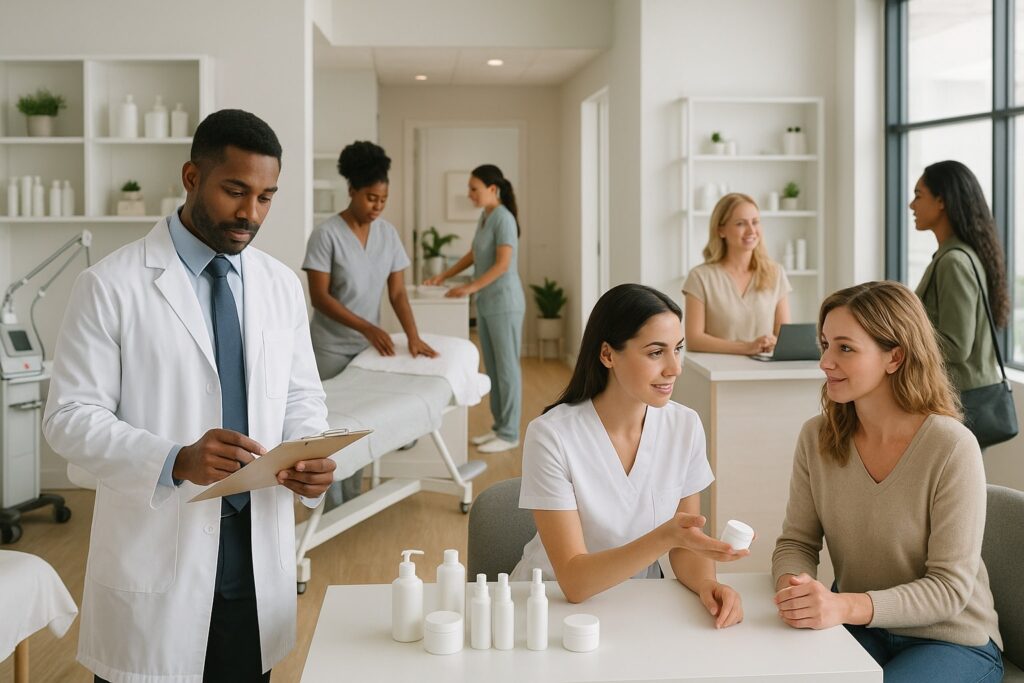
- Aesthetic clinics in the United States rely on team-based care, with physicians, nurses, estheticians, medical assistants, and coordinators each contributing different skills.
- Common work settings include med spas, dermatology offices, plastic surgery practices, laser clinics, and larger franchise-based aesthetic centers.
- Support roles often focus on patient flow, skin-focused services within scope, treatment room readiness, documentation, and the overall client experience.
- Scope of practice is not the same in every state, so job duties, supervision models, and qualification requirements can vary widely.
- For people exploring medical aesthetics careers, the best starting point is understanding the difference between clinical support work, esthetics, and licensed medical procedures.
The growth of non-surgical cosmetic treatments has created more visibility around careers in aesthetic clinics. For many people, the appeal is clear: the field sits at the intersection of skincare, client experience, and healthcare-adjacent clinical work.
But not every role in medical aesthetics looks the same.
Some professionals provide skincare services within an esthetician license. Others support physicians and nurses in clinical operations. Some work in front-office coordination, patient education, or product support. Understanding how these roles fit together is essential for anyone considering a future in this space.
What counts as an aesthetic clinic in the US
In the United States, “aesthetic clinic” is a broad term. It can describe several types of businesses and medical practices that offer cosmetic services, skin treatments, and non-surgical procedures. What they share is a strong focus on appearance-related care, often delivered in structured settings with varying degrees of medical oversight.
Med spas
Med spas are one of the most recognized employers in medical aesthetics. These businesses typically blend the feel of a spa with the structure of a clinical environment. Depending on the state and business model, med spas may involve physicians, nurse practitioners, physician assistants, registered nurses, estheticians, and medical assistants.
For job seekers, med spas often offer exposure to:
- Skin-focused client care
- Treatment room preparation and turnover
- Product education
- Patient intake and scheduling support
- Coordination between providers and front-desk teams
Dermatology clinics
Dermatology practices may offer both medical and cosmetic services. That means support staff may work around acne care, skin evaluations, cosmetic consultations, and office-based aesthetic procedures, depending on the practice.
These settings often place a strong emphasis on:
- Documentation
- Clinical professionalism
- Patient communication
- Organized workflows
- A clear understanding of role boundaries
Plastic surgery practices
Plastic surgery offices often include non-surgical aesthetic services alongside surgical consultations and post-procedure support. In these environments, support roles can be part of a highly coordinated patient journey that includes consultation, scheduling, skin preparation, follow-up communication, and retail skincare guidance.
Laser clinics, skin centers, and wellness settings
Some employers specialize in laser-based services, skin rejuvenation, or advanced skincare. Others operate within broader wellness or beauty businesses. These settings may feel less traditional than a medical office, but they still require professionalism, strong client interaction skills, and attention to scope-of-practice limits.
Franchise and corporate aesthetic clinics
Larger chains and franchise models are increasingly common in the US market. These employers may offer more standardized onboarding, clearer job descriptions, and defined growth paths. For entry-level candidates, that structure can be appealing. At the same time, responsibilities still depend on state law, clinic protocols, and supervision requirements.
Common support roles in aesthetic clinics
When people search for medical aesthetics careers, they often focus only on injectors or physicians. In reality, clinics run on far more than licensed procedure providers. Support roles are central to efficiency, patient comfort, and the consistency of the overall experience.
Licensed estheticians in medical aesthetics
Licensed estheticians often bring a strong foundation in skin analysis, skincare products, treatment preparation, and client education. In aesthetic clinics, their role may differ from what it looks like in a traditional salon or spa.
Depending on state law and employer structure, an esthetician in a clinical aesthetic environment may be involved in:
- Skincare consultations within permitted scope
- Pre- and post-service client support
- Product recommendations
- Facial and skin-focused services allowed under licensure
- Chart support or intake assistance
- Maintaining treatment room readiness
Not every esthetician role is the same. Some positions are heavily retail- and service-based, while others are closely integrated into a physician-led practice.
Medical assistants in aesthetic practices
Medical assistants can play an important operational role in aesthetic clinics, particularly in practices that function more like medical offices than spa environments. Their work may support physicians, nurse practitioners, physician assistants, or nurses, depending on the setting.
In aesthetic practices, medical assistants may help with:
- Patient flow and rooming
- Intake and basic documentation support
- Preparing rooms and supplies
- Coordinating schedules and follow-up
- Assisting with general clinic organization
- Supporting providers during non-sensitive parts of the patient journey
Employers may prefer or require certification, especially in more clinical environments. Requirements can vary by employer and state, so reviewing local expectations is important before pursuing a specific role.
Patient coordination and front-office roles
Not all careers in aesthetic clinics are treatment-room based. Front-desk coordinators, patient care coordinators, and client experience specialists are often the first point of contact.
These roles may involve:
- Scheduling and calendar management
- Consultation coordination
- Retail product support
- Financing or package communication
- Follow-up communication
- Helping maintain a polished, organized client experience
For people with strong communication skills and interest in aesthetics, this can be a practical entry point into the field.
What working alongside physicians actually means
One of the defining features of clinical aesthetics is collaboration. In physician-led or medically supervised environments, support professionals do not replace licensed medical providers. Instead, they help the clinic function smoothly and contribute to a safer, more organized experience.
Team-based care supports both workflow and experience
Aesthetic clinics often depend on a coordinated model where each professional handles a different part of the process. In broad terms:
- Physicians and other licensed medical providers oversee or perform medical procedures
- Estheticians focus on skin-related services and client support within scope
- Medical assistants support clinical flow and organization
- Coordinators manage scheduling, communication, and continuity
This division helps create consistency across the patient journey, from consultation through follow-up.
Role boundaries matter
One of the most important realities in medical aesthetics is that job titles can sound similar while legal authority differs significantly. A person may work in a beautiful clinical setting, wear scrubs, and interact with patients all day, but that does not automatically mean they are authorized to perform medical procedures.
That is why reputable employers pay close attention to:
- State scope-of-practice rules
- Delegation and supervision policies
- Training and credential verification
- Internal protocols
- Documentation standards
For anyone exploring the field, this is not a minor detail. It is one of the most important factors in choosing the right career path.
Skills employers often value in aesthetic clinic support roles
Aesthetic clinics are client-facing, fast-moving environments. Technical knowledge matters, but so do professionalism, communication, and consistency.
Skin knowledge and treatment awareness
Support professionals do not need to act as independent medical decision-makers to be valuable. Employers often look for candidates who understand basic skin terminology, common aesthetic services, product categories, and the flow of a cosmetic consultation.
This helps teams communicate more clearly and creates a better patient experience.
Strong interpersonal communication
Medical aesthetics is personal. Clients may feel excited, self-conscious, uncertain, or highly detail-oriented. Support staff need to communicate clearly, professionally, and with appropriate boundaries.
Important skills include:
- Active listening
- Calm communication
- Discretion
- Professional presentation
- Comfort in service-oriented environments
Organization and clinical readiness
Even in clinics with a luxury feel, day-to-day operations require structure. Employers often value people who can stay organized, follow systems, and support consistency.
That may include:
- Preparing rooms
- Managing schedules
- Following documentation processes
- Tracking supplies
- Helping the day run on time
Adaptability and professionalism
Aesthetic practices can change quickly. Providers may run behind, consultations may convert into treatments, and patient expectations can vary. Professionals who adapt well, stay composed, and follow protocol are often strong fits for this environment.
Scope of practice: why state law matters so much
If there is one issue that should never be treated casually in medical aesthetics, it is scope of practice.
In the US, scope is determined at the state level. That means what is allowed in one state may be restricted, delegated differently, or prohibited in another. It can also vary by license type, supervision model, and the policies of the employer.
Why this affects career planning
Before pursuing a role, candidates should understand that:
- Esthetician licensure is state-specific
- Medical assistant expectations differ by employer and state
- Procedure-related responsibilities may depend on who is supervising
- A job posting may use broad language that still requires careful review
This is especially relevant in med spas and cosmetic clinics, where beauty language and clinical language often overlap.
Why job titles can be misleading
Terms like “aesthetic specialist,” “laser technician,” or “medical esthetician” may be used in the market, but they do not always correspond to a standardized license recognized the same way in every state.
That is why the safest approach is to focus less on the title and more on:
- The actual responsibilities
- The required credentials
- The supervision structure
- The legal scope in the state where the job exists
Who may be a good fit for a career in aesthetic clinics
Careers in aesthetic clinics can appeal to people who enjoy both client interaction and structured environments. The field may be especially attractive to individuals who want to work around skincare and cosmetic services without necessarily becoming a physician or injector.
This path may suit people who are interested in:
- Skin health and skincare products
- Professional, appearance-focused environments
- Patient or client communication
- Operational support in clinical settings
- Career paths that combine service and structure
It may be less appealing for those who prefer low-interaction work or who are uncomfortable with sales-adjacent conversations, fast scheduling, or appearance-related services.
Career growth beyond the clinic
Aesthetic clinic experience can also open doors beyond direct patient-facing roles. Depending on background, training, and experience, professionals may later move into:
- Skincare brand education
- Practice support roles
- Device and technology companies
- Training coordination
- Client success or account support
- Operations and management
That broader ecosystem is one reason medical aesthetics continues to attract people from esthetics, healthcare support, beauty, and wellness backgrounds.
How to prepare for work in medical aesthetics
Breaking into the field usually starts with choosing the right lane rather than chasing the most glamorous title.
Build a solid foundation first
That may mean esthetics school, medical assistant education, front-office experience, or another relevant path. The best foundation depends on the role you want to pursue.
A strong starting point usually includes:
- Training that matches the role
- Clear understanding of legal scope
- Professional communication skills
- Familiarity with clinical etiquette
- Realistic expectations about entry-level duties
Research employers carefully
Not all aesthetic clinics operate with the same standards. When exploring career options, look for organizations that appear structured, transparent, and clear about responsibilities.
Useful signals include:
- Clear job descriptions
- Defined supervision models
- Respect for licensure boundaries
- Emphasis on patient experience and professionalism
- Ongoing staff education
Continue learning as the field evolves
Medical aesthetics changes quickly. Services, technologies, and consumer expectations shift over time. For support professionals, continuing education can help build confidence, improve communication, and create more career mobility.
For readers exploring the field, Eduasthetics can be a helpful place to keep learning about medical aesthetics, skincare, and the professional side of the industry.
Explore education for medical aesthetics careers
If you are considering a future in medical aesthetics, the right education can help you understand industry roles, professional expectations, and the structure of aesthetic practice in the US. Explore Eduasthetics resources and training to build a stronger foundation before taking your next step.
Sources and references
- U.S. Bureau of Labor Statistics. Occupational Outlook Handbook: Skincare Specialists.
- U.S. Bureau of Labor Statistics. Occupational Outlook Handbook: Medical Assistants.
- American Association of Medical Assistants. Medical assisting role and certification overview.
FAQS
Can estheticians work in aesthetic clinics?
Yes, licensed estheticians may work in aesthetic clinics, med spas, dermatology offices, and related settings. Their exact responsibilities depend on state law, employer policies, and the type of practice.
What is the difference between an esthetician and a medical assistant in medical aesthetics?
An esthetician is typically trained and licensed for skin-focused services within an esthetics scope. A medical assistant usually supports clinical operations and provider workflow in a medical environment. These roles can overlap in setting, but they are not the same profession.
Do you need certification to work in an aesthetic clinic?
It depends on the role. Estheticians need state licensure. Medical assistants may or may not need certification depending on the employer and state, although many employers prefer it. Front-office roles may not require a clinical credential but often value relevant experience.
Can support staff perform injectables or laser treatments?
That depends on state law, licensure, delegation rules, and the specific service involved. Support staff should never assume that a task is permitted based only on a job title or what another clinic does in a different state.
What types of employers hire for medical aesthetics support roles?
Common employers include med spas, dermatology clinics, plastic surgery practices, laser centers, wellness clinics, and larger franchise-based cosmetic practices. Some professionals also transition into skincare brands, device companies, and education roles.
Is working in a med spa the same as working in a spa?
Not necessarily. A med spa may involve medical oversight, clinical documentation, and coordination with licensed healthcare providers. A traditional spa is usually more focused on wellness and beauty services rather than medically supervised care.
Related posts
Infection control in medical aesthetic clinics: essential safety protocols for estheticians and assistants
How to build a resume for medical aesthetic assistant jobs in the U.S.
How to handle difficult patients in a medical aesthetics clinic
Stay Updated
About de author
