
Chemical vs mechanical exfoliation: how over-exfoliation damages the skin barrier
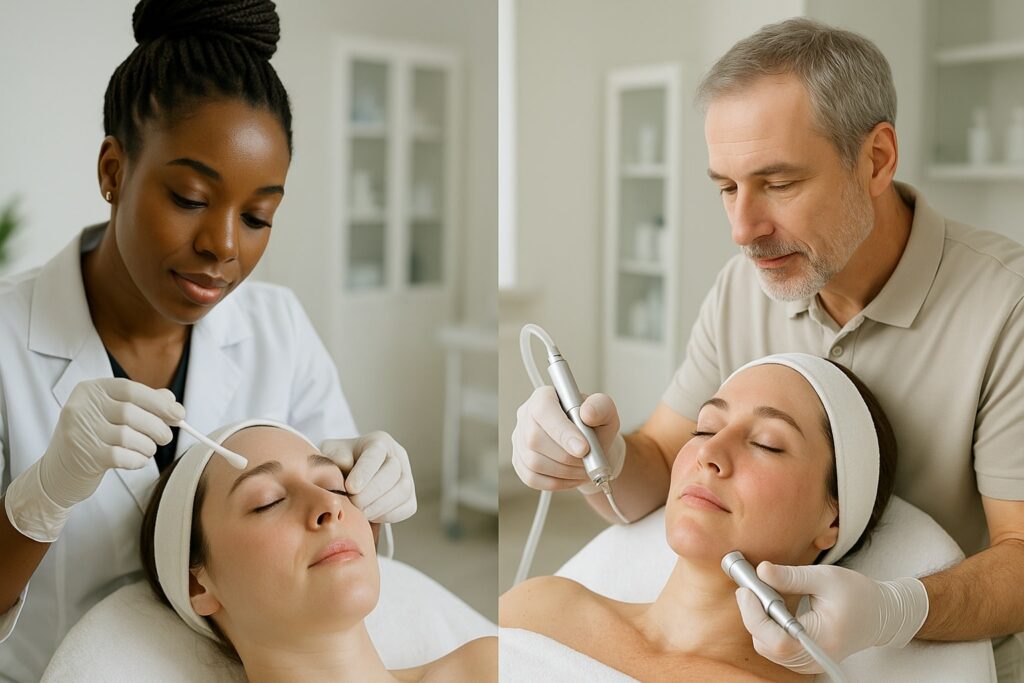
- Chemical and mechanical exfoliation can both support smoother texture and brighter-looking skin, but neither is automatically better in every case.
- In medical aesthetics settings, over-exfoliation is a common reason for barrier disruption, prolonged redness, stinging, dehydration, and reduced treatment tolerance.
- The risk often increases when in-clinic exfoliation is combined with aggressive home routines that include acids, retinoids, scrubs, or exfoliating devices.
- Better outcomes usually come from individualized assessment, simpler protocols, adequate recovery time, and clear patient education.
- Medical aesthetic assistants, estheticians, and clinic teams play an important role in spotting early warning signs before irritation turns into a larger clinical or business problem.
Exfoliation is often treated like a shortcut to better skin. In reality, it is only helpful when it is used with good clinical judgment.
In medical aesthetics, the goal is not to remove as much surface buildup as possible. The goal is to support skin health, treatment tolerance, and predictable results. When exfoliation is overused, layered too aggressively, or applied without considering the skin barrier, it can do the opposite.
That is why understanding chemical vs mechanical exfoliation matters. The difference is not just about product type. It is about how the skin is being challenged, how much recovery it needs, and whether the patient’s current condition can tolerate that stress.
What exfoliation does in medical aesthetics
Exfoliation refers to the removal of surface dead skin cells. In the right context, that can help improve skin feel, support more even-looking tone, and prepare the skin for certain treatments or skincare products.
But exfoliation is not always a sign of better care. More frequent exfoliation does not automatically mean better skin quality. When the barrier is already compromised, even a mild approach can become too much.
In a clinical setting, exfoliation should be viewed as one tool within a broader treatment plan, not as a default step for every patient.
Chemical vs mechanical exfoliation: the key differences
Both approaches aim to remove surface buildup, but they do it in very different ways.
Chemical exfoliation
Chemical exfoliation uses ingredients such as acids or enzymes to loosen the bonds between dead skin cells so they shed more easily.
Common examples include:
- Alpha hydroxy acids, such as glycolic acid or lactic acid
- Beta hydroxy acids, such as salicylic acid
- Enzyme-based exfoliants
- Professional chemical peel systems
In medical aesthetics, chemical exfoliation is often valued because it can be more controlled and more evenly distributed across the skin when selected appropriately. Even so, “controlled” does not mean harmless. Strength, frequency, formulation, skin condition, and concurrent skincare use all influence how well the skin tolerates it.
Mechanical exfoliation
Mechanical exfoliation removes dead skin cells through physical friction or abrasion.
Common examples include:
- Facial scrubs
- Exfoliating brushes or tools
- Microdermabrasion-type approaches
- Textured cleansing devices
Mechanical exfoliation can produce an immediate smooth feel, which is one reason it is often overused. But the visible short-term effect can be misleading. Skin may feel polished while the barrier is becoming increasingly irritated underneath.
Why one is not always better than the other
The better option depends on context, not trends.
Chemical exfoliation may be more suitable when a provider wants a more even application and a less friction-based approach. Mechanical exfoliation may be appropriate in some settings, but it can be problematic when the skin is reactive, inflamed, or already weakened by active ingredients.
The real clinical mistake is not choosing one category over the other. It is failing to evaluate total exfoliation load across the patient’s full routine and treatment plan.
Why over-exfoliation is becoming more common
Over-exfoliation rarely happens because of a single product or a single appointment. More often, it builds over time from multiple sources of skin stress.
Layered active ingredients at home
Many patients already use exfoliating cleansers, acid toners, retinoids, acne products, or resurfacing masks before they ever arrive at a clinic.
If that home routine is not reviewed carefully, in-clinic exfoliation may be added on top of an already overstimulated barrier. The patient may not even realize they are over-exfoliating, especially if their routine was influenced by social media or product marketing.
Short treatment intervals and protocol stacking
When treatments are scheduled too close together or multiple resurfacing elements are combined too often, cumulative irritation becomes more likely.
This is especially relevant in busy aesthetic practices where patients want fast progress. A more aggressive schedule can appear efficient, but skin that is not given enough recovery time often becomes less predictable, not more responsive.
Trend-driven skincare habits
Consumers are exposed to constant advice about “glowing skin,” “glass skin,” and exfoliation as a weekly or even daily essential. Those messages rarely account for skin sensitivity, barrier status, or the total number of active ingredients already in use.
Patients may arrive believing that tingling, peeling, or tightness means a product is working. In many cases, those are early signs that the skin is struggling.
Incomplete skin assessment
One of the most preventable causes of over-exfoliation is poor initial assessment.
A treatment plan should consider more than skin type. It should also consider:
- Current barrier status
- History of sensitivity or irritation
- Recent procedures or inflammatory flare-ups
- At-home use of acids, retinoids, benzoyl peroxide, scrubs, or cleansing devices
- Seasonal factors and environmental stress
Without that context, even familiar protocols can lead to poor tolerance.
How over-exfoliation affects the skin barrier
The skin barrier helps retain moisture and defend against external irritants. When it is disrupted, the skin becomes more reactive and less resilient.
In practical terms, that can mean:
- Increased transepidermal water loss
- Persistent dryness that does not improve with heavier moisturizers alone
- More visible redness and inflammation
- Greater stinging or burning with routine skincare
- Reduced tolerance to treatments that were previously well tolerated
Over time, chronic irritation can make clinical progress harder to achieve. Skin that is constantly inflamed may not respond as expected, and patients may begin to lose confidence in the treatment plan.
Early signs clinicians and patients often notice
Over-exfoliation is not always dramatic at first. In many cases, the early signs are subtle and easy to dismiss.
Common warning signs include:
- Ongoing redness
- A shiny or “polished” look that is paired with dehydration
- Tightness after cleansing
- Flaking or rough patches
- Burning or stinging with normally gentle products
- Increased sensitivity to touch, heat, or sun exposure
Why a shiny look can be misleading
One of the most misunderstood signs of over-exfoliation is overly glossy skin.
Patients may interpret that shine as radiance. In reality, it can reflect a compromised surface that has lost balance. When shine appears alongside tightness, irritation, or increased product sensitivity, it should not be treated as a positive outcome.
Common clinic mistakes that increase the risk
Over-exfoliation is often the result of routine habits rather than obvious negligence.
Combining chemical and mechanical exfoliation without a strong reason
Using both methods too close together increases cumulative stress on the skin. In some cases, this may be clinically justified, but it should never be automatic.
When providers stack exfoliating steps without clearly considering barrier status and recovery needs, they make irritation more likely.
Repeating peels or resurfacing treatments too quickly
A patient who wants faster improvement may ask for more frequent exfoliating treatments. That does not mean the skin is ready for them.
Visible peeling or temporary smoothness should not be confused with full recovery. If the barrier has not stabilized, repeating the same type of treatment can lead to more inflammation and worse tolerance over time.
Ignoring homecare
This is one of the biggest blind spots in aesthetic practice.
A patient may say they use “just a few skincare products,” but those products may include multiple exfoliating ingredients across cleanser, toner, serum, mask, and spot treatment. If homecare is not reviewed in plain language, important details are easy to miss.
Using the same protocol for every patient
Standardization can improve consistency, but exfoliation is one area where overly rigid protocols can create problems.
Sensitive skin, acne-prone skin, mature skin, post-inflammatory hyperpigmentation risk, and barrier-impaired skin do not all respond the same way. A one-size-fits-all approach is rarely the safest approach.
Safer decision-making in medical aesthetics
Better exfoliation outcomes usually come from restraint, not intensity.
Start with barrier status, not the treatment menu
Before deciding how to exfoliate, assess whether the skin appears calm, resilient, and able to tolerate additional stress.
If the barrier already looks compromised, the better decision may be to delay exfoliation, simplify the routine, or focus on recovery-supportive care first.
Reduce unnecessary overlap
Clinical plans work better when exfoliation is intentional and limited.
That may mean choosing one primary exfoliation approach rather than layering several. It may also mean removing redundant home products that are pushing the skin past its comfort zone.
Build recovery time into the plan
Recovery time is not a passive gap between treatments. It is part of the treatment strategy.
When the skin is given appropriate time to normalize, follow-up treatments are often better tolerated and easier to evaluate. When there is no recovery window, irritation can accumulate quietly until the patient suddenly presents with widespread sensitivity.
Educate patients in plain language
Patients do better when they understand why “more” is not always better.
Helpful education often includes:
- What signs suggest the skin is becoming overworked
- Why professional and at-home exfoliation should be considered together
- Why temporary irritation should not be treated as proof of effectiveness
- When to pause potentially irritating products and contact the clinic
Simple explanations can prevent a large share of avoidable reactions.
The role of medical aesthetic assistants and estheticians
In many practices, assistants and estheticians are the first to notice when a patient’s skin is not tolerating a plan well.
Their role may include:
- Noticing early signs of barrier stress during intake or follow-up
- Asking clear questions about homecare habits
- Flagging combinations that may be too aggressive
- Reinforcing aftercare and product-use guidance
- Supporting more consistent documentation across visits
That role is especially important in high-volume settings, where small details can be missed if the team is not aligned.
For clinic owners, this is not only a patient care issue. It is also an operational one. Poorly managed exfoliation can lead to disappointing outcomes, lower retention, negative reviews, and avoidable loss of trust.
Why a conservative approach often leads to better results
In aesthetic care, visible activity is not always a sign of progress. Redness, peeling, and tightness may look like the skin is responding, but they can also mean the barrier is being pushed too far.
A more conservative exfoliation strategy often supports:
- Better treatment tolerance
- More stable skin between visits
- Fewer interruptions caused by irritation
- Clearer patient communication
- Stronger long-term confidence in the care plan
That does not mean avoiding exfoliation altogether. It means using it with enough restraint to support the skin rather than overwhelm it.
For professionals in medical aesthetics, the takeaway is simple: exfoliation should be purposeful, individualized, and balanced against the skin’s ability to recover.
Sources and references
- American Academy of Dermatology Association. Exfoliation tips for healthy-looking skin.
- U.S. Food and Drug Administration. Alpha hydroxy acids in cosmetics.
- American Society for Dermatologic Surgery. Chemical peel overview.
FAQS
Is chemical exfoliation better than mechanical exfoliation?
Not by default. Chemical exfoliation can offer a more even and controlled approach in many situations, but either method can be useful or excessive depending on the patient’s skin condition, history, and overall routine.
Can over-exfoliation damage the skin barrier?
Yes. Over-exfoliation can disrupt the barrier, increase moisture loss, and make the skin more reactive. Common effects include redness, tightness, stinging, flaking, and reduced tolerance to skincare or in-clinic treatments.
Should chemical and mechanical exfoliation be combined?
Sometimes, but not automatically. Combining them can increase skin stress, especially if the patient is already using active products at home or has signs of sensitivity. The decision should be individualized and conservative.
How can a clinic tell if a patient is already over-exfoliating at home?
A detailed product review is often the best clue. Multiple exfoliating products, frequent mask use, scrubs, cleansing devices, retinoids, or acne actives can all add up. Clinically, persistent redness, dehydration, stinging, and a shiny but fragile appearance may also suggest over-exfoliation.
How often should exfoliation be performed in a medical aesthetics setting?
There is no universal schedule. Appropriate frequency depends on skin condition, treatment goals, current homecare, and how well the skin recovers. More frequent exfoliation is not always better and may increase the risk of irritation.
Who may need a more conservative exfoliation approach?
Patients with sensitive or reactive skin, visible barrier impairment, recent irritation, or intensive at-home active use may need a more cautious plan. A history of post-inflammatory hyperpigmentation risk can also justify a gentler approach.
Related posts
Smoking and skin aging: what aesthetic professionals and patients should know
Why over-exfoliated skin is becoming more common in aesthetic clinics
Skin longevity in modern aesthetics: why less is more
Stay Updated
About de author
