
Why over-exfoliated skin is becoming more common in aesthetic clinics
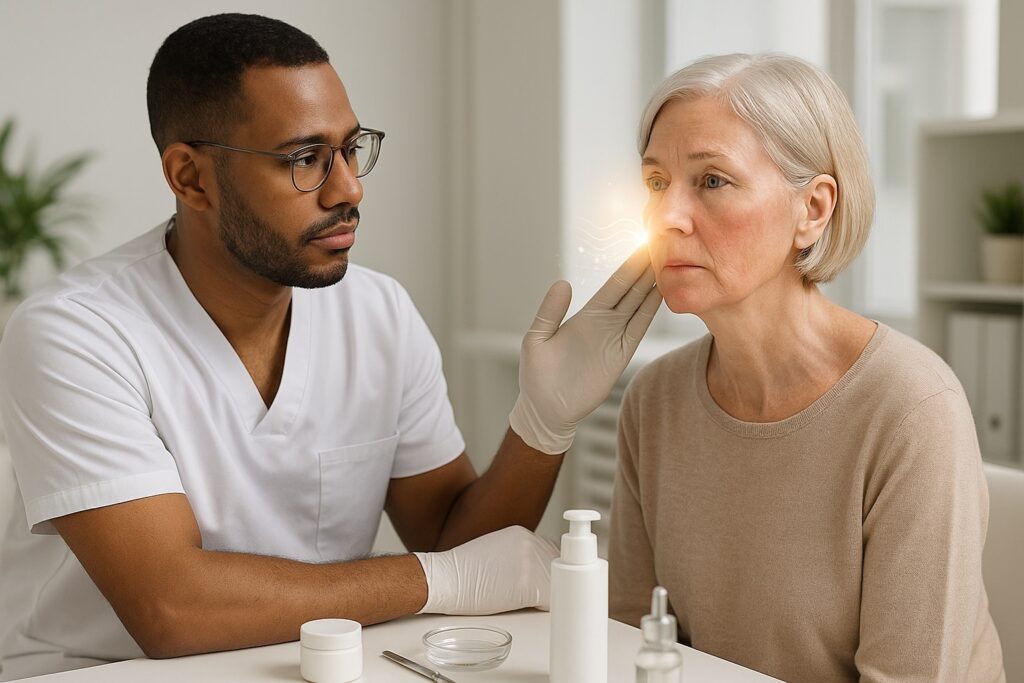
- Over-exfoliated skin is usually a skin barrier issue, not just a brief episode of irritation or dryness.
- Aesthetic clinics are seeing more reactive skin linked to layered active ingredients, frequent exfoliation, and overlap between home care and professional treatments.
- Common signs include stinging, redness, tightness, dehydration, flaking, and less predictable tolerance to treatments.
- “Skin burnout” can be a useful informal term, but it is not a medical diagnosis and should be understood as a pattern of barrier stress.
- For aesthetics professionals, understanding barrier health helps improve skin assessment, treatment timing, and patient education.
What over-exfoliated skin actually means
Over-exfoliated skin refers to skin that has been pushed beyond its ability to recover from repeated exfoliation, active ingredient use, or other ongoing irritation. In many cases, the underlying issue is a weakened skin barrier.
That matters in aesthetic settings because barrier integrity affects how skin behaves, how it feels, and how it responds to treatment. When the barrier is compromised, skin may become more reactive, less resilient, and harder to interpret during consultation or follow-up.
This is one reason many clinics are seeing more clients with skin that looks inflamed, feels sensitive, or does not respond as expected to otherwise routine services.
The role of the skin barrier
The outermost layer of the skin, the stratum corneum, helps retain moisture and limit the entry of external irritants. A healthy barrier supports balance. It allows normal skin renewal while still protecting the skin from unnecessary stress.
When that barrier is repeatedly challenged, the skin may lose water more easily and become less tolerant. In practical terms, that can mean more dryness, more stinging, more visible redness, and more variability in how the skin reacts.
Why barrier damage is different from simple dryness
Dry skin and barrier damage can overlap, but they are not identical.
Dryness may improve with routine moisturization. A compromised barrier often comes with a broader pattern, such as:
- Burning or stinging with products that were once well tolerated
- Redness that lingers
- Tightness even after moisturizing
- Flaking combined with sensitivity
- Increased reactivity to weather, cleansing, or active ingredients
For aesthetics professionals, this distinction is important. Skin that is merely dry may need supportive care. Skin with barrier disruption may also require a more cautious interpretation of treatment readiness.
Why clinics are seeing more barrier damage
The increase in over-exfoliated skin is not happening in isolation. It reflects a wider shift in how people use skin care.
Consumers now have easy access to high-strength actives, trend-driven routines, and a large volume of advice from social media, influencers, and product marketing. Many people are not using one strong product. They are combining several, often without a clear understanding of how cumulative irritation builds over time.
The cumulative effect of multi-active routines
A single exfoliating product may not create a major issue on its own. The problem often comes from stacking:
- Alpha hydroxy acids (AHAs)
- Beta hydroxy acids (BHAs)
- Retinoids
- Benzoyl peroxide
- Vitamin C formulas with low pH
- Physical scrubs
- At-home resurfacing tools or devices
Not all of these ingredients are exfoliants in the strict sense, but together they can increase irritation potential. The skin may tolerate one category reasonably well, yet struggle when several are used too often or without recovery time.
This “more is better” pattern is one of the clearest reasons barrier damage is becoming more visible in clinics.
When home care and in-clinic treatments overlap
Another common issue is overlap between aggressive home care and professional services. A client may arrive for a treatment after using acids, retinoids, scrubs, or other resurfacing products frequently at home.
Even when a treatment is considered low-downtime, baseline barrier stress can change how the skin responds. That does not automatically mean treatment is inappropriate, but it does mean the skin may not behave as expected.
For professionals, this is less about labeling skin as “sensitive” in a generic way and more about recognizing cumulative exposure.
How compromised skin tends to present in practice
Over-exfoliated skin does not always look dramatic. In many cases, the presentation is subtle at first. That is why it can be missed if the assessment focuses only on visible dryness or isolated redness.
Common signs of an over-exfoliated barrier
In aesthetic settings, a compromised barrier may show up as:
- Persistent or easily triggered redness
- Tightness, especially after cleansing
- Stinging or burning with products
- Flaking or rough texture
- Shiny yet dehydrated-looking skin
- Increased sensitivity to heat, friction, or common skin care products
- Breakout-like irritation that does not behave like typical acne
A barrier-disrupted client may also describe their skin as “suddenly sensitive” after introducing more actives or increasing product frequency.
Why transepidermal water loss matters
One of the clearest functional consequences of barrier disruption is increased transepidermal water loss, often abbreviated as TEWL. In simple terms, the skin loses moisture more easily.
That loss of water can create a cycle:
- The skin feels dry or tight
- The person adds more products, including more actives
- Sensitivity increases rather than improves
- The barrier becomes more reactive over time
This pattern helps explain why some clients appear both oily and dehydrated, or irritated despite having an extensive skin care routine.
Why response and recovery become less predictable
Compromised skin often reacts less consistently. A person who tolerated previous treatments well may now report more discomfort, prolonged redness, or uneven recovery.
That unpredictability matters in clinic settings because it affects:
- Treatment planning
- Timing
- Expectations around recovery
- Product recommendations
- Follow-up interpretation
The goal is not to create alarm. It is to recognize that baseline skin condition can change how a treatment is experienced and observed.
Why this matters before aesthetic treatments
Barrier health is not a minor detail in aesthetics. It influences both the immediate treatment experience and the broader quality of skin response.
Barrier status affects treatment tolerance
When skin is already stressed, it may be less tolerant of procedures that are normally considered manageable. The same treatment can feel very different on resilient skin versus compromised skin.
This is especially relevant in settings where clients are seeking visible improvement with little interruption to daily life. The popularity of low-downtime procedures does not remove the need for careful assessment.
Low-downtime does not mean low-consideration
A common misconception is that if a service has minimal downtime, it requires minimal preparation. In reality, skin barrier status still matters.
Even noninvasive or superficial services can be affected by:
- Recent overuse of actives
- Poor recovery between skin stressors
- Ongoing irritation from home care
- A mismatch between treatment goals and current skin condition
For professionals, this reinforces the value of evaluating the skin in context rather than assuming every client arrives with a stable baseline.
“Skin burnout” is useful shorthand, but not a diagnosis
The term “skin burnout” has gained traction because it describes a familiar pattern: skin that looks overworked, feels reactive, and seems less resilient than before.
That said, it is not a formal medical diagnosis.
Using the term can be helpful in educational or observational discussions, but professionals should understand its limits. It is best used as shorthand for cumulative barrier stress, not as a substitute for proper assessment or medical evaluation when needed.
Clear language matters in aesthetics. It supports better communication with clients, better charting, and better collaboration with supervising clinicians or referral partners.
What aesthetics professionals should pay attention to
As over-exfoliated skin becomes more common, strong skin assessment skills become even more valuable. In many cases, the clues are present before treatment begins.
Product history matters more than ever
A thorough product history can reveal patterns that are not obvious from visual assessment alone. Useful areas to review include:
- Frequency of acid use
- Retinoid use
- Physical exfoliation habits
- Recent peels or resurfacing services
- Use of multiple “active” serums in the same routine
- At-home devices or tools
- Whether irritation began after trying a trending routine or new launch
This kind of history helps explain why the skin may appear reactive even when the client believes they are following a “good” routine.
Watch for a mismatch between goals and skin capacity
Many clients are trying to achieve clearer, smoother, brighter skin as quickly as possible. That can lead to routines designed around constant correction rather than skin resilience.
A key professional skill is recognizing when the skin’s current condition does not match the intensity of the client’s goals or self-directed regimen. That awareness can support better education and better decision-making.
Know when to pause and refer
Persistent inflammation, worsening irritation, or symptoms that suggest dermatitis or another medical skin issue may require evaluation by a licensed medical professional or board-certified dermatologist.
Educational content can help professionals recognize patterns, but it should not replace medical judgment. In aesthetic practice, one of the most important skills is knowing when barrier stress looks like something more complex.
A more sustainable direction in skin care and aesthetics
The good news is that skin care culture is also beginning to shift. Alongside high-intensity routines, there is growing interest in simpler regimens, barrier support, and skin health over constant stimulation.
That shift is especially relevant for aesthetic professionals. Clients increasingly need guidance that is not trend-based, product-hyped, or overly aggressive. They need help understanding that more products do not always mean better skin.
For clinics and education providers, this creates an important opportunity: to teach skin behavior, not just treatment categories.
A stronger understanding of barrier function can improve:
- Intake and consultation quality
- Recognition of reactive skin patterns
- Communication about expectations
- Decision-making around timing and readiness
- Long-term client trust
In other words, over-exfoliated skin is not just a skin care trend. It is a practical clinical observation that is changing how aesthetic professionals evaluate skin every day.
Sources and references
- American Academy of Dermatology Association. Guidance on exfoliation, retinoids, and sensitive skin care.
- Elias PM. Stratum corneum defensive functions: an integrated view. Journal of Investigative Dermatology.
- National Library of Medicine. Overview of skin barrier function and transepidermal water loss.
FAQS
What is over-exfoliated skin?
Over-exfoliated skin is skin that has been exposed to more exfoliation or irritation than it can comfortably recover from. It often involves a weakened skin barrier, which can lead to redness, stinging, tightness, and increased sensitivity.
Is “skin burnout” a real medical condition?
No. “Skin burnout” is an informal term, not a formal diagnosis. It is commonly used to describe skin that appears reactive, stressed, or less resilient after repeated exposure to strong products or frequent exfoliation.
Can too many active ingredients damage the skin barrier?
They can contribute to barrier stress, especially when several active products are layered or used too often. The cumulative effect matters. Even well-known ingredients can become problematic when recovery time is limited.
Why does barrier damage matter before aesthetic treatments?
Barrier disruption can change how the skin tolerates treatment and how it recovers afterward. Skin that is already reactive may respond less predictably, even during procedures considered low-downtime.
How can professionals spot a possible barrier issue during intake?
Product history is often one of the biggest clues. Frequent use of acids, retinoids, scrubs, or multiple active serums can point to cumulative irritation, particularly when paired with symptoms like redness, burning, or unusual sensitivity.
Does over-exfoliated skin always look dry?
No. Some people have skin that looks shiny, congested, or oily while still showing signs of barrier stress. A compromised barrier does not always present as obvious flaking alone.
When should someone seek medical evaluation for skin irritation?
If redness, burning, rash-like changes, swelling, or discomfort persist or worsen, medical evaluation may be appropriate. Aesthetic education can support recognition, but persistent skin issues should be assessed by a qualified medical professional.
Related posts
Smoking and skin aging: what aesthetic professionals and patients should know
Skin longevity in modern aesthetics: why less is more
Chemical vs mechanical exfoliation: how over-exfoliation damages the skin barrier
Stay Updated
About de author
