
How to become a medical aesthetic assistant in the United States
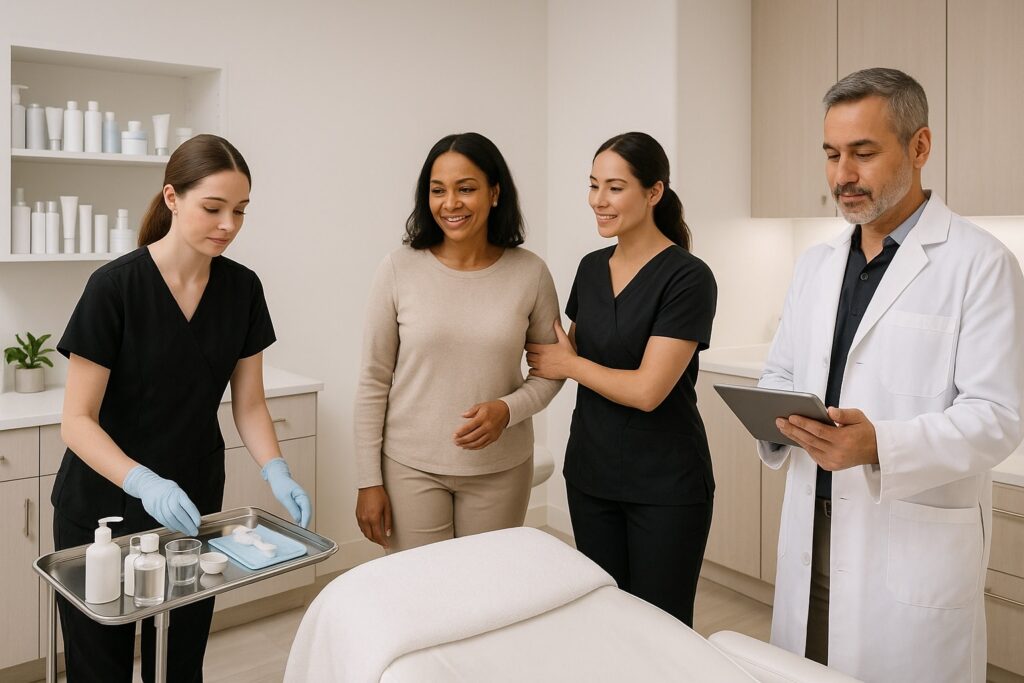
- A medical aesthetic assistant supports patient care, clinic flow, and treatment preparation in settings such as med spas, dermatology offices, and plastic surgery practices.
- In the US, this role is not defined the same way everywhere. Job duties, required credentials, and what you may legally do vary by state, employer, and professional license.
- The strongest candidates combine skin and treatment knowledge with communication skills, professionalism, attention to detail, and an understanding of clinical safety standards.
- A smart career path usually includes foundational education, aesthetics-specific training, supervised experience, and a clear understanding of scope of practice.
- If you want to work in medical aesthetics long term, focus on patient experience, compliance, and clinical readiness, not just treatment trends.
Medical aesthetics continues to expand across the United States, and clinics need more than licensed injectors and providers to deliver a consistent patient experience. They also need trained support staff who understand how a medical aesthetic practice works.
That is where the medical aesthetic assistant role comes in.
For people exploring careers in med spas, dermatology clinics, or cosmetic practices, this path can be appealing because it blends patient interaction, operational support, and exposure to clinical aesthetics. At the same time, it is a role that is often misunderstood.
In many US markets, “medical aesthetic assistant” is not a single standardized title. A clinic may use terms like aesthetic assistant, med spa assistant, medical assistant in aesthetics, patient care coordinator, or treatment room support staff. What matters most is not the title alone, but the actual job duties, the clinic environment, and whether those duties fall within state law and employer policy.
What a medical aesthetic assistant does
A medical aesthetic assistant helps the clinic run smoothly before, during, and after patient visits. The role usually supports licensed professionals rather than replacing them.
Depending on the setting, responsibilities may include:
- Preparing treatment rooms and supplies
- Supporting patient intake and visit flow
- Assisting with pre-appointment preparation
- Reinforcing general aftercare instructions provided by the clinician
- Helping maintain documentation and operational consistency
- Monitoring patient comfort and communicating concerns to the provider
- Supporting front-office coordination when needed
This is not simply a skincare retail role. In a medical aesthetics setting, assistants are often expected to understand how common aesthetic services fit into a broader clinical workflow.
How the title is used in the US
One reason people get confused about this career path is that clinics do not always label the role the same way.
You may see similar work performed by:
- Medical assistants in dermatology or cosmetic medicine
- Licensed estheticians working in physician-led practices
- Clinical support staff in med spas
- Patient coordinators with treatment-room responsibilities
Because of that, anyone researching this path should look beyond job titles and focus on three practical questions:
- What are the day-to-day responsibilities?
- What credentials does the employer require?
- What tasks are legally allowed in that state and setting?
Core responsibilities in a medical aesthetic clinic
The best medical aesthetic assistants combine patient-facing skills with clinic discipline. Their work usually supports efficiency, safety, and communication.
Before the appointment
Before a patient is seen, an assistant may help with:
- Room readiness and workflow organization
- Basic patient intake support
- Preparing the treatment area according to clinic standards
- Confirming that the patient understands next steps in the visit process
In a strong clinic, this part of the job is about consistency. Small errors in preparation, communication, or documentation can create delays and confusion.
During and after the visit
During the visit, support may include helping the provider maintain flow, observing patient comfort, and assisting with non-provider tasks that fall within policy and scope.
After the visit, an assistant may help by:
- Reinforcing general instructions already given by the provider
- Supporting product or recovery guidance according to clinic protocol
- Scheduling follow-up steps
- Helping ensure the patient leaves with realistic expectations and a clear understanding of next actions
The exact boundary of the role matters. A medical aesthetic assistant should not assume responsibilities that require a professional license, independent clinical judgment, or provider-level decision-making.
Skills that matter most in this role
Clinics usually hire for more than technical interest. They want people who can function well in a patient-centered, highly organized environment.
Clinical awareness without overstepping scope
A strong assistant understands the basics of:
- Skin health and skin barrier considerations
- Common aesthetic treatments and why patients seek them
- Contraindications awareness at a general level
- Clean technique, sanitation, and infection control principles
- The importance of documentation and consistent protocols
That does not mean acting as the treating clinician. It means understanding the environment well enough to support it responsibly.
Communication and expectation-setting
Medical aesthetics is a people-centered field. Patients often arrive with anxiety, high expectations, or limited understanding of how treatments work.
An effective assistant knows how to communicate in a way that is:
- Clear
- Calm
- Professional
- Empathetic
- Consistent with the provider’s guidance
This skill matters because patient satisfaction depends not only on the treatment itself, but also on how informed and supported the patient feels throughout the process.
Organization, detail, and professionalism
Employers consistently value candidates who are dependable and detail-oriented.
That includes:
- Showing up prepared
- Following clinic systems
- Respecting patient privacy
- Keeping work areas organized
- Escalating concerns appropriately
- Understanding that aesthetics is still a healthcare-adjacent environment with real standards
In practice, reliability often matters just as much as enthusiasm for the industry.
How to become a medical aesthetic assistant
There is no single national path that applies to everyone in the United States, but most successful candidates build their careers in stages.
Start with the role you actually want
First, identify the kind of clinic environment you want to work in.
Medical aesthetic assistants may work in:
- Med spas
- Dermatology offices
- Plastic surgery practices
- Cosmetic medicine clinics
- Physician-led aesthetic practices
A front-desk-heavy support role, a clinical assistant role, and a licensed esthetician role can look very different from one another. Knowing the setting helps you choose the right training path.
Build a foundation in patient care or esthetics
Many people enter this field from one of these starting points:
- Esthetics education
- Medical assisting education
- Dermatology or cosmetic office experience
- Spa or patient service roles with a desire to move into clinical aesthetics
A foundation in skin science, patient communication, and professional standards is valuable. Depending on the role, some employers may prefer or require formal medical assisting education, while others may hire licensed estheticians or train support staff internally for non-licensed duties.
Learn the medical aesthetics environment
To work effectively in this space, you need more than basic skincare knowledge.
Useful training often covers:
- Overview of common aesthetic treatments
- Skin physiology and treatment considerations
- Patient preparation and post-visit support
- Infection control principles
- Documentation habits
- Ethics and professional boundaries
- Scope-of-practice awareness
This kind of education helps candidates understand how treatments fit into a real clinic workflow without crossing into provider-level instruction.
Get supervised exposure to real-world workflows
Experience matters. Even strong coursework should be paired with observation, structured practice, or supervised clinic exposure when available.
That is often where candidates learn how to:
- Communicate with patients under pressure
- Follow protocols consistently
- Work as part of a provider-led team
- Handle the pace of an aesthetic practice
- Protect the patient experience while staying organized
Employers notice candidates who understand the rhythm of a clinic, not just the terminology.
Understand legal and employer-specific limits
This step is essential in the US.
There is no universal national license called “medical aesthetic assistant.” What you can do depends on factors such as:
- State law
- Employer policy
- Physician oversight
- Your underlying license or certification, if any
- Whether the task is considered clinical, cosmetic, administrative, or provider-only
Anyone preparing for this field should understand that scope of practice is not a minor detail. It shapes the role.
Do you need a license to work as a medical aesthetic assistant?
Sometimes yes, sometimes no. It depends on the job.
That is one of the most important realities to understand before entering medical aesthetics in the United States.
Some roles are primarily administrative or supportive and may not require a professional license. Other roles involve duties that may require one, such as functioning as a licensed esthetician, a medical assistant under permitted supervision, or another regulated professional.
A good rule of thumb is this: do not assume that a job title tells you what is legally allowed. Review the actual responsibilities, the credentials expected by the employer, and the laws that apply in that state.
What employers look for when hiring
If you want to stand out in this job market, focus on being employable in a clinical environment, not just enthusiastic about aesthetics.
Most employers value:
- Professional communication
- Strong patient service habits
- Comfort with structure and protocols
- Attention to cleanliness and organization
- Discretion and professionalism
- Ability to work on a team
- Interest in continuing education
- Clear understanding of role boundaries
Many clinics can teach their systems. What they often cannot teach quickly is maturity, consistency, and judgment.
Common mistakes when entering this field
People new to medical aesthetics often make avoidable career mistakes. Knowing them early can save time and frustration.
Treating the role like a basic skincare job
A medical aesthetics setting is not the same as a retail beauty environment. Clinical workflows, compliance expectations, and patient communication standards are typically much higher.
Focusing only on trendy treatments
Devices, injectables, and social media trends can attract attention, but employers usually prioritize fundamentals first. Skin knowledge, safety awareness, professionalism, and workflow discipline matter more than hype.
Ignoring scope of practice
One of the fastest ways to create problems in a clinic is to blur the line between support and treatment authority. Respecting scope protects patients, providers, and your career.
Underestimating communication
Many people think the role is mostly technical. In reality, the ability to explain processes clearly, stay calm, and support realistic expectations is a major part of success.
Choosing training based on marketing alone
Not all education prepares you for real clinical work. Look for training that builds understanding, judgment, and practical readiness, not just buzzwords.
Where this career can lead
For the right person, this role can be a meaningful entry point into the medical aesthetics field.
Possible career directions include:
- Long-term clinic support in med spas or cosmetic practices
- Dermatology or plastic surgery office roles
- Patient coordination and treatment planning support
- Expanded responsibilities in operations, education, or practice management
- Further education in esthetics, medical assisting, or other regulated healthcare pathways
Some professionals stay in support roles and become indispensable members of a high-performing team. Others use the role as a stepping stone into broader aesthetic or clinical careers.
Is medical aesthetic assistant a good career path?
It can be, especially for people who enjoy patient interaction, structured environments, and the blend of beauty, skin science, and clinical professionalism.
It may be a strong fit if you want:
- Exposure to aesthetic medicine without immediately becoming a treating provider
- A role that combines service, workflow, and patient care support
- A growing field with different types of clinic settings
- A pathway that can develop into more specialized opportunities over time
It may be less suitable for people looking for a highly independent treatment role without the licensing, supervision, or foundational training that those responsibilities often require.
How to choose training for this field
If your goal is to work in a medical aesthetic clinic, choose education that reflects how clinics actually operate.
Look for programs or coursework that emphasize:
- Skin and treatment literacy
- Patient communication
- Professional standards
- Infection control awareness
- Scope and legal boundaries
- Real clinic workflow
- Ethical, patient-centered decision-making
That kind of preparation is more useful than training that focuses only on product language or trend-driven content.
A credible training path should help you understand the setting, speak the language of the industry, and build confidence without encouraging you to work outside your qualifications.
Sources and references
- U.S. Bureau of Labor Statistics. Medical assistants. Occupational Outlook Handbook.
- American Association of Medical Assistants. Medical assisting scope of practice and state law guidance.
Explore training for medical aesthetics support roles
If you want to build a stronger foundation for working in a medical aesthetics clinic, Eduasthetics offers education designed to help professionals understand skin science, clinic workflows, patient communication, and the realities of aesthetic practice in the US market.
FAQS
What is a medical aesthetic assistant?
A medical aesthetic assistant is a support professional who helps a medical aesthetics clinic with patient flow, preparation, communication, and operational consistency. The role usually supports licensed providers rather than functioning independently.
Is a medical aesthetic assistant the same as a medical assistant?
Not always. Some clinics may use overlapping duties or similar titles, but the role can vary widely. In some practices, the position is closer to a traditional medical assistant role. In others, it may blend administrative support, aesthetics knowledge, and patient coordination.
Can an esthetician work in a medical aesthetic clinic?
In many cases, yes, but duties depend on state law, the employer’s model, and the esthetician’s license. Working in a medical setting does not automatically expand scope of practice.
Do you need certification to become a medical aesthetic assistant?
There is no single universal US certification for this exact title. Employers may prefer different backgrounds depending on the role, such as esthetics education, medical assisting education, or clinic-specific training.
What skills are most important for this job?
The most important skills are communication, professionalism, attention to detail, patient-centered service, organizational ability, and a practical understanding of how aesthetic clinics operate.
Where can medical aesthetic assistants work?
They may work in med spas, dermatology offices, plastic surgery practices, cosmetic clinics, and other physician-led aesthetic settings, depending on the employer and the candidate’s background.
Is this a good entry point into medical aesthetics?
For many people, yes. It can be a practical way to enter the field, understand clinic workflows, and build experience before pursuing more specialized roles or further education.
Related posts
Infection control in medical aesthetic clinics: essential safety protocols for estheticians and assistants
How to build a resume for medical aesthetic assistant jobs in the U.S.
How to handle difficult patients in a medical aesthetics clinic
Stay Updated
About de author
