
Inflammaging in aesthetic practice: what estheticians and medical assistants should know
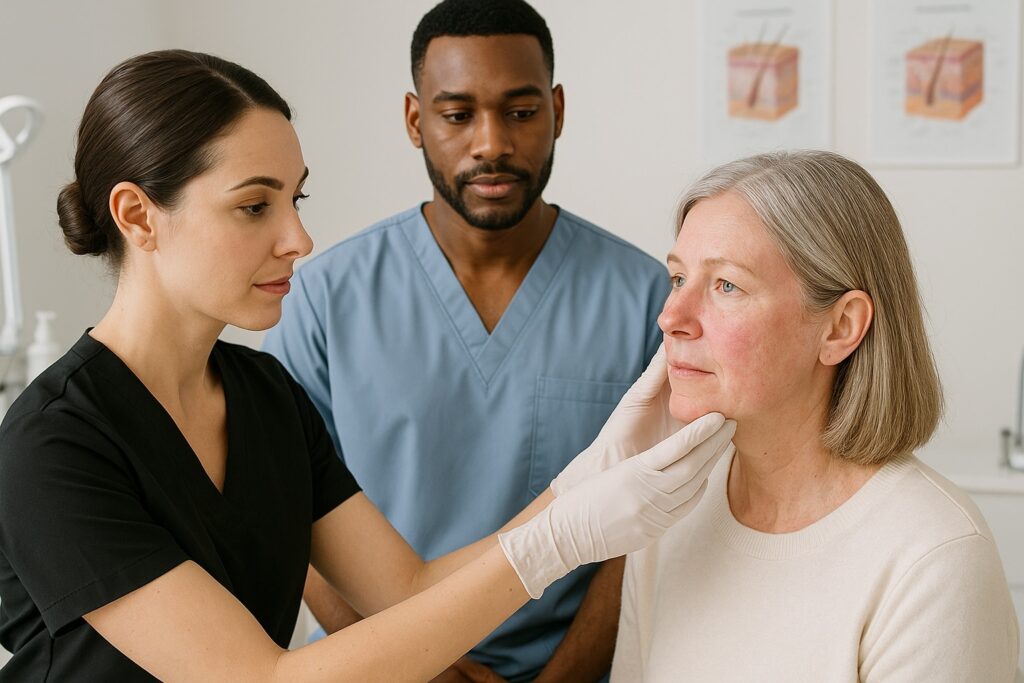
- Inflammaging refers to ongoing, low-grade inflammation that can gradually weaken skin quality, increase sensitivity, and contribute to visible aging.
- In aesthetic settings, it often appears as persistent redness, reactivity, dullness, uneven tone, or skin that does not recover well after products or procedures.
- Common contributors include UV exposure, pollution, barrier disruption, overuse of active ingredients, and lifestyle-related stressors.
- Over-treating already reactive skin can increase irritation, delay recovery, and raise the risk of post-inflammatory hyperpigmentation.
- A barrier-first, lower-intensity approach is often more supportive than aggressive treatment plans when signs of chronic inflammation are present.
Skin aging is not driven by time alone. In many patients, visible changes in skin quality are also shaped by ongoing inflammation that stays below the surface and persists over time. This process is often called inflammaging.
For estheticians and medical assistants in aesthetic practice, understanding inflammaging can improve observation, treatment planning support, patient education, and long-term outcome awareness. It also helps explain why some patients present with redness, sensitivity, uneven tone, and poor tolerance to treatment even when there is no obvious acute skin issue.
This article explains what inflammaging is, how it may show up in practice, what can make it worse, and how aesthetic professionals can respond in a more thoughtful, skin-respecting way.
What inflammaging means in aesthetic practice
Inflammaging is a term used to describe chronic, low-grade inflammation associated with aging. Unlike acute inflammation, which is part of a short-term healing response, inflammaging is more subtle and persistent. It may not be dramatic enough to look like an obvious flare, but it can still affect skin function over time.
In the context of aesthetic care, inflammaging matters because skin does not need to look severely inflamed to behave like compromised skin. A patient may simply seem “sensitive,” “reactive,” or “hard to treat,” when the deeper issue is that the skin is under ongoing stress.
How chronic inflammation affects skin quality over time
When inflammatory pathways stay active for too long, skin may become less resilient. Over time, that can contribute to:
- Reduced skin comfort and increased reactivity
- A weaker barrier and higher water loss
- Rougher texture and dullness
- Uneven pigmentation
- Earlier or more noticeable fine lines
- Slower recovery after treatment
- Greater likelihood of irritation after active products or procedures
This does not mean every patient with redness or sensitivity has inflammaging. It does mean that persistent, low-grade inflammation should be part of the clinical conversation when the skin repeatedly struggles to maintain balance.
Why this matters in a medical aesthetics setting
In a busy practice, it is easy to focus on the visible concern a patient wants to improve, such as pigmentation, fine lines, acne marks, or texture. But if the skin is already inflamed or barrier-impaired, even well-intended treatment plans may be poorly tolerated.
Recognizing possible inflammaging can help professionals:
- Avoid over-treating compromised skin
- Set more realistic expectations
- Support more appropriate pacing between visits
- Reduce the chance of repeated irritation
- Improve consistency and patient confidence over time
What contributes to skin inflammaging
Inflammaging is usually not caused by one factor alone. It tends to develop through repeated exposure to internal and external stressors.
Environmental triggers that keep skin under stress
Two of the most important contributors are UV exposure and pollution. Repeated sun exposure is a major driver of skin aging and inflammatory damage. Pollution can also increase oxidative stress and worsen skin reactivity, especially in urban environments.
Other external contributors may include:
- Heat exposure
- Dry climates
- Wind and environmental friction
- Harsh cleansing habits
- Frequent exfoliation
- Repeated irritation from products or devices
Barrier dysfunction and product overuse
A damaged skin barrier can make almost everything feel more irritating. When the barrier is not functioning well, skin becomes more vulnerable to inflammatory triggers, moisture loss, and visible sensitivity.
Common practice-related causes include:
- Using multiple active ingredients at the same time
- Overusing acids, retinoids, or exfoliating products
- Introducing too many new products at once
- Repeating procedures before the skin has fully recovered
- Prioritizing intensity over tolerance
In some patients, the problem is not a single strong product, but the cumulative effect of too many “helpful” products layered together.
Lifestyle and systemic factors
Although aesthetic professionals are not diagnosing systemic conditions, it is still useful to understand that skin inflammation can also be influenced by broader health and lifestyle patterns.
These may include:
- Poor sleep
- Ongoing stress
- Smoking
- Diet patterns that may contribute to inflammation
- Hormonal changes
- Chronic health conditions that affect skin resilience
This broader perspective supports better patient education without crossing into personalized medical advice.
How to recognize possible inflammaging in practice
Inflammaging often shows up as a pattern rather than one isolated sign. The key is noticing skin that seems chronically unsettled.
Visible signs that may raise concern
Possible signs include:
- Persistent low-level redness
- Uneven or blotchy tone
- Dull-looking skin
- Fine lines that appear earlier than expected
- Recurrent dryness or flaking
- Skin that looks fragile or easily irritated
- Lingering discoloration after minor inflammation
These signs are not unique to inflammaging, but they can suggest that the skin is under ongoing inflammatory stress.
What patients may report
Patients may describe the skin as:
- Sensitive “all the time”
- Easily irritated by products they used to tolerate
- Prone to burning, stinging, or tightness
- Slow to calm down after treatment
- Frequently reactive for no clear reason
This patient-reported experience is often just as important as what is visible on the surface.
Patterns that suggest the skin is not recovering well
One of the most useful clues in practice is recovery behavior. Skin affected by chronic inflammation may:
- Stay red longer than expected
- Struggle after mild treatments
- Become reactive with small protocol changes
- Show repeated irritation after active home care
- Never seem to return to a calm baseline
That pattern matters because it may signal that the skin needs a slower, more supportive approach.
When the presentation may need clinical evaluation
Some signs that resemble inflammaging may overlap with other concerns such as rosacea, contact dermatitis, eczema, acne-related inflammation, allergy, or post-procedure complications. If symptoms are persistent, worsening, unusually painful, or difficult to interpret, the patient may need assessment by an appropriately licensed clinician.
For estheticians and medical assistants, recognizing limits is part of safe practice.
Common mistakes that can make inflammaging worse
Aesthetic professionals often see patients who want quick improvement. The challenge is that skin under chronic inflammatory stress usually responds poorly to overly aggressive care.
Over-treating reactive skin
When skin already shows signs of sensitivity, increasing treatment intensity can backfire. More procedures, more actives, and more frequent exfoliation do not necessarily produce better results. In some cases, they extend irritation and slow visible progress.
Stacking treatments too closely together
Skin needs time to recover. When procedures or strong home-care adjustments are introduced too close together, the skin may remain in a constant state of stress rather than moving through a healthy repair cycle.
Using too many active ingredients at once
It is common for patients to arrive using a long list of products with acids, retinoids, brightening agents, exfoliants, and other high-activity ingredients. Even if each product seems reasonable on its own, the combined effect may overwhelm the skin.
Ignoring early warning signs
Subtle redness, new product intolerance, or prolonged post-treatment sensitivity are easy to dismiss. But these early signs often appear before more obvious complications. Responding early can help prevent escalation.
Overlooking pigmentation risk
Chronic inflammation can increase the risk of post-inflammatory hyperpigmentation, especially in patients who are already prone to pigment changes. This makes a calm, measured treatment strategy particularly important when uneven tone is part of the concern.
A more supportive approach to chronic skin inflammation
In aesthetic practice, the goal is not to “treat inflammaging” as a diagnosis. The goal is to recognize when skin may be inflammation-prone and respond with care that supports tolerance, recovery, and long-term skin health.
Prioritize barrier support
A barrier-first approach often makes sense when skin appears reactive, sensitized, or slow to recover. That may mean shifting focus away from rapid correction and toward restoring comfort, reducing avoidable triggers, and supporting the skin’s protective function.
In practical terms, that often involves:
- Keeping protocols simple
- Avoiding unnecessary irritation
- Respecting recovery time
- Reinforcing consistent, non-aggressive home care
Simplify the treatment plan
When the skin is inflamed, simpler is usually better. A lower-intensity plan can be more productive than repeatedly pushing the skin past its tolerance threshold.
That may include:
- Fewer changes at one time
- More conservative treatment pacing
- Careful attention to skin response between visits
- Reassessment before increasing intensity
This kind of restraint is not a weakness in care. It is often a sign of stronger clinical judgment.
Educate patients about recovery and expectations
Many patients equate stronger sensations with better results. That belief can make them more likely to overuse active products at home or seek more aggressive treatment than their skin can comfortably handle.
Clear education helps patients understand that:
- Ongoing irritation is not a sign of progress
- A calmer barrier can improve long-term outcomes
- Consistency often matters more than intensity
- Recovery time is part of responsible aesthetic care
Track response over time
Documenting how the skin reacts over multiple visits can be very useful. Patterns such as delayed redness, recurring sensitivity, or poor tolerance to standard protocols may help the team adjust expectations and make better decisions over time.
The role of estheticians and medical assistants
Inflammaging awareness is especially relevant for professionals who spend time observing skin closely and communicating with patients throughout the care journey.
What estheticians can contribute
Estheticians can play an important educational and observational role by:
- Noticing early signs of chronic irritation
- Identifying barriers to tolerance, such as product overload
- Supporting skin-friendly treatment pacing
- Reinforcing home-care consistency
- Encouraging realistic expectations around skin recovery
What medical assistants can contribute
In medical aesthetics settings, medical assistants may help support patient care through observation, documentation, communication, and follow-up within the scope allowed by their role, supervision model, and applicable regulations.
That may include:
- Flagging patterns of poor tolerance
- Noting patient-reported sensitivity or lingering irritation
- Supporting continuity between visits
- Communicating concerns to the supervising clinician
Why scope and escalation matter
Inflammaging is a useful concept, but it should not replace proper clinical evaluation when skin findings are unclear or persistent. When symptoms suggest a medical skin condition or an unexpected reaction, escalation is appropriate.
A strong aesthetic team knows when to support, when to slow down, and when to refer concerns for clinical assessment.
Why this matters for patient outcomes and practice quality
Chronic inflammation affects more than skin appearance. It can also influence the patient experience and the consistency of results.
When inflammaging is overlooked, practices may see:
- More irritation complaints
- Lower treatment tolerance
- Slower visible improvement
- Greater dissatisfaction with otherwise reasonable plans
- Reduced patient trust and retention
When it is recognized early, the team is better positioned to support a more sustainable path. That usually means fewer setbacks, better communication, and a treatment journey that feels more respectful of the patient’s skin.
Build a stronger foundation in skin science
If you want to deepen your understanding of skin aging, barrier health, and evidence-informed aesthetic practice, explore Eduasthetics resources designed for professionals who want clearer clinical reasoning and safer decision-making in aesthetic settings.
Sources and references
- National Institute on Aging. Inflammation, aging, and age-related disease.
- Franceschi C, et al. Inflammaging: a new immune-metabolic viewpoint for age-related diseases. Nature Reviews Endocrinology.
- American Academy of Dermatology Association. Guidance on sensitive skin, irritation, and sun protection.
FAQS
Is inflammaging the same as sensitive skin?
Not exactly. Sensitive skin describes how skin reacts, while inflammaging refers to chronic low-grade inflammation associated with aging and ongoing stress. Sensitive skin can be one sign that inflammaging may be present, but the two terms are not interchangeable.
Can inflammaging look like rosacea or dermatitis?
Yes. Persistent redness, reactivity, and discomfort can overlap with several skin concerns. That is why aesthetic professionals should avoid assuming the cause and should escalate concerns when the presentation is unclear or persistent.
Does stronger treatment fix inflammaging faster?
Not usually. Skin showing signs of chronic inflammation often does better with a measured, lower-irritation approach. Pushing intensity too quickly may worsen sensitivity and delay visible progress.
What is the biggest mistake in inflammation-prone skin?
A common mistake is trying to solve chronic irritation with more aggressive treatment. Stacking procedures, over-exfoliating, or using too many active products can keep the skin in a cycle of reactivity.
Why is post-inflammatory hyperpigmentation a concern?
Any ongoing inflammation can increase the risk of lingering pigment changes in some patients. This is one reason why minimizing avoidable irritation is so important in aesthetic care.
What should estheticians and medical assistants focus on first?
Observation, barrier awareness, treatment tolerance, and clear patient education are good starting points. Recognizing patterns early is often more valuable than reacting after the skin has already become significantly irritated.
Related posts
Smoking and skin aging: what aesthetic professionals and patients should know
Skin longevity in modern aesthetics: why less is more
Why over-exfoliated skin is becoming more common in aesthetic clinics
Stay Updated
About de author
