
Medical aesthetic assistant training: why clinical experience matters
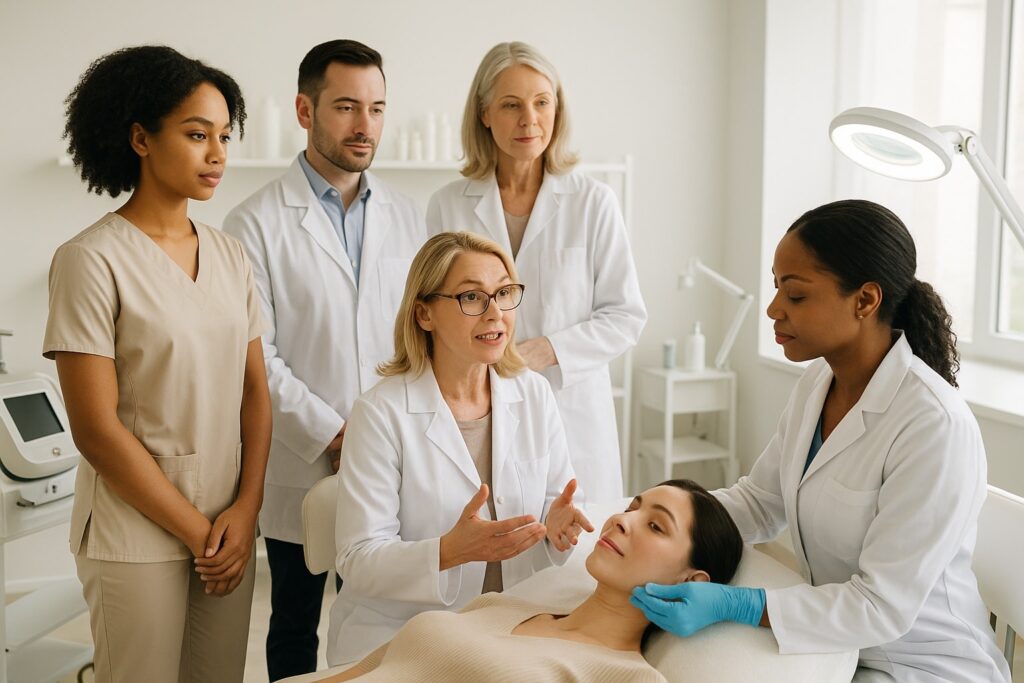
- Clinical exposure can help bridge the gap between classroom knowledge and the day-to-day reality of a med spa or aesthetic clinic.
- The strongest medical aesthetic assistant training programs often combine foundational education with observation, workflow familiarity, and professional context.
- Clinical experience does not automatically authorize someone to perform treatments; scope of practice depends on licensure, employer policies, supervision, and state law.
- When comparing programs, look beyond course topics and evaluate how well the training supports real-world readiness, patient-facing professionalism, and safety awareness.
- In the United States, role expectations can vary widely, so learners should choose training that emphasizes both industry relevance and clear role boundaries.
Interest in medical aesthetic assistant training continues to grow as non-surgical aesthetics expands across med spas, cosmetic dermatology practices, plastic surgery offices, and other advanced aesthetic settings. Many learners are drawn to the field because it blends patient experience, operational support, and exposure to modern aesthetic technology.
But curriculum alone does not tell the whole story.
For many people entering this space, one of the most important differences between programs is whether the education connects meaningfully to real clinical environments. That is where clinical exposure becomes especially valuable.
A strong training experience should not only explain terminology, treatment categories, and clinic operations. It should also help learners understand how an aesthetic practice actually functions, how teams coordinate care, and how professionalism shows up in everyday workflow.
What medical aesthetic assistant training is designed to support
Medical aesthetic assistant training typically aims to prepare learners for support-oriented roles in aesthetic settings. Depending on the program and the employment environment, this may include learning about:
- Patient intake and coordination
- Treatment room preparation and turnover
- Documentation support and workflow organization
- Professional communication in a clinical setting
- Safety-minded operations
- Device awareness at a general educational level
- Clinic systems, scheduling, and patient experience standards
In the US market, job titles and expectations are not always standardized. One employer may use “medical aesthetic assistant,” while another may use titles related to patient coordination, clinical support, front-office operations, or med spa assistance. That makes program selection even more important.
A course may sound impressive on paper, but if it does not help learners understand how these responsibilities fit into a real practice environment, it may leave important gaps.
Why clinical experience matters in aesthetic training
Clinical experience matters because aesthetics is not just a theory-based field. It is a workflow-driven, patient-facing environment where timing, communication, professionalism, and safety culture all shape the workday.
Even when a learner is not independently performing clinical services, exposure to the setting itself can be highly educational.
Clinical exposure gives theory real-world context
Classroom learning can explain concepts. Clinical exposure helps learners see how those concepts connect in practice.
For example, a learner may understand the idea of treatment-room preparation from a course module. But seeing how rooms are organized, how teams move between appointments, and how protocols are followed in a functioning clinic gives that knowledge a much clearer frame of reference.
This kind of context can improve understanding in ways that are difficult to replicate through slides, readings, or recorded lectures alone.
It helps learners understand pace, workflow, and team structure
Aesthetic practices often operate on tightly managed schedules. Patients may move through consultations, pre-treatment preparation, follow-up communication, and administrative touchpoints quickly. Clinical exposure can help learners understand:
- How the front office and clinical team interact
- How patient flow affects operations
- Why timing and organization matter
- How professionalism supports both efficiency and patient comfort
- What a safety-focused environment looks like in practice
These are not small details. In many settings, they are central to whether someone feels prepared when entering the workforce.
It supports professional judgment and role awareness
One of the most useful aspects of supervised observation is that it can help learners recognize professional boundaries.
That includes awareness of:
- What falls within a support role
- What requires licensed oversight
- When escalation to a supervisor matters
- How clinics maintain structure, documentation, and accountability
- Why protocols exist and how they guide team behavior
This kind of judgment is especially important in medical aesthetics, where the environment may feel fast-moving and highly visual, but still requires careful adherence to role limitations and organizational standards.
Theory vs. clinical exposure: why the difference matters
Theory and clinical exposure should not be treated as interchangeable.
Theory provides the foundation. It may cover terminology, treatment categories, patient flow concepts, infection control principles, professionalism, documentation basics, and general clinic operations.
Clinical exposure, by contrast, helps learners observe how those ideas show up in a real setting.
What theory does well
Theory-based learning can help learners:
- Build vocabulary and industry familiarity
- Understand common aesthetic services at a high level
- Learn the basics of clinic organization
- Develop awareness of patient communication standards
- Explore career pathways before entering a practice environment
This foundation matters. Without it, clinical observation may feel fragmented or difficult to follow.
What theory alone may not fully provide
A classroom-only format may not fully prepare learners for:
- The pace of patient-facing environments
- Team communication in active clinic settings
- The operational rhythm of treatment days
- The practical side of room turnover and coordination
- The difference between learning a concept and applying it responsibly in context
That does not mean every learner needs the same type of hands-on component. It means that programs with some form of real-world exposure often offer a more complete picture of the field.
What “clinical experience” can mean in this context
Not every program uses the same model, and not every educational experience involves direct participation in patient care.
In medical aesthetic assistant training, clinical exposure may include:
Observation-based learning
This may involve structured observation in an aesthetic clinic, med spa, or supervised medical environment. Learners can gain insight into workflow, communication, room setup, and patient coordination without crossing into independent clinical activity.
Externship or practice-based exposure
Some programs include externship-style components or other supervised educational experiences intended to connect the curriculum to real-world operations. The quality and depth of these experiences can vary significantly.
Workflow and systems familiarity
Even limited exposure to scheduling systems, treatment-room organization, patient flow, and team communication can help learners understand what the role actually requires.
The key point is not whether a program uses a specific label. The key point is whether it meaningfully prepares learners for professional reality.
What employers may value in job-ready candidates
No training program can guarantee employment. Hiring depends on the employer, the role, local market conditions, and the candidate’s background.
Still, many employers are likely to value signs of practical readiness, especially in patient-facing aesthetic environments.
That can include:
- Familiarity with clinical or med spa workflow
- Professional communication skills
- Understanding of patient experience standards
- Organized, safety-aware habits
- Comfort working within team structure
- Awareness of role boundaries and supervision
A candidate who has only studied the field in theory may still be qualified for entry-level consideration. But a candidate who also understands the pace and expectations of a real clinic may feel more prepared during interviews, onboarding, and early employment.
Clinical experience does not equal authorization to perform treatments
This is one of the most important points in the article.
Clinical exposure, observation, or externship experience does not automatically authorize someone to perform aesthetic treatments or medical duties independently.
In the United States, responsibilities may depend on several factors, including:
- State law and regulations
- Licensure, certification, or credentials where applicable
- Employer policies
- Supervising provider requirements
- The specific setting and role description
Because scope of practice varies, learners should avoid assuming that exposure to a procedure or device means they are permitted to perform it.
This distinction protects both the learner and the patient. A reputable training program should communicate that clearly.
What to look for in a medical aesthetic assistant training program
Choosing a program should involve more than comparing price or course length. The best fit is usually the one that aligns with your learning goals, offers realistic industry preparation, and clearly explains what the training does and does not provide.
A curriculum that reflects current aesthetic practice
Look for education that feels relevant to today’s market, including modern clinic operations, patient communication, safety-minded workflow, and general awareness of aesthetic technologies and services.
A dated or overly generic curriculum may not prepare learners for the expectations of contemporary med spa and aesthetic practice settings.
Meaningful clinical exposure or observation opportunities
Not every learner needs the same training format, but practical exposure is worth evaluating carefully.
Look for clarity around whether the program includes:
- Observation in a real practice setting
- Externship-style learning
- Workflow exposure
- Educational interaction with clinical environments
- Structured supervision or guided observation
The goal is not to find a program that makes unrealistic promises. It is to find one that helps connect education to professional reality.
Faculty with relevant field experience
Programs are often stronger when they are taught by instructors who understand clinical workflow, patient-facing operations, and the expectations of aesthetic environments.
Experienced faculty can often provide nuance that purely academic instruction may miss, especially around professionalism, communication, and role clarity.
Clear communication about scope and expectations
A trustworthy program should explain what the training is meant to support and what it does not authorize.
That includes transparency around:
- Whether the program is educational only
- Whether it includes observation or externship components
- How it approaches role boundaries
- Whether state-specific legal or licensing issues may affect employment pathways
This kind of clarity is a sign of responsible educational design.
Who may benefit most from this type of training
Medical aesthetic assistant training may be a strong fit for people who are interested in the aesthetic field from an operational, patient support, or clinic-readiness perspective.
This can include:
- Career changers exploring med spa or aesthetic clinic roles
- Administrative professionals moving into aesthetic environments
- Entry-level learners seeking structured exposure to the field
- Individuals who want to understand clinic workflow before pursuing a more advanced path
For many learners, the value is not only in the course content itself. It is in gaining a realistic sense of the workplace and understanding whether the environment is a good long-term fit.
Why this matters as aesthetic education evolves
As the aesthetics industry grows, expectations around training are becoming more practical. Learners are not just looking for information. They are looking for education that feels connected to actual work settings.
That shift matters.
In a field shaped by patient experience, team coordination, technology, and regulation, readiness is not built through theory alone. It is built through context, observation, judgment, and a clear understanding of professional boundaries.
That is why clinical experience matters in medical aesthetic assistant training. It helps learners move from abstract knowledge to informed awareness of how aesthetic practices operate in the real world.
Explore training with real-world relevance
If you are comparing educational pathways in aesthetics, look for training that goes beyond theory and helps you understand how professional environments actually work. Eduasthetics offers education designed to support informed learning, industry awareness, and practical readiness.
Sources and references
- U.S. Bureau of Labor Statistics. Occupational Outlook Handbook: Medical Assistants.
- American Association of Medical Assistants. Medical assisting scope of practice and state law basics.
- U.S. Food and Drug Administration. General information on cosmetic products, procedures, and medical devices.
FAQS
Is clinical experience required in medical aesthetic assistant training?
Not always. Programs vary widely. Some are classroom-based, while others include observation, externship models, or other forms of real-world exposure. Whether it is required depends on the program, but many learners consider it a valuable feature.
Can clinical observation help with job readiness?
It may. Observation can help learners understand workflow, team structure, patient communication, and clinic expectations. While it does not guarantee employment, it can support stronger professional awareness.
Does clinical exposure allow someone to perform treatments independently?
No. Observation or training exposure does not automatically grant authority to perform services. What someone may do in a professional setting depends on state law, licensure, employer requirements, and supervision.
What is the difference between a classroom-only program and one with clinical exposure?
A classroom-only program focuses on concepts and foundational knowledge. A program with clinical exposure may also help learners understand how those concepts function in an actual aesthetic practice.
What should I ask when comparing medical aesthetic assistant programs?
Focus on practical issues: whether the curriculum is current, whether there is meaningful clinical exposure, who teaches the course, how professional readiness is addressed, and how clearly the program explains role limitations.
Are medical aesthetic assistant roles the same in every state?
No. Titles, responsibilities, supervision requirements, and scope-related expectations may differ by employer and state. That is why learners should avoid broad assumptions and seek training that emphasizes role clarity.
Related posts
Infection control in medical aesthetic clinics: essential safety protocols for estheticians and assistants
How to build a resume for medical aesthetic assistant jobs in the U.S.
How to handle difficult patients in a medical aesthetics clinic
Stay Updated
About de author
