
Premature skin aging and nutrition: foods that may be worth limiting
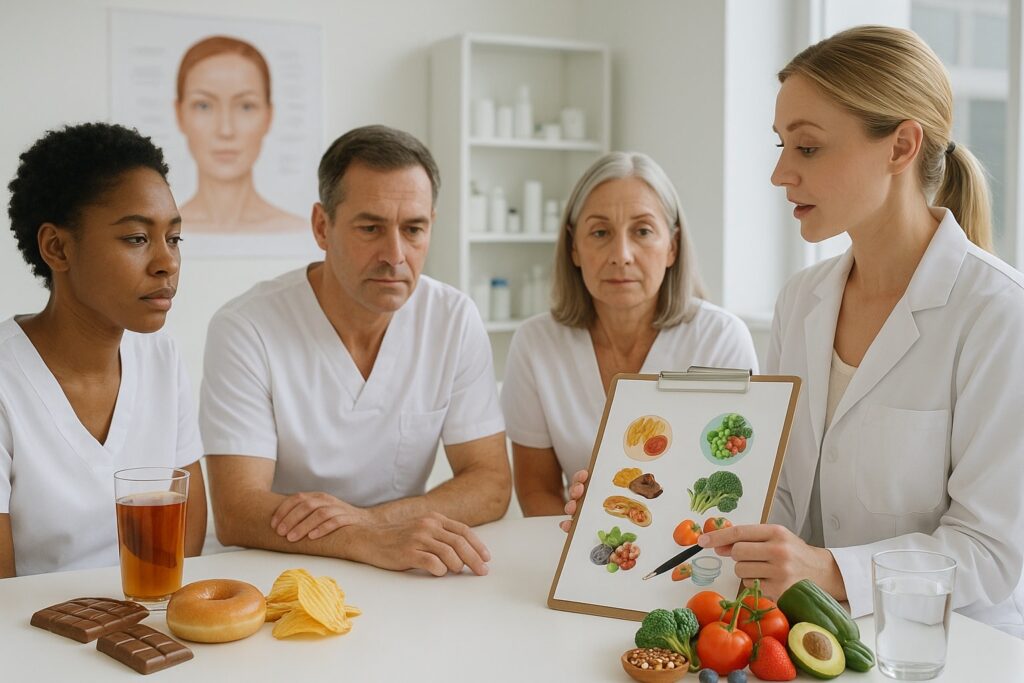
- Skin aging is influenced by many factors, including sun exposure, genetics, smoking, sleep, stress, and overall health. Nutrition is one part of a much bigger picture.
- Added sugars are often discussed in relation to glycation, a process that may affect proteins such as collagen that help support skin structure.
- Ultra-processed dietary patterns and frequent alcohol intake are also commonly mentioned in broader conversations about skin quality, hydration, and healthy aging.
- For most people, overall dietary quality matters more than labeling single foods as “good” or “bad.”
- In aesthetic settings, nutrition is best addressed as general education and lifestyle context, not as individualized medical or nutrition treatment.
Skin aging is a normal biological process, but the pace and visible signs of aging can vary from person to person. When people search for foods that “age the skin,” they are usually trying to understand whether diet may play a role in fine lines, dullness, texture changes, or loss of firmness over time.
The short answer is yes—nutrition may matter—but not in a simplistic way. No single food causes wrinkles on its own, and no food can stop aging altogether. Skin health reflects a combination of internal and external factors, including UV exposure, genetics, lifestyle habits, and general health status. Diet fits into that broader picture.
For professionals and learners in medical aesthetics, this topic matters because clients often connect skin concerns with lifestyle choices. Understanding the nutrition conversation can help support more informed, responsible education without crossing into individualized medical advice.
How nutrition fits into the bigger picture of premature skin aging
Premature skin aging refers to skin changes that may appear earlier or more noticeably than expected based on age alone. These changes may include:
- Fine lines and wrinkles
- Uneven tone or dullness
- Loss of elasticity
- Dry or rough texture
- A tired or less resilient appearance
Diet is only one possible contributor. Sun exposure remains one of the most discussed external drivers of visible skin aging, while smoking, poor sleep, chronic stress, and underlying health conditions may also influence how skin looks and functions.
That context matters because it keeps the conversation grounded. When nutrition is discussed responsibly, it is usually as part of an overall healthy aging pattern—not as a standalone explanation for every skin concern.
Foods most often discussed in premature skin aging conversations
Searches about “foods that age your skin” usually point to a few recurring categories. The evidence is still evolving, but these groups are commonly discussed in the context of skin wellness and healthy aging.
Added sugars and glycation
Added sugar is one of the most frequently mentioned topics in conversations about premature skin aging.
A key reason is glycation, a process in which excess sugar can react with proteins in the body. In skin-aging discussions, this matters because proteins such as collagen and elastin help support the skin’s structure and elasticity. When glycation is part of the conversation, the concern is not that one dessert will suddenly damage the skin, but that consistently high sugar intake may be one factor associated with changes over time.
Foods and drinks that are often mentioned in this context include:
- Sugar-sweetened beverages
- Candy and sweets
- Baked goods with high added sugar
- Sweetened coffee drinks
- Highly sweetened snack foods
That does not mean all sugar must be avoided. A more practical takeaway is that overall intake of added sugars may be worth paying attention to, especially when it is part of a broader pattern of lower dietary quality.
Ultra-processed dietary patterns
Highly processed foods are also often discussed in broader healthy aging conversations. The issue is usually not one single packaged food. The bigger concern is a dietary pattern that relies heavily on foods that are high in added sugars, refined carbohydrates, sodium, and low-quality fats while being lower in fiber, protein quality, and nutrient density.
In skin-related discussions, ultra-processed dietary patterns are often associated with wider issues such as:
- Lower overall diet quality
- Reduced intake of protective nutrients
- Broader inflammation-related concerns
- Less consistent support for long-term wellness
This is where nuance matters. Not every processed food is a problem, and convenience foods can still fit into a balanced diet. But when ultra-processed foods dominate the diet, the conversation shifts from one ingredient to overall pattern quality.
Alcohol and skin appearance
Alcohol is commonly brought up in skin wellness discussions for a few reasons. Depending on intake and the individual, it may relate to:
- Dehydration or a dehydrated appearance
- Dull-looking skin
- Lifestyle patterns that affect sleep and recovery
- Increased attention to redness or uneven appearance in some people
That does not make alcohol a direct cause of premature skin aging in every case. Still, frequent or high intake is often part of broader conversations about skin quality and overall wellness. In educational content, moderation and context are the most accurate framing.
What to focus on instead of chasing “anti-aging” foods
People often search for foods to avoid, but that approach can become overly restrictive and less useful than it sounds. In practice, a supportive dietary pattern usually matters more than trying to eliminate every item that appears on a social media “bad foods” list.
Build a skin-supportive eating pattern
Foods commonly discussed in healthy aging nutrition include:
- Fruits, especially colorful varieties rich in antioxidants
- Vegetables
- Protein-rich foods
- Nuts and seeds
- Healthy fats
- Omega-3-containing foods such as certain fish, walnuts, and flax-based options
These foods are often included in broader wellness patterns because they may help support overall nutrition status, which can indirectly support skin health as part of whole-body health.
Hydration also matters in the bigger picture. While water alone is not an anti-aging strategy, overall hydration can affect how skin looks and feels.
Why overall dietary quality matters more than one ingredient
A person who eats a generally balanced diet but occasionally has dessert is in a very different situation from someone whose regular pattern is dominated by sugary drinks, low-fiber snacks, and heavy alcohol intake.
That is why many nutrition and public health experts focus on patterns rather than food moralizing. A balanced, sustainable approach is usually more realistic and more helpful than strict rules.
For aesthetic education, this distinction is important. It encourages conversations based on long-term habits rather than fear-based messaging.
What aesthetic professionals should know about nutrition and skin aging
Clients often raise lifestyle questions during consultations or informal conversations. Even when a visit is centered on a treatment or skin concern, people may ask whether sugar, alcohol, or processed foods are “making their skin age faster.”
Aesthetic professionals do not need to provide individualized nutrition plans to respond helpfully. What they do need is a sound understanding of how these topics are typically discussed so they can communicate responsibly.
Nutrition questions come up because skin concerns are rarely one-dimensional
In aesthetic settings, skin quality is often viewed through a broader lens that includes:
- Sun habits
- Daily skin care
- Smoking status
- Stress and sleep patterns
- General wellness habits
- Nutrition-related questions
That does not mean nutrition explains everything. It means clients often think about skin health as part of a lifestyle picture, and professionals should be prepared to discuss that context clearly.
Stay educational and within scope
For estheticians, assistants, and other support-role professionals, the safest and most professional approach is to keep nutrition conversations general and educational.
That may include:
- Explaining that diet is one factor among many in skin aging
- Noting that high added sugar intake is often discussed because of glycation
- Emphasizing overall dietary quality rather than labeling foods as “toxic”
- Avoiding diagnosis, treatment, or individualized meal planning
- Referring clients to a physician or registered dietitian nutritionist when concerns are medical, complex, or highly personal
This kind of scope awareness is especially important in a US setting, where nutrition counseling and medical guidance may fall under licensed professional roles.
A practical way to discuss nutrition without overpromising
When talking about diet and skin in an educational setting, a balanced message usually works best:
- Avoid absolutes such as “this food causes wrinkles”
- Avoid miracle framing such as “this diet reverses aging”
- Explain that skin aging is multifactorial
- Focus on patterns, consistency, and overall wellness
- Encourage clients to seek qualified medical or nutrition care when needed
This approach is more credible, more aligned with current evidence, and more appropriate for aesthetic education.
Explore more with Eduasthetics
If you want to build a stronger foundation in skin wellness, healthy aging conversations, and responsible communication in aesthetic settings, explore more educational content from Eduasthetics. Our training-focused resources are designed to help professionals and learners understand the bigger picture behind common client questions.
Sources and references
- Harvard T.H. Chan School of Public Health. Nutrition and healthy aging.
- National Institutes of Health, Office of Dietary Supplements. Nutrition and dietary supplement fact sheets.
- American Academy of Dermatology Association. Skin aging and skin care guidance.
FAQS
Can sugar cause premature skin aging?
High added sugar intake is commonly discussed in relation to glycation, which may affect proteins such as collagen. That said, skin aging is influenced by many factors, so sugar is better understood as one possible contributor within a broader lifestyle pattern.
What is glycation in skin aging?
Glycation is a process in which excess sugar reacts with proteins in the body. In skin-aging discussions, it is often mentioned because collagen and elastin are important for skin structure and elasticity.
Do processed foods age your skin?
It is more accurate to look at overall dietary patterns than to blame one food. Diets heavily centered on ultra-processed foods are often discussed in broader healthy aging conversations because they may reflect lower overall nutrition quality.
Is alcohol bad for your skin?
Alcohol is often mentioned in relation to dehydration, sleep disruption, and skin appearance. Its impact can vary, but frequent or high intake is commonly discussed as part of broader skin wellness conversations.
What foods are usually included in healthy aging nutrition?
Fruits, vegetables, protein-rich foods, nuts, seeds, healthy fats, and omega-3-containing foods are commonly discussed as part of balanced eating patterns that support overall wellness.
Can diet improve skin quality?
Nutrition may support skin health as one part of a larger picture that includes sun protection, skin care, sleep, and general health. It should not be viewed as a standalone solution or a substitute for medical care.
Should aesthetic professionals give nutrition advice?
General educational discussion may be appropriate, but individualized nutrition counseling, diagnosis, or treatment recommendations should be left to qualified medical professionals or registered dietitian nutritionists when needed.
Related posts
Smoking and skin aging: what aesthetic professionals and patients should know
Why over-exfoliated skin is becoming more common in aesthetic clinics
Skin longevity in modern aesthetics: why less is more
Stay Updated
About de author
