
Regenerative aesthetics in modern aesthetic medicine
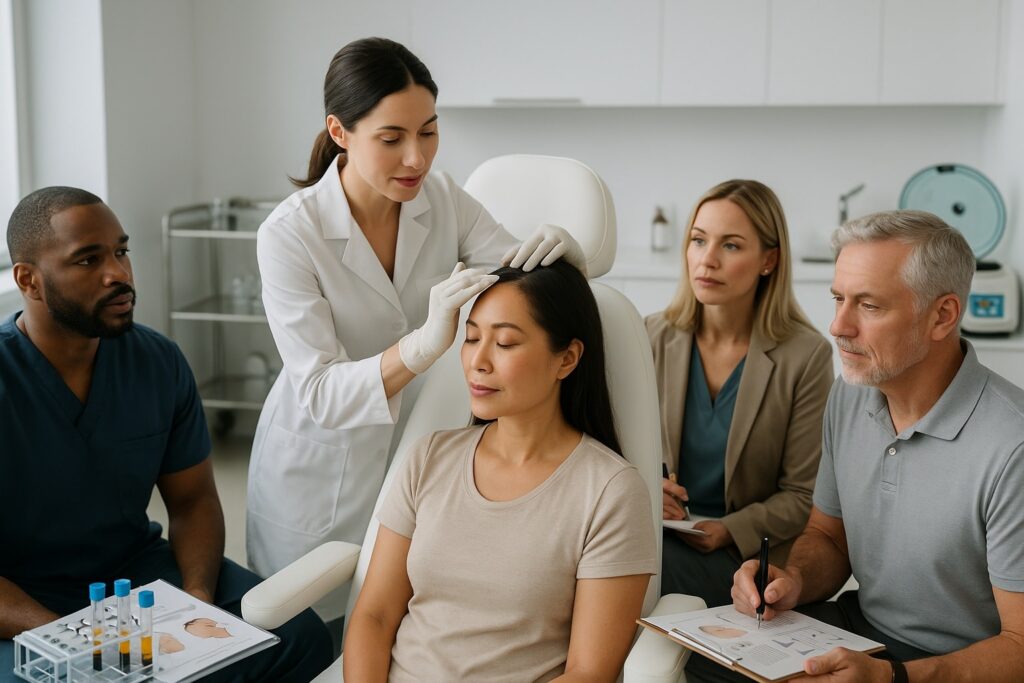
Regenerative aesthetics refers to biologically based approaches used in aesthetic medicine to support tissue quality, repair signaling, and overall skin or scalp health.
- Commonly discussed examples include platelet-rich plasma (PRP), growth factor-based approaches, autologous techniques, and some cell-based therapies where legally permitted.
- Interest in regenerative aesthetics is growing because many providers and patients are looking beyond short-term correction and focusing more on skin quality and long-term treatment planning.
- Not all regenerative treatments have the same level of evidence, and legal scope of practice can vary across the United States.
- For aesthetic professionals, education matters: understanding treatment concepts, patient communication, safety boundaries, and workflow support is essential.
Regenerative aesthetics is one of the fastest-growing topics in aesthetic medicine, but it is also one of the most misunderstood. The term is often used broadly, and in some settings it can refer to very different technologies, treatment philosophies, or levels of evidence.
At its core, regenerative aesthetics focuses on treatments intended to support the body’s own biologic response rather than only masking visible signs of aging. That shift has made the topic especially relevant for professionals who want to understand where aesthetic medicine is heading, how newer treatment categories are being discussed, and what patients are increasingly asking about.
What regenerative aesthetics means in practice
Regenerative aesthetics generally describes biologically based approaches that aim to support tissue renewal, repair signaling, and structural skin or scalp quality. In aesthetic settings, these approaches are often discussed in connection with collagen remodeling, skin texture, elasticity, and overall tissue health.
Rather than focusing only on immediate cosmetic change, regenerative strategies are typically positioned around supporting how tissue functions and responds over time.
How it differs from traditional aesthetic goals
Traditional aesthetic treatments often focus on visible correction, such as softening lines, restoring volume, or improving surface appearance. Regenerative aesthetics does not necessarily replace those goals, but it adds another layer to the conversation.
The emphasis is often on:
- Skin quality, not just wrinkle reduction
- Tissue support, not only temporary correction
- Biologic response, not only external appearance
- Long-term treatment planning, not only isolated procedures
This is one reason the category continues to gain attention. Many professionals see it as part of a broader movement toward more individualized and tissue-focused aesthetic care.
Treatments commonly discussed under the regenerative umbrella
The regenerative aesthetics category may include several types of treatment concepts, depending on the provider’s background, the clinical setting, and applicable regulations. Commonly discussed examples include:
- Platelet-rich plasma (PRP)
- Growth factor-based approaches
- Autologous regenerative techniques
- Biologically oriented adjunctive therapies
- Some cell-based therapies, where legally allowed and appropriately regulated
Because terminology can vary, it is important not to assume that every treatment marketed as “regenerative” is equivalent in evidence, safety profile, or regulatory status.
Why regenerative aesthetics is attracting so much attention
The rise of regenerative aesthetics is not just a trend-driven marketing shift. It reflects a real change in what many patients and professionals are prioritizing.
The focus has expanded from correction to skin quality
In many practices, patients are no longer looking only for a quick visible change. There is increasing interest in treatments that may support skin texture, tone, elasticity, and overall tissue quality.
That has made regenerative concepts especially appealing in conversations around:
- Early intervention
- Maintenance planning
- Healthy aging
- Combination treatment strategies
- More natural-looking aesthetic goals
Personalized treatment plans are becoming more important
Another reason for the category’s growth is the move toward individualized treatment planning. Aesthetic medicine increasingly emphasizes patient-specific factors such as age, skin condition, treatment history, overall goals, and tolerance for downtime.
Regenerative approaches are often discussed within that more personalized framework, especially when providers are building broader treatment plans instead of relying on a single procedure.
Innovation continues to shape the field
Ongoing innovation in medical aesthetics has also helped drive interest. New devices, newer protocol ideas, and increased discussion around biologic mechanisms have all contributed to the expansion of regenerative language in the market.
That said, interest should not be confused with certainty. Some areas of regenerative aesthetics are better established than others, and ongoing research continues to shape how these approaches are understood.
Where regenerative approaches are used in aesthetic medicine
Regenerative aesthetics is most commonly discussed in relation to skin quality and hair restoration, although some providers also incorporate these concepts into broader multimodal plans.
Skin quality and facial rejuvenation support
One of the most common reasons regenerative treatments are explored is to support skin quality. In aesthetic settings, this may include efforts to improve the appearance of:
- Texture
- Fine lines
- Elasticity
- Dullness
- Overall dermal quality
The language around these treatments often centers on tissue support and remodeling rather than dramatic transformation. That framing matters because it helps set more realistic expectations for both providers and patients.
Hair restoration and scalp-focused treatment plans
Regenerative concepts are also frequently discussed in hair restoration. In these cases, the goal is typically not presented as a stand-alone cure for hair loss, but as part of a broader treatment strategy intended to support the scalp environment and follicular function.
Hair-related treatment planning can be complex, and suitability depends on the underlying cause of shedding or thinning, the patient’s medical history, and clinical evaluation by an appropriately licensed professional.
Regenerative treatments are often part of a bigger plan
In many practices, regenerative aesthetics is not used in isolation. It may be considered alongside other aesthetic services as part of a more comprehensive plan.
That is important from an educational standpoint. Professionals entering this area should understand not only what a regenerative treatment is, but also how it fits into consultation, sequencing, patient expectations, and follow-up care.
What to know about PRP in regenerative aesthetics
When people search for regenerative aesthetics, they are often really searching for information about PRP. Platelet-rich plasma remains one of the most widely discussed regenerative approaches in aesthetic medicine.
What PRP is at a high level
PRP is derived from a patient’s own blood and processed to concentrate platelets and other components involved in biologic signaling. In aesthetic medicine, it is often discussed as a treatment approach that may support tissue response in selected protocols.
Because it uses autologous material, PRP is often presented as part of the broader regenerative category.
Why PRP is frequently discussed for skin and hair
PRP commonly comes up in two areas:
- Skin-focused treatment plans intended to support overall skin quality
- Hair-related protocols intended to support scalp and follicular environments
Its popularity comes partly from familiarity. Compared with more controversial or more heavily regulated regenerative terms, PRP is more widely recognized in the medical aesthetics space.
Why professional evaluation still matters
PRP should not be viewed as universally appropriate or interchangeable across all patients and treatment goals. Clinical appropriateness depends on the individual, the treatment setting, the provider’s judgment, and applicable laws and regulations.
For educational audiences, the key point is this: understanding the concept is valuable, but treatment decisions belong to qualified licensed professionals.
Limits, evidence, and regulatory considerations
One of the most important topics in regenerative aesthetics is not what is possible, but what should be approached carefully.
Not every regenerative treatment has the same evidence base
The term “regenerative” can sound more established than it actually is. Some approaches have stronger clinical support than others, and evidence may be more robust for certain uses than for others.
This matters for both patient communication and professional credibility. Overstating outcomes, implying guarantees, or treating all regenerative technologies as equally validated can create confusion and undermine trust.
A more responsible way to discuss the category is to acknowledge that:
- Evidence varies by treatment type and indication
- Research is still evolving in several areas
- Results can differ significantly between individuals
- Marketing language often outpaces clinical consensus
Scope of practice and legal variation in the US
In the United States, scope of practice is not uniform. What is allowed for a physician, nurse practitioner, physician assistant, registered nurse, esthetician, or medical aesthetic assistant can differ based on state law, supervision requirements, and treatment type.
That is especially relevant in regenerative aesthetics, where procedures may involve blood products, biologic materials, or other regulated considerations.
For that reason, professionals should avoid assuming that a treatment discussed in education or on social media is automatically within their legal scope to perform.
Realistic expectations are essential
Regenerative aesthetics is often associated with long-term quality improvement rather than instant transformation. That can be a strength, but it also requires clear expectation setting.
Patients and professionals alike should understand that outcomes are influenced by factors such as:
- Treatment selection
- Clinical assessment
- Baseline tissue quality
- Individual response
- Overall treatment plan
Educational content should help clarify these realities rather than oversimplify them.
Education and training in regenerative aesthetics
As regenerative aesthetics grows, so does the need for responsible education. This is not only a topic for advanced injectors or physicians. It is also highly relevant for support staff and aesthetic professionals who participate in consultation flow, patient education, and clinical operations.
What professionals should understand
High-quality education in regenerative aesthetics should cover more than trend-based treatment names. It should help learners understand:
- Core biologic concepts in plain language
- Common treatment categories and terminology
- Indications and limitations at a general level
- Patient communication and expectation setting
- Safety boundaries and referral awareness
- Scope-of-practice considerations
- How regenerative concepts fit into broader aesthetic planning
This kind of foundation helps professionals speak more clearly, support patients more responsibly, and work more effectively within their role.
Why this matters for estheticians and clinical support roles
For estheticians and medical aesthetic assistants, regenerative aesthetics education is typically less about performing advanced procedures and more about understanding the environment in which those treatments are discussed and delivered.
That knowledge can support:
- Better patient education within role boundaries
- More confident communication during intake and follow-up
- Stronger collaboration with licensed providers
- Clearer understanding of current trends in medical aesthetics
In a field where patient questions are becoming more sophisticated, foundational knowledge is a professional advantage.
Continue learning with Eduasthetics
Regenerative aesthetics is evolving quickly, and professionals need education that is clear, current, and grounded in responsible practice. Eduasthetics offers learning resources designed to help aesthetic professionals better understand treatment concepts, patient communication, and the broader direction of medical aesthetics.
Sources and references
- U.S. Food and Drug Administration. Important patient and consumer information about regenerative medicine therapies.
- American Academy of Dermatology Association. Platelet-rich plasma guidance for hair loss.
- Mayo Clinic. Platelet-rich plasma: overview and current uses.
FAQS
What is regenerative aesthetics?
Regenerative aesthetics is a category within aesthetic medicine that focuses on biologically based approaches intended to support tissue quality, repair signaling, and overall skin or scalp health.
Is PRP the same as regenerative aesthetics?
No. PRP is one example of a treatment commonly discussed within regenerative aesthetics, but the category is broader and can include other biologically oriented approaches.
Are regenerative treatments only used for anti-aging?
Not necessarily. They are often discussed in anti-aging care, but they may also come up in conversations about skin quality, tissue support, and hair restoration.
Who can perform regenerative aesthetic treatments in the United States?
That depends on the treatment type, state law, and professional licensure. Scope of practice varies, so clinical procedures should only be performed by appropriately qualified professionals under applicable legal requirements.
Can estheticians perform regenerative procedures?
Rules vary by state and by procedure. In many cases, estheticians may be involved in patient support, education, and workflow, while the clinical treatment itself is performed by a licensed medical provider.
How should professionals evaluate regenerative aesthetics training?
Look for training that explains concepts clearly, respects scope-of-practice boundaries, avoids exaggerated claims, and places equal weight on safety, communication, and clinical context.
Related posts
Gut-skin axis: how gut health, inflammation, and skin may be connected
Minerals for skin health: hydration, micronutrients, and skin barrier support
Medical-grade skincare and facial oils: how they can work together in professional skin care
Stay Updated
About de author
