
Skin barrier health in aesthetic treatments: what professionals should know
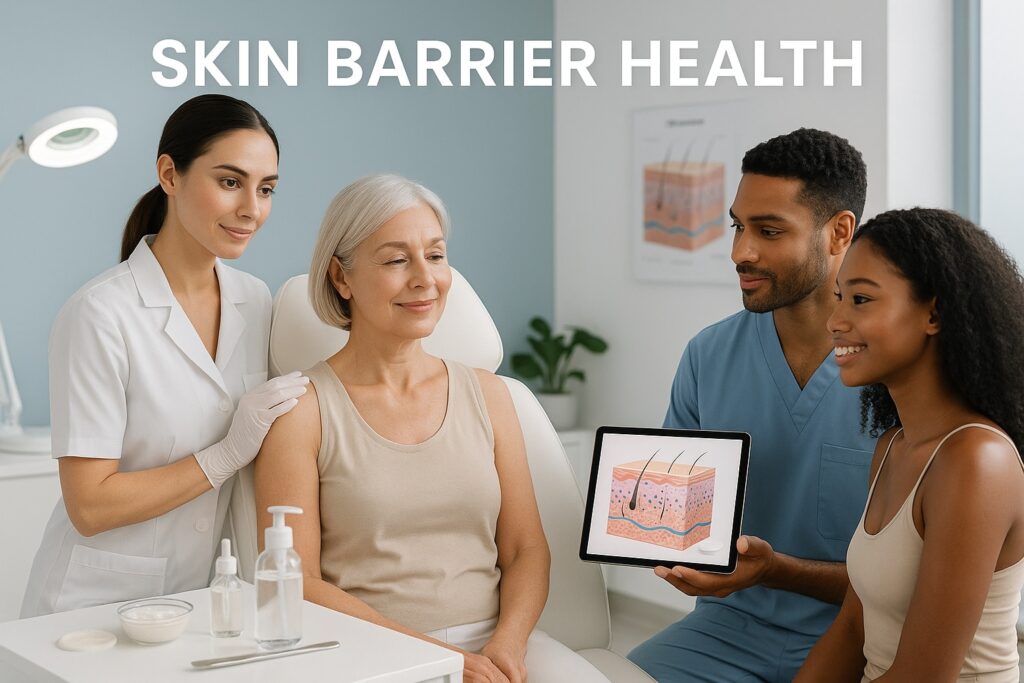
- The skin barrier is the outer defense system that helps limit water loss, reduce exposure to irritants, and support overall skin stability.
- Many aesthetic treatments, including chemical peels, microneedling, and certain laser procedures, interact with the barrier as part of their intended effect.
- Barrier function is not the same for every person. Skin type, age, climate, skincare habits, and systemic conditions can all influence how skin responds.
- A stronger understanding of barrier health helps aesthetic professionals interpret reactivity, support communication in clinical settings, and approach treatment education more responsibly.
- In medical aesthetics, barrier knowledge is not just about skincare. It is a core part of understanding treatment response, recovery patterns, and patient variability.
Skin barrier health has become a central topic in dermatology, skincare, and medical aesthetics for a good reason. As more patients seek non-surgical aesthetic treatments, professionals need a better understanding of how skin behaves before, during, and after treatment.
In clinical aesthetic settings, the skin barrier is especially relevant because many common procedures interact with the outermost layer of the skin. That does not mean every treatment affects the skin in the same way, or that every patient responds similarly. It means that barrier function provides an essential framework for understanding treatment tolerance, visible reactivity, and recovery.
For licensed estheticians, aesthetic medical assistants, and other professionals working alongside physicians, this topic is foundational. It supports better observation, clearer communication, and stronger clinical awareness without crossing into individualized medical advice or procedural instruction.
What the skin barrier is and what it does
The term skin barrier usually refers to the stratum corneum, the outermost layer of the epidermis. It is often described as a “brick and mortar” structure: skin cells act as the bricks, while lipids help form the mortar that holds the structure together.
That outer layer plays several important roles:
- It helps reduce transepidermal water loss, or TEWL
- It limits penetration of environmental irritants
- It supports hydration and skin comfort
- It contributes to resilience, texture, and visible skin integrity
When the barrier is functioning well, skin tends to be more stable and predictable. When barrier function is weakened, skin may become dry, reactive, tight, or more easily irritated.
Why transepidermal water loss matters
TEWL is one of the most widely discussed concepts in skin barrier science. In simple terms, it reflects how much water escapes through the skin. Higher TEWL is often associated with a weaker barrier.
In aesthetic settings, TEWL matters because it helps explain why some skin tolerates treatment better than other skin. A barrier that is already stressed may respond differently to exfoliation, heat, friction, or active ingredients than a barrier that is more intact.
TEWL is not something professionals should treat as a stand-alone answer, but it is a helpful concept when learning how barrier function relates to skin behavior.
Why skin barrier health matters in aesthetic treatments
Barrier health matters because many aesthetic procedures depend on controlled interaction with the skin. In some cases, that interaction is superficial. In others, it may trigger a broader repair response.
Common examples include:
- Chemical peels, which promote exfoliation and skin renewal
- Microneedling, which creates controlled micro-injury pathways
- Laser-based procedures, which may affect the skin through targeted thermal energy
- Some resurfacing or rejuvenation approaches that temporarily alter barrier integrity
These procedures are not defined by “damage” alone. In clinical practice, they are intended to produce a controlled response. But from an educational standpoint, it is still important to recognize that the barrier is involved.
Controlled disruption is not the same as uncontrolled irritation
This distinction matters. In aesthetic medicine, not all redness, dryness, or sensitivity means the same thing. A planned treatment response is different from unanticipated barrier stress or poor tolerance.
That is one reason skin barrier literacy is so valuable. It helps professionals understand that:
- Skin may react differently depending on baseline condition
- The same treatment category may not lead to the same visible response in every person
- Recovery patterns can vary
- Pre-existing barrier weakness can affect what happens after treatment
This perspective supports safer, more thoughtful communication in clinical environments.
What can weaken or alter skin barrier function
Barrier function is dynamic. It changes over time and is influenced by both external and internal factors.
External factors that affect barrier health
Several everyday variables can influence the skin barrier, including:
- Low humidity and cold weather
- Excessive cleansing
- Overuse of exfoliating products
- Friction or repeated irritation
- UV exposure
- Inappropriate use of strong topical actives
These factors can make skin more vulnerable before any in-office treatment even begins. That is why barrier health should not be treated as an isolated concept tied only to procedures.
Internal and patient-specific factors
Barrier function also varies based on individual physiology. Relevant factors may include:
- Age-related changes in skin structure
- Baseline skin sensitivity
- Certain inflammatory skin conditions
- Hormonal influences
- Systemic conditions that may affect hydration, circulation, or repair dynamics
Diabetes is one example often discussed in clinical education. Some individuals with diabetes may experience increased skin dryness, altered barrier integrity, or differences in healing response. That does not mean every person with diabetes will respond the same way, nor does it determine whether a treatment is appropriate. It does mean that systemic health can influence skin behavior and should not be ignored.
For any patient with a chronic medical condition, individualized assessment belongs with the appropriate licensed clinician.
How inflammation and the skin barrier are connected
The skin barrier and the inflammatory response are closely linked. When the barrier is disrupted, the body activates signaling pathways involved in defense and repair.
This may include:
- Release of inflammatory mediators
- Activation of local immune activity
- Changes in cell turnover
- Repair processes that help restore surface integrity
In aesthetic treatments, some degree of inflammatory signaling may be part of the expected biological response. That is especially relevant in treatments intended to stimulate renewal or remodeling.
The key educational point is that inflammation is not automatically negative, but it is also not identical from one patient to another. Variability in inflammatory response can help explain differences in visible redness, sensitivity, downtime, and the pace of recovery.
What barrier recovery involves
After the skin barrier is disrupted, the body begins working to restore function. This process is not just about “calming the skin.” It involves structural repair.
Core elements of barrier recovery
Barrier recovery generally involves:
- Replenishment of surface lipids
- Reorganization of the stratum corneum
- Ongoing cell turnover
- Restoration of hydration balance
This is one reason barrier education is so important in aesthetics. Skin is not simply reacting at the surface. It is engaging in coordinated repair activity.
Why recovery time can vary
Recovery is influenced by more than the treatment itself. It may vary based on:
- Baseline barrier health
- Skin type and sensitivity
- Environmental exposure
- Skincare practices
- Age and general physiology
- The presence of underlying skin or systemic concerns
That variability helps explain why one-size-fits-all assumptions are rarely helpful in clinical aesthetics.
What a compromised skin barrier can look like
A compromised barrier does not always present dramatically. In many cases, the signs are subtle and easy to overlook.
Common signs associated with reduced barrier resilience may include:
- Persistent dryness
- Tightness or rough texture
- Stinging with products that were previously tolerated
- Increased visible redness
- Heightened sensitivity
- Skin that appears more reactive than expected
These signs are not diagnostic on their own, and they do not replace clinical evaluation. Still, they are useful educational markers for professionals learning how to observe and describe skin behavior more accurately.
Why this topic matters in clinical aesthetic education
Aesthetic professionals do not all have the same role, license, or scope of practice. That is especially important in the United States, where regulations vary by state and by professional credential.
Even so, skin barrier health is relevant across many roles because it supports better understanding of:
- How skin responds to treatment categories
- Why patient experiences can differ
- How to recognize patterns of reactivity
- How to communicate observations within a clinical team
- Why treatment planning should consider baseline skin condition
For licensed estheticians and aesthetic medical assistants, this knowledge can strengthen foundational competence without turning education into a treatment manual.
What good barrier education should include
If you are studying medical aesthetics, strong educational content on skin barrier health should help you understand:
- Basic skin anatomy and physiology
- The function of the stratum corneum
- The relationship between barrier status and treatment response
- Common factors that influence sensitivity and recovery
- The limits of non-physician roles in clinical settings
- The importance of documentation, observation, and physician collaboration where appropriate
This type of education is especially useful because it improves judgment. It helps professionals move beyond memorizing treatment names and toward understanding skin as a biological system.
Common mistakes in skin barrier discussions
Assuming every treatment affects all skin the same way
Even within the same procedure category, outcomes and tolerance can differ. Baseline skin condition matters.
Treating all redness or irritation as equivalent
Some post-treatment changes may be expected. Others may suggest increased sensitivity or an impaired baseline barrier. Context matters.
Focusing only on products and ignoring physiology
Skincare products play a role, but barrier health is also influenced by inflammation, environment, systemic health, and treatment choice.
Overlooking the patient’s broader health picture
Skin does not function in isolation. Chronic dryness, inflammatory tendencies, and systemic conditions can all shape skin behavior in aesthetic settings.
Why skin barrier knowledge is becoming more important in aesthetics
As aesthetic medicine continues to evolve, treatments are becoming more sophisticated and patient expectations are rising. At the same time, professionals are expected to communicate more clearly about treatment response, recovery, and suitability.
That makes skin barrier knowledge more than a trend. It is part of modern clinical literacy in aesthetics.
Understanding the barrier does not require giving medical advice or performing advanced procedures. It requires a solid grasp of how skin protects itself, how treatments interact with that protection, and why individual variation matters.
For professionals building a long-term foundation in medical aesthetics, few topics are more useful.
Sources and references
- Proksch E, Brandner JM, Jensen JM. The skin: an indispensable barrier. Experimental Dermatology.
- National Institute of Arthritis and Musculoskeletal and Skin Diseases. Skin health basics and common skin conditions.
- American Diabetes Association. Skin complications related to diabetes.
FAQS
What is the skin barrier in simple terms?
The skin barrier is the outer protective layer of the skin. It helps keep moisture in, limits exposure to irritants, and supports overall skin stability.
Why is skin barrier health important before aesthetic treatments?
Baseline barrier health can influence how skin reacts to treatment, how much sensitivity may occur, and how recovery may progress. It helps explain why responses can vary from one person to another.
Do all aesthetic treatments disrupt the skin barrier?
Not in the same way or to the same degree. Some treatments interact more directly with the barrier than others, but many common aesthetic procedures involve at least some level of barrier stress or temporary alteration.
Can a compromised skin barrier make skin more reactive?
Yes. When barrier function is reduced, skin may be more prone to dryness, stinging, redness, or general sensitivity. That is one reason barrier health is such an important part of aesthetic education.
Does diabetes affect skin barrier function?
It can. Diabetes is associated with skin changes in some individuals, including dryness and altered healing dynamics. That does not define treatment suitability on its own, but it is a relevant clinical consideration.
What is transepidermal water loss?
Transepidermal water loss, or TEWL, refers to the amount of water that passes from inside the body through the skin to the external environment. It is commonly used as a marker of barrier function.
Who should learn about skin barrier health in medical aesthetics?
Anyone working in or preparing for a clinical aesthetic environment can benefit from it, including licensed estheticians, aesthetic medical assistants, and professionals who support patient care alongside physicians.
Related posts
Smoking and skin aging: what aesthetic professionals and patients should know
Why over-exfoliated skin is becoming more common in aesthetic clinics
Skin longevity in modern aesthetics: why less is more
Stay Updated
About de author
