
Skin of color in medical aesthetics: what estheticians and clinic teams should know
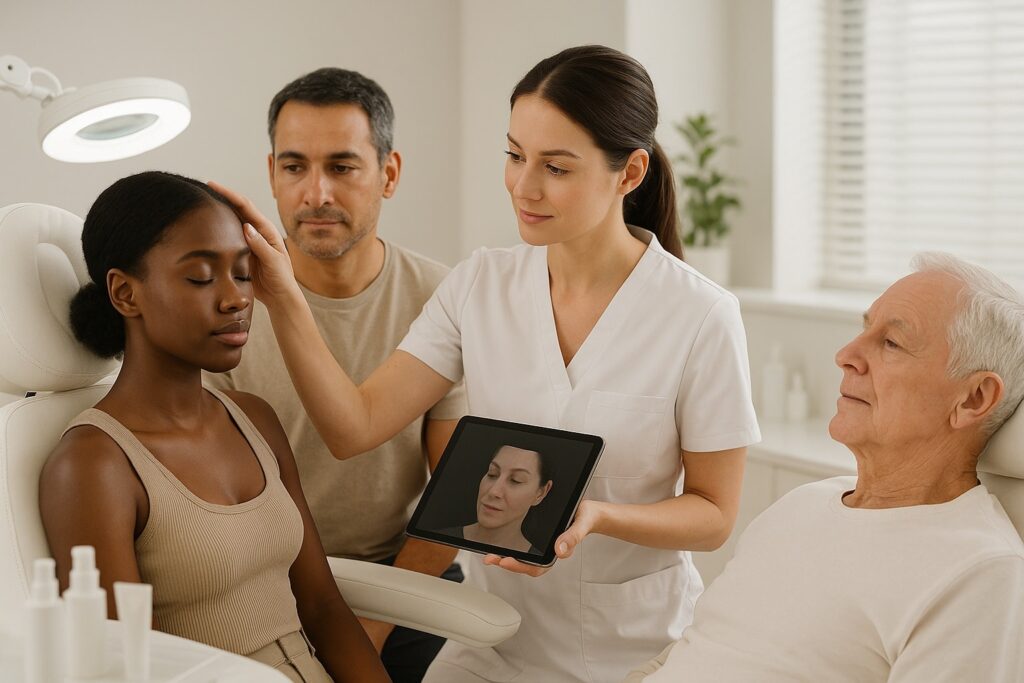
- Skin type diversity affects how patients respond to exfoliation, energy-based treatments, inflammation, and recovery, so one-size-fits-all protocols can raise the risk of unwanted outcomes.
- In medical aesthetics, deeper skin tones often require special attention to post-inflammatory hyperpigmentation, while lighter skin types may show redness, irritation, and visible photoaging differently.
- The Fitzpatrick scale can help guide assessment, but it should not be the only tool used when evaluating treatment tolerance, pigment risk, and healing patterns.
- Estheticians and medical aesthetic assistants support safer care by recognizing skin differences, documenting concerns, reinforcing aftercare, and working within clinic protocols and scope.
- Personalization is not just a quality issue. It helps protect patient trust, improve consistency, and support better long-term skin health.
In US medical aesthetics, understanding skin of color is no longer a niche topic. It is a core part of safe, modern practice.
For years, many treatment approaches were shaped around lighter skin tones. That history still affects how some protocols, product choices, and treatment expectations are taught. But real-world patient populations are diverse, and skin does not respond uniformly across tones, backgrounds, and biologic characteristics.
For estheticians, medical aesthetic assistants, and clinic owners, this matters for a simple reason: skin type influences risk. It can affect how the skin reacts to irritation, how visible inflammation becomes, how likely pigment changes are after a procedure, and how recovery should be monitored.
This article explains the clinical relevance of skin differences in aesthetic settings, where common mistakes happen, and what professionals should understand when supporting more individualized care.
Why skin diversity matters in aesthetic practice
Treating every patient with the same assumptions can lead to avoidable problems. In medical aesthetics, generalized protocols may overlook meaningful differences in:
- Melanin content
- Inflammatory response
- Barrier resilience
- Sensitivity patterns
- Visible aging patterns
- Tendency toward pigment alteration after irritation
That does not mean each patient should be defined only by skin tone. It means skin tone is one important variable among several. A safe treatment plan considers the full picture, including history, concerns, product use, prior reactions, and visible skin condition.
Why pigment risk deserves special attention
One of the most important concerns in skin of color is post-inflammatory hyperpigmentation, often called PIH. This refers to darkening that can appear after irritation or inflammation. In aesthetic settings, PIH may develop after over-exfoliation, friction, aggressive product use, or procedures that the skin does not tolerate well.
For many patients, PIH is more distressing than the original concern being treated. That is why professionals working with diverse skin tones need strong awareness of inflammation triggers and recovery considerations.
Why visible aging does not look the same in every skin type
Skin aging is not identical across all patients. Some lighter skin types may show fine lines, surface texture changes, and sun damage earlier or more visibly. Some deeper skin tones may show pigment irregularity, uneven tone, or dyschromia before more obvious wrinkling becomes the main concern.
These are broad patterns, not rules. They should guide observation, not stereotypes.
What “skin of color” means in a US clinical context
In the United States, the term skin of color is commonly used in dermatology and aesthetics to describe patients with richly pigmented skin. It is a practical umbrella term, but it is not a diagnosis and it does not capture every individual difference.
Some professionals also use the term ethnic skin, but in US clinical education, skin of color is often preferred because it centers skin response rather than broad identity labels.
The Fitzpatrick scale is helpful, but not enough
The Fitzpatrick skin type scale is often used to estimate how skin reacts to UV exposure and pigment changes. It can be useful in aesthetic settings, especially when thinking about sensitivity to irritation and risk of dyspigmentation.
Still, it has limits.
It does not fully capture:
- Mixed heritage
- Variation within similar-looking skin tones
- History of PIH or scarring
- Current barrier status
- Active inflammation
- Cultural practices or home care habits that affect the skin
A thoughtful assessment goes beyond a number on a scale.
How different skin presentations may respond in clinic settings
No two patients are identical, but some broad patterns can help support safer planning.
Lighter skin types
Lighter skin may be more likely to show:
- Visible redness
- Flushing
- Surface irritation
- Sun-related aging changes
- Fine lines and textural changes that appear early
Because inflammation is often easier to see, providers may identify irritation quickly. That visibility can be helpful, but it should not lead to the false assumption that lighter skin is always simpler to treat.
Skin of color
Skin of color may be more likely to present concerns such as:
- Post-inflammatory hyperpigmentation
- Uneven tone after irritation
- Pigment alteration after acne or friction
- Keloid or hypertrophic scar history in some patients
- Sensitivity that is not always obvious through visible redness
A key clinical challenge is that irritation may be less visually obvious in richly pigmented skin. If a practitioner relies only on redness as a warning sign, they may miss early inflammation.
Mixed and highly individualized skin presentations
Many patients do not fit neatly into one category. They may have mixed heritage, region-specific sensitivity, concurrent pigmentation and barrier issues, or a history that changes how their skin behaves.
That is why rigid assumptions are risky. Good aesthetic care depends on observation, communication, and careful treatment selection rather than visual shortcuts.
Common mistakes that increase risk in diverse skin types
Many complications in aesthetics do not come from a single dramatic error. They come from routine oversights.
Using standardized protocols for every patient
Protocol-based care can support consistency, but standardized does not mean universal. Applying the same intensity, frequency, or prep routine to every skin type can increase the chance of irritation, prolonged recovery, or unwanted pigment changes.
A protocol should be a framework, not a substitute for judgment.
Over-exfoliating skin that is already vulnerable
Exfoliation is a common source of preventable irritation. When the skin barrier is compromised or when a patient is already prone to PIH, too much exfoliation can worsen the very concerns the treatment was meant to improve.
This applies to both chemical and mechanical exfoliation. The issue is not only the category of treatment. It is how the skin tolerates cumulative irritation.
Ignoring barrier health
Barrier function matters across all skin types. If the barrier is impaired, the skin may sting more, inflame more easily, and recover less predictably.
Before supporting advanced aesthetic care, clinic teams should understand that dehydrated, inflamed, over-treated, or sensitized skin is less resilient. Barrier-first thinking often improves tolerance and helps prevent setbacks.
Underestimating the value of patient education
Patients may not realize that their skin history affects what is appropriate for them. Some may expect the same treatment their friend received. Others may not report a prior reaction because they assumed it was normal.
Education helps set realistic expectations and reduces the pressure to overtreat.
What personalized care should include
Personalization in medical aesthetics is not about making care more complicated. It is about making it more appropriate.
Start with risk awareness, not treatment intensity
A strong assessment looks at more than the cosmetic concern. It also considers:
- Prior hyperpigmentation after acne, waxing, or procedures
- Sensitivity to topical products
- Current irritation or barrier disruption
- History of abnormal scarring
- Recent sun exposure
- Active breakouts, inflammation, or dermatitis
- The patient’s ability to follow home care instructions
This type of screening supports better decision-making and helps teams recognize when a patient may need a more conservative approach.
Prioritize barrier stability
Healthy-looking skin is not always healthy-functioning skin. When the barrier is unstable, even common treatments can become poorly tolerated.
A barrier-focused mindset may include:
- Respecting recovery time
- Avoiding unnecessary treatment stacking
- Watching for cumulative irritation
- Reinforcing appropriate post-treatment care
- Recognizing when the skin should be calmed before additional intervention
Choose products and actives carefully
Products should be selected based on the patient’s skin behavior, not just their visible tone or headline concern. In practice, this means being thoughtful about:
- Irritation potential
- Pigment risk
- Sensitization history
- Home care compatibility
- Long-term skin health goals
Even well-known actives may not be appropriate in every context or at every stage of care.
Space treatments appropriately
Back-to-back interventions can make recovery harder to predict, especially in patients prone to inflammation or dyspigmentation. A measured schedule allows the skin to recover and gives the clinic team time to evaluate how the patient is responding.
The role of estheticians and medical aesthetic assistants
Estheticians and medical aesthetic assistants are often the professionals who spend the most time observing the skin before and after treatment. That makes their role especially important.
In a medical aesthetic clinic, support staff can contribute by:
- Recognizing visible signs of sensitivity, pigmentation concerns, and barrier disruption
- Documenting patient-reported reactions clearly
- Flagging concerns for the supervising provider
- Reinforcing aftercare instructions
- Helping maintain consistency in personalized treatment plans
- Supporting patient education without stepping outside scope
Why scope awareness matters
Educational knowledge does not replace licensure, supervision, or clinical authority. Professionals should always work within local regulations, clinic policies, and their defined role.
That said, better training improves pattern recognition. It helps staff notice risk earlier, communicate more effectively, and support safer patient experiences.
Why this matters for clinic outcomes and patient trust
Understanding skin diversity is not only a clinical quality issue. It also affects how a clinic is perceived.
When patients feel their skin has been assessed thoughtfully rather than treated generically, it can support:
- Better communication
- More realistic expectations
- Fewer avoidable complications
- Greater confidence in the care team
- Stronger long-term retention
For clinic owners and team leads, education in skin of color and individualized care is part of professional standard-setting. It helps create systems that are safer, more inclusive, and more responsive to the patients a clinic actually serves.
What professionals should keep learning
This area of aesthetics continues to evolve. Ongoing education should include:
- Skin of color considerations in treatment planning
- Pigment-related risk awareness
- Barrier repair concepts
- Patient selection and documentation
- Communication practices that support informed expectations
- Recognition of when a patient needs provider evaluation rather than routine aesthetic support
Professionals do not need to know everything at once. But they do need to move beyond outdated assumptions that all skin responds the same way.
Build stronger clinical judgment in aesthetics
If you want to deepen your understanding of skin science, patient safety, and modern medical aesthetics, explore educational resources from Eduasthetics. Practical training can help estheticians and clinic teams make more informed, individualized decisions in everyday practice.
Sources and references
- American Academy of Dermatology Association. Skin of color resources and clinical guidance.
- Fitzpatrick TB. The validity and practicality of sun-reactive skin types I through VI. Archives of Dermatology.
- Davis EC, Callender VD. Postinflammatory hyperpigmentation: a review of the epidemiology, clinical features, and treatment options in skin of color. Journal of Clinical and Aesthetic Dermatology.
FAQS
What is skin of color in medical aesthetics?
In US clinical usage, skin of color generally refers to richly pigmented skin types. It is a practical term used to discuss how melanin-rich skin may respond differently to irritation, inflammation, and certain aesthetic treatments.
Why is post-inflammatory hyperpigmentation more common in deeper skin tones?
Skin with higher melanin activity can be more prone to pigment changes after inflammation or injury. In aesthetic settings, even mild irritation may trigger darkening in susceptible patients.
Is the Fitzpatrick scale enough for treatment planning?
No. It can be useful, but it should not replace a broader assessment. Skin history, prior reactions, barrier status, active inflammation, and patient goals all matter.
Can all skin types receive the same aesthetic treatments?
Not always in the same way. A treatment that is well tolerated by one patient may require a more conservative approach in another. Personalization helps reduce risk and improve consistency.
Are lighter skin types always more sensitive than darker skin types?
Not necessarily. Sensitivity can appear differently across skin tones. Lighter skin may show redness more clearly, while darker skin may develop pigment changes even when irritation is less visually obvious.
Why does barrier health matter so much before aesthetic treatments?
A compromised barrier can increase stinging, inflammation, poor tolerance, and uneven recovery. Supporting barrier stability often helps the skin respond more predictably.
What should estheticians and medical aesthetic assistants pay close attention to?
They should watch for signs of sensitivity, pigment changes, delayed recovery, patient-reported discomfort, and patterns that suggest the skin may not be tolerating a treatment plan well. Clear documentation and communication are essential.
Related posts
Smoking and skin aging: what aesthetic professionals and patients should know
Why over-exfoliated skin is becoming more common in aesthetic clinics
Skin longevity in modern aesthetics: why less is more
Stay Updated
About de author
