
Facial radiofrequency: what it’s used for, when it may be recommended, and what to expect
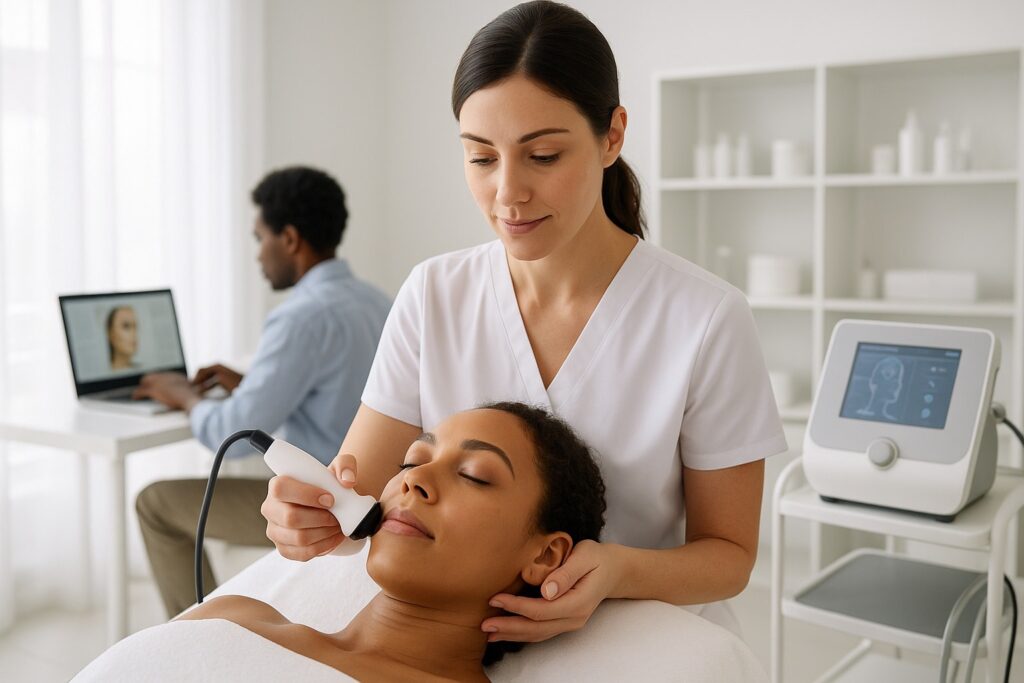
- Facial radiofrequency is a non-invasive aesthetic technology used to support gradual improvements in the appearance of skin firmness, texture, and mild laxity.
- It is often considered for early signs of skin aging, including fine lines, reduced elasticity, and subtle softening of facial contours.
- Results are typically progressive rather than immediate, and outcomes vary based on individual skin characteristics, treatment planning, and maintenance.
- Facial radiofrequency does not replace surgical lifting or remove excess skin, so realistic expectations matter.
- Safe use depends on proper assessment, appropriate device selection, and trained professionals working within their scope of practice.
What facial radiofrequency is and how it works
Facial radiofrequency is a device-based treatment commonly used in medical aesthetics to support skin rejuvenation without surgery. It works by delivering controlled energy that creates heat in targeted tissue layers. That thermal effect is associated with biological responses that may help improve the appearance of skin firmness and overall skin quality over time.
For many people, the appeal is straightforward: facial radiofrequency is often positioned as a lower-downtime option for mild to moderate cosmetic concerns. It is not designed to create the kind of dramatic structural change associated with surgery, and it should not be viewed as an instant facelift. Instead, it is generally used as part of a gradual, maintenance-focused aesthetic plan.
Why heat matters in radiofrequency treatments
The role of heat is central to how facial radiofrequency is discussed in aesthetics. When used appropriately, controlled heating may support visible improvements in:
- Skin firmness
- Elasticity-related concerns
- Texture irregularities
- Mild facial laxity
That does not mean every patient will respond the same way. Skin condition, age, treatment history, and the device being used can all influence the visible outcome.
What facial radiofrequency is commonly used for
Search interest around facial radiofrequency usually comes down to one question: what does it actually help with? In aesthetic practice, it is most often associated with subtle, non-surgical support for skin quality and early signs of aging.
Mild skin laxity and reduced firmness
Facial radiofrequency is commonly discussed for people who are starting to notice that their skin feels less firm than it used to. This may include mild looseness in the lower face, cheeks, or jawline area.
It is generally more relevant when laxity is still relatively early or moderate. When laxity is more advanced, other treatment paths may be more appropriate.
Fine lines and early visible aging changes
Another common reason facial radiofrequency is considered is the appearance of fine lines related to changing skin elasticity. It may be part of a broader plan focused on refreshed-looking skin rather than dramatic correction.
It is important to keep expectations grounded. Facial radiofrequency may support the appearance of fine lines, but it is not typically understood as a way to erase deep wrinkles completely.
Texture and overall skin quality
Some treatment plans include facial radiofrequency to support smoother-looking skin and better overall skin quality. This is one reason it often appears in conversations about non-surgical facial rejuvenation.
People exploring this option are often less focused on one isolated issue and more interested in a general improvement in how the skin looks and feels.
Subtle support for facial contour definition
Facial radiofrequency may also be considered when the goal is to support the appearance of contour in areas such as the jawline. The keyword here is subtle. It may help refine the look of softening contours, but it should not be presented as a substitute for procedures designed for more significant lifting or reshaping.
When facial radiofrequency may be recommended
Facial radiofrequency is not a one-size-fits-all treatment. In practice, it is typically considered in cases where the goals and degree of concern align with what the technology can reasonably support.
Situations where it may fit
A professional may consider facial radiofrequency when someone has concerns such as:
- Early loss of skin firmness
- Mild to moderate skin laxity
- Fine lines linked to reduced elasticity
- A preference for non-surgical options
- Interest in maintenance-oriented rejuvenation
This makes it especially relevant for people looking for gradual improvement rather than immediate, dramatic change.
When expectations may not match the treatment
Facial radiofrequency may be a weaker fit when someone expects it to:
- Remove excess skin
- Deliver surgical-level lifting
- Correct significant structural aging changes
- Eliminate deep creases completely
Understanding these limits helps prevent disappointment and supports better decision-making.
What to expect from facial radiofrequency results
One of the most important things to understand about facial radiofrequency is that visible change is usually gradual. This is not typically the kind of treatment where the final outcome is obvious right away.
Results tend to be progressive
People often describe changes in terms of:
- A firmer feel to the skin
- A more refreshed appearance
- Mild improvement in contour definition
- Better-looking skin texture over time
The pace and degree of improvement can vary widely. Some individuals notice subtle changes earlier than others, while some may need a series of sessions before they perceive a difference.
What can influence visible outcomes
Several factors may affect how facial radiofrequency performs in a real-world setting, including:
- Baseline skin condition
- Age-related skin changes
- Lifestyle factors
- Treatment consistency
- Device characteristics
- Maintenance approach
Because of these variables, no responsible provider should guarantee a specific outcome.
Facial radiofrequency vs. surgery: understanding the difference
This is a key area where confusion often happens. Facial radiofrequency is sometimes grouped into the broader category of “skin tightening,” but that phrase can create unrealistic expectations if it is not explained carefully.
Radiofrequency is generally used to support mild cosmetic improvement. Surgery addresses more significant tissue laxity and structural repositioning. These are not interchangeable approaches.
For readers comparing options, the most practical takeaway is this: facial radiofrequency is better understood as a non-surgical support tool for selected concerns, not as a replacement for procedures intended to produce major lifting.
Safety considerations and why professional assessment matters
Although facial radiofrequency is non-invasive, that does not mean it should be treated casually. Like other energy-based aesthetic treatments, safety depends on how the treatment is assessed, planned, and performed.
Why professional evaluation matters
A qualified professional should consider whether the treatment matches the individual’s goals, skin condition, and overall situation. That evaluation helps determine whether facial radiofrequency is appropriate at all, or whether another option may be more suitable.
In educational settings, this is also where case selection becomes especially important. A device alone does not create safe practice. Judgment does.
Factors that affect safe use
Safe treatment depends on factors such as:
- Appropriate patient assessment
- Understanding indications and contraindications
- Proper device handling
- Sound treatment planning
- Recognition of unexpected skin responses
Scope of practice can also vary across the United States. Depending on the state and the setting, supervision requirements, delegated duties, and allowed device use may differ. Professionals working with radiofrequency technology should always follow applicable laws, workplace protocols, and licensing requirements.
Why training matters in facial radiofrequency
Facial radiofrequency is often described as simple because it is non-surgical, but safe and effective use requires more than operating a machine. For estheticians, medical aesthetic assistants, and professionals entering device-based aesthetics, training supports both patient safety and professional confidence.
Core knowledge behind responsible use
Useful education in facial radiofrequency typically includes an understanding of:
- Basic facial anatomy
- Skin assessment fundamentals
- Treatment indications and limitations
- Contraindications and caution areas
- Heat-related tissue response
- Communication and documentation standards
This knowledge helps professionals contribute more effectively in clinical environments, communicate more clearly with patients, and support safer workflows.
What to look for in aesthetics education
If you are exploring training in device-based aesthetics, look for education that emphasizes:
- Clear, evidence-aware instruction
- Realistic treatment expectations
- Safety and case selection
- Scope-of-practice awareness
- Practical relevance for medical aesthetic settings
Strong education should make professionals more careful, not more casual, about energy-based treatments.
How to think about facial radiofrequency realistically
Facial radiofrequency can play a useful role in aesthetic care when it is matched to the right goals. It is commonly used for mild firmness concerns, early visible aging changes, and non-surgical skin quality support. It is less suitable for major laxity or expectations of dramatic lifting.
For patients, the key is understanding what the treatment may and may not do. For professionals, the key is training, assessment, and responsible application within legal and clinical boundaries.
Build stronger knowledge in medical aesthetics
If you want to better understand technologies like facial radiofrequency in a professional learning context, explore Eduasthetics educational resources designed for today’s medical aesthetics environment. Thoughtful training can help support safer communication, better judgment, and stronger day-to-day practice.
FAQS
What is facial radiofrequency used for?
Facial radiofrequency is commonly used to support the appearance of firmer skin, mild laxity improvement, smoother texture, and a more refreshed overall look. It is generally discussed for subtle, progressive aesthetic support rather than dramatic correction.
Is facial radiofrequency safe?
Safety depends on appropriate assessment, device use, treatment planning, and the skill and judgment of the professional performing or supporting the treatment. Like other energy-based procedures, it should be approached carefully.
How many facial radiofrequency sessions are usually needed?
There is no universal number. Treatment plans vary based on the device, the skin concern being addressed, and how the individual responds over time.
Does facial radiofrequency help with wrinkles?
It may support improvement in the appearance of fine lines and mild textural aging changes. It should not be understood as a treatment that completely removes deep wrinkles.
When do facial radiofrequency results become noticeable?
Results are usually described as gradual. Some people notice subtle changes earlier, while others see improvement more progressively as treatment and maintenance continue.
Can facial radiofrequency replace a facelift?
No. Facial radiofrequency is not a substitute for surgical lifting when significant laxity or excess skin is present. It is more appropriate for mild to moderate, non-surgical aesthetic goals.
Can facial radiofrequency be combined with other aesthetic treatments?
In some settings, combination planning may be considered as part of a broader aesthetic approach. The best sequencing and suitability depend on professional judgment and the overall treatment plan.
Related posts
Ultrasound in aesthetics: uses, types, and when it may be considered
Needle-free biostimulation in medical aesthetics: what professionals should know
Skincare ingredients that should not be combined in aesthetic practice
Stay Updated
About de author
