
Skincare ingredients that should not be combined in aesthetic practice
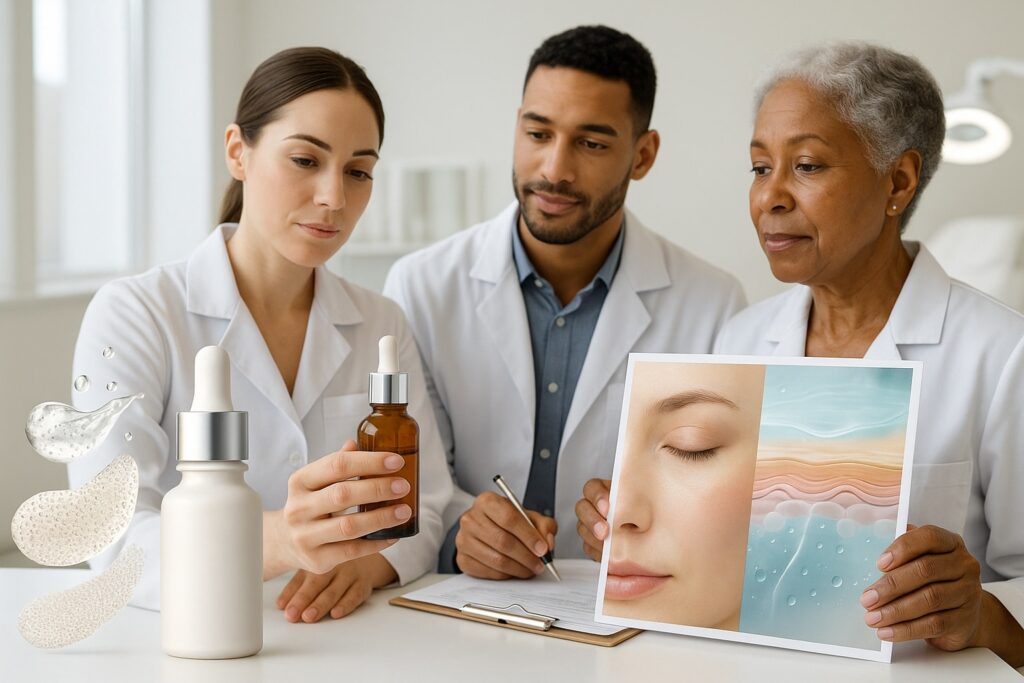
- Some skincare actives are not inherently “bad,” but layering the wrong ones in the same routine can increase irritation, weaken the skin barrier, and make in-office treatment outcomes less predictable.
- The most common high-risk pairings include retinoids with exfoliating acids, multiple acids used together, benzoyl peroxide with certain retinoids, and retinoids with aggressive physical exfoliation.
- Low tolerance matters as much as ingredient chemistry. Sensitive, recently treated, or barrier-impaired skin is more likely to react poorly to combinations that other skin types may handle better.
- In aesthetic practice, reviewing a client’s homecare routine before treatment is essential. Many complications start outside the treatment room.
- Safer planning usually means simpler protocols, better sequencing, stronger patient education, and a clear focus on barrier health.
Combining active skincare ingredients without understanding how they interact is one of the most common causes of avoidable irritation in aesthetic settings. For professionals, that matters for more than comfort alone. Poor pairing decisions can affect skin tolerance, delay progress, complicate treatment planning, and reduce confidence in the overall care experience.
This is especially relevant in medical aesthetics, where clients often arrive already using retinoids, exfoliating acids, acne products, brightening serums, and over-the-counter “active” routines at home. When those products are layered carelessly—or combined with in-office treatments without proper screening—the result may be redness, peeling, barrier disruption, or post-inflammatory discoloration in susceptible skin.
Why ingredient combinations matter in aesthetic practice
Modern skincare is more active, more accessible, and more complicated than ever. A single client may use a cleanser with salicylic acid, a vitamin C serum in the morning, a retinoid at night, and a weekly acid peel at home—all before stepping into a clinic for an aesthetic procedure.
That does not automatically mean their routine is unsafe. But it does mean the professional evaluating their skin needs to think beyond the day’s treatment plan.
When incompatible or poorly tolerated ingredients are stacked too aggressively, several problems can follow:
- Increased irritation and visible inflammation
- Impaired skin barrier function
- Higher transepidermal water loss, or TEWL
- More reactivity during or after aesthetic treatments
- Reduced adherence because the client stops using products consistently
- Greater risk of uneven outcomes, especially in skin prone to post-inflammatory hyperpigmentation
For professionals in aesthetics, this is not just a product knowledge issue. It is a treatment planning issue.
The most common skincare ingredients not to mix
Not every combination is universally contraindicated for every person. In many cases, the real issue is same-routine use, frequency, skin condition, or cumulative irritation. Still, some combinations deserve extra caution because they are consistently associated with poor tolerance.
Retinoids with AHAs or BHAs
This is one of the most common high-risk combinations in both consumer skincare and professional practice.
Retinoids increase cell turnover and can already cause dryness, peeling, and irritation during the adjustment period. Alpha hydroxy acids and beta hydroxy acids also exfoliate and may further increase sensitivity. When used together too aggressively, they can overwhelm the skin barrier.
Potential concerns include:
- Stinging and burning
- Flaking and visible irritation
- Barrier impairment
- Increased treatment downtime
- Reduced tolerance to future procedures
This does not mean the two categories can never exist in the same long-term regimen. Some clients may tolerate carefully separated use under professional guidance. The risk rises when both are layered at the same time, used too often, or applied to already sensitized skin.
Multiple exfoliating acids used together
Stacking glycolic acid, lactic acid, salicylic acid, mandelic acid, or other exfoliating acids may sound effective in theory, but more is not always better.
When several acids are combined without a strong reason, the skin may receive repeated exfoliative stress rather than a smarter treatment strategy. The outcome is often irritation, not better results.
Warning signs include:
- Tightness
- Diffuse redness
- Patchy dryness
- Heightened sensitivity to otherwise tolerated products
- Increased likelihood of rebound irritation
This pattern is especially common when clients use multiple “active” products from different brands without recognizing overlap in ingredients.
Benzoyl peroxide with certain retinoids
Benzoyl peroxide can be a useful acne-focused ingredient, but it may not pair well with every retinoid. Historically, benzoyl peroxide has been known to reduce the stability of some retinoids, while the combination can also increase dryness and irritation.
From an aesthetic practice standpoint, the bigger issue is often tolerance. A client using both may present with skin that looks mildly inflamed, dehydrated, or compromised even if they believe their routine is working.
The practical takeaway is caution: do not assume all acne routines are compatible with planned aesthetic treatments. Review the full regimen and consider cumulative irritation, not just the ingredient list.
Retinoids with physical exfoliation
Retinoids already make the skin more reactive during the adjustment phase. Adding scrubs, cleansing brushes, abrasive tools, or other forms of physical exfoliation can create a second layer of stress.
This combination may lead to:
- Micro-injury to the stratum corneum
- Persistent sensitivity
- Redness that clients misinterpret as “purging”
- Poor tolerance to professional skincare or device-based services
In practice, this is one of the easiest problems to miss because clients may not think of a scrub or cleansing brush as an “active” product.
Low-pH vitamin C with retinoids
This pairing is often discussed online in overly absolute terms. It is more accurate to say that low-pH L-ascorbic acid and retinoids may be difficult to tolerate together in the same routine, especially in sensitive or barrier-impaired skin.
The issue is not simply that one “cancels out” the other. Rather, the combination may increase irritation potential, particularly when layered with other actives or used around procedures.
For professionals, the key point is not to treat this pairing as universally forbidden or universally safe. Tolerance, formulation, routine complexity, and skin condition all matter.
Why these combinations can cause problems
Understanding the mechanism behind ingredient conflict helps professionals make better decisions. The main issue is usually not dramatic chemical incompatibility. It is cumulative stress on the skin.
Barrier disruption and increased TEWL
The skin barrier helps retain moisture and limit irritation from the outside environment. When too many active ingredients are used at once, the barrier may become less efficient. Water loss increases, the skin feels tighter, and irritation becomes more likely.
Once barrier function declines, even mild products may start to sting.
Inflammation and visible sensitivity
Excessive exfoliation or poorly tolerated active layering can trigger persistent low-grade inflammation. In an aesthetic setting, that can affect the way skin responds to treatment, recovers afterward, and tolerates recommended homecare.
Post-inflammatory hyperpigmentation risk
For clients with a tendency toward discoloration after irritation, poorly planned ingredient combinations can create avoidable setbacks. Barrier injury and inflammation may increase the chance of lingering dark marks after a breakout, aggressive product use, or a professional treatment performed on already stressed skin.
What professionals should review before planning treatment
One of the most important habits in aesthetic practice is looking beyond the scheduled service. Skin does not start fresh at the clinic door.
Review the homecare routine
Ask what the client is using regularly, not just what they consider “treatment products.” Cleansers, toners, spot treatments, scrubs, acne pads, brightening serums, and weekly masks may all contribute to irritation load.
Key categories to identify include:
- Retinoids
- AHAs and BHAs
- Benzoyl peroxide
- Physical exfoliants
- Vitamin C serums
- Acne-focused or brightening products with multiple actives
Look for signs of low tolerance
Even before a procedure, skin may show clues that the current routine is too aggressive. These signs can include diffuse redness, dryness around the mouth or nose, tightness, burning with basic products, or a history of “everything stings.”
When that pattern is present, adding more stimulation is rarely the smartest first step.
Consider recent treatments and cumulative stress
A client using strong home actives may not tolerate the same treatment plan as someone with a more supportive routine. Recent exfoliation, waxing, peels, acne flares, or intense product cycling can all lower tolerance.
Common mistakes that lead to ingredient-related complications
Professionals do not usually run into problems because they lack access to good products. More often, issues come from poor sequencing, incomplete assessment, or assuming that more active ingredients equal better outcomes.
Following trends instead of skin condition
Popular routines do not replace individualized assessment. Social media has normalized frequent exfoliation, aggressive active rotation, and multitiered routines that may not suit reactive skin.
A trend may be appealing, but the skin in front of you matters more.
Ignoring what the client is doing at home
Many disappointing treatment outcomes begin with a detail that was never documented: a nightly retinoid, an acid toner, an acne wash, or a scrub used “just once or twice a week.”
Without that context, post-treatment irritation may be blamed on the procedure when the real issue was cumulative exposure.
Overloading the skin with too many actives
A crowded routine can make it difficult to identify what is helping, what is harming, and what needs to stop. In professional settings, simpler plans are often easier for clients to follow and easier for practitioners to monitor.
How to build safer skincare protocols
Safer care does not mean under-treating the skin. It means using actives with intention.
Simplify before you intensify
If the skin is reactive, barrier support and routine simplification often make more sense than adding new corrective products. A shorter routine may improve compliance and reduce avoidable irritation.
Think in terms of compatibility and tolerance
Two ingredients may be acceptable in the same overall regimen but poorly tolerated in the same application window. Timing, frequency, and current skin condition all influence how well a routine is tolerated.
Prioritize barrier health
Barrier-resilient skin tends to respond more predictably to professional care. In educational settings, this is one of the most important mindset shifts for newer practitioners: visible activity is not the same as progress.
Educate the client clearly
Clients are more likely to follow guidance when they understand why a recommendation matters. Simple education can help them avoid product stacking, trend-driven overuse, and accidental over-exfoliation.
Useful education points may include:
- More active ingredients do not always mean better results
- Irritation is not a sign that a product is necessarily working
- Homecare can influence in-office treatment outcomes
- A strong routine should still be tolerable
The role of the esthetician and medical aesthetic assistant
Within the scope of education and practice standards, aesthetic professionals play an important role in reducing avoidable skin reactions tied to poor product combinations.
That role often includes:
- Identifying ingredient overlap and high-risk pairings
- Recognizing signs of barrier stress or low tolerance
- Adjusting the non-procedural plan when appropriate
- Reinforcing safer homecare habits
- Escalating concerns to the supervising licensed provider when needed
This is one of the clearest examples of why ingredient literacy matters in aesthetics. Product knowledge is not only about recommending skincare. It is about preventing unnecessary complications and supporting more consistent outcomes.
A practical takeaway for aesthetic learning
The most important lesson is not to memorize a rigid list of ingredients that can never be used together. It is to understand why certain combinations often fail in real-world practice.
In aesthetics, the safest and most effective approach usually comes from asking a few disciplined questions:
- What is the client already using?
- Is the skin currently showing signs of irritation?
- Is this combination necessary, or just popular?
- Does the plan support barrier function?
- Will this routine be realistic and tolerable?
That kind of judgment is what separates routine product use from thoughtful aesthetic practice.
Continue your education with smarter skincare training
Strong aesthetic outcomes begin with better clinical judgment, especially when active skincare and treatment planning overlap. Eduasthetics offers education designed to help professionals build clearer product knowledge, safer decision-making habits, and a stronger understanding of skin response.
Sources and references
- American Academy of Dermatology Association. Guidance on retinoids, acne products, and skin irritation.
- National Institute of Arthritis and Musculoskeletal and Skin Diseases. Skin basics and skin barrier function.
FAQS
Which skincare ingredients should not be mixed in the same routine?
The most common high-risk pairings are retinoids with AHAs or BHAs, multiple exfoliating acids layered together, benzoyl peroxide with certain retinoids, and retinoids with physical exfoliation. These combinations are not always universally prohibited, but they often increase irritation risk.
Can vitamin C and retinoids be used together?
Sometimes, but not always comfortably. Low-pH vitamin C and retinoids may be too irritating for some people when layered in the same routine, especially if other active ingredients are already in use. Skin tolerance and formulation matter.
Why are multiple acids a problem?
Using several exfoliating acids together can increase barrier stress without delivering better results. Overlapping exfoliation may lead to dryness, redness, inflammation, and lower tolerance for future treatments.
Why is homecare review so important before an aesthetic treatment?
Because many reactions are influenced by what the client is already using. A routine that includes retinoids, acne products, scrubs, and acids may leave the skin more reactive before any in-office treatment even begins.
Does irritation mean a product is working?
Not necessarily. Mild adjustment reactions can happen with some actives, but ongoing burning, peeling, redness, or tightness may signal poor tolerance or barrier disruption rather than progress.
What is TEWL in skincare?
TEWL stands for transepidermal water loss. It refers to the amount of water that passes from the skin into the environment. When the skin barrier is compromised, TEWL tends to increase, and the skin may become drier and more reactive.
Related posts
Needle-free biostimulation in medical aesthetics: what professionals should know
Ultrasound in aesthetics: uses, types, and when it may be considered
Mesotherapy in aesthetic medicine: what it means for facial, hair, and body treatments
Stay Updated
About de author
