
What radiofrequency in aesthetics is and why it’s used
Home › Aesthetic Treatments & Devices › Energy-Based & Device Treatments › Radiofrequency
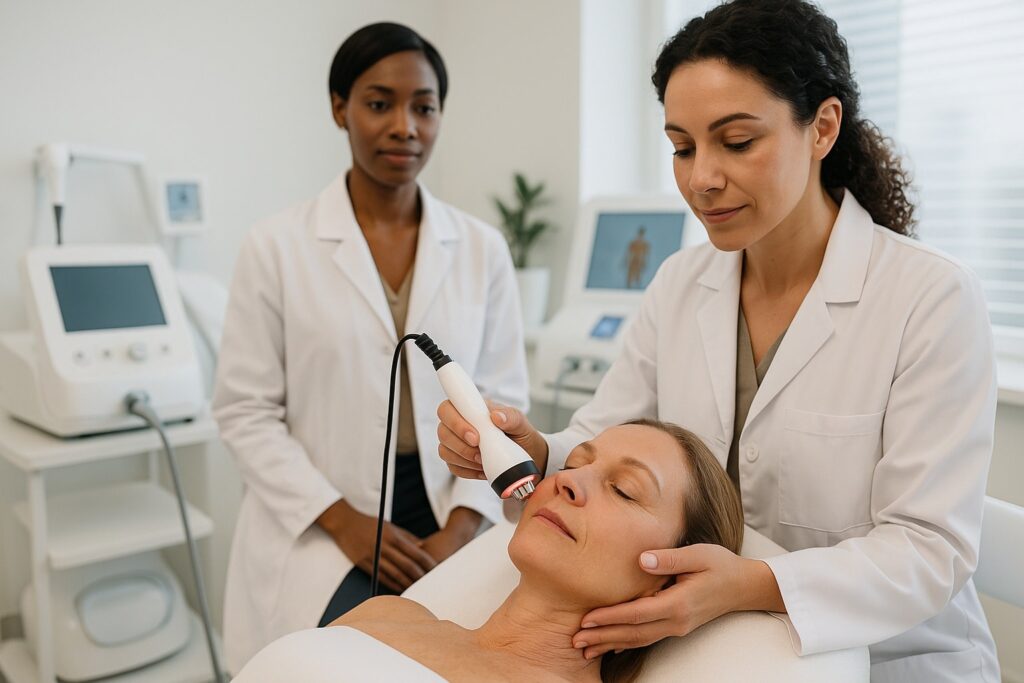
- Radiofrequency in aesthetics is a non-surgical treatment approach that uses controlled energy to create heat in the skin and superficial tissues.
- It is commonly used to support improvements in the appearance of skin firmness, texture, and overall skin quality on the face and body.
- Results are typically gradual, not immediate, and can vary based on the treatment area, skin condition, device, and treatment plan.
- Radiofrequency is not a replacement for surgery and is generally best suited for mild to moderate aesthetic concerns, depending on professional assessment.
- Safe use depends heavily on training, case selection, heat management, and compliance with state-specific scope-of-practice rules.
Radiofrequency remains one of the most recognized technologies in medical aesthetics because it offers a non-surgical option for patients seeking gradual skin-focused improvement. It is widely used in professional aesthetic settings, but it is also widely misunderstood.
Some people assume radiofrequency delivers instant tightening. Others think it works the same way on every part of the body. In reality, radiofrequency is best understood as an energy-based modality that may support visible improvement over time when used appropriately, on the right candidate, and within a well-designed treatment plan.
What radiofrequency in aesthetics means
In aesthetic practice, radiofrequency refers to the use of electromagnetic energy to create a controlled thermal effect in the skin and superficial tissues. That heat is the central mechanism behind the treatment.
The goal is not to “burn” the skin or force dramatic change in a single session. Instead, radiofrequency is used in a controlled way to support aesthetic improvement in areas such as skin firmness, texture, and overall skin quality.
Because it is non-surgical, radiofrequency is often included in treatment plans for patients who want less invasive options and a more gradual approach.
How radiofrequency creates a thermal effect
When radiofrequency energy is delivered through an approved treatment device, it can generate heat in targeted tissue layers. In aesthetic settings, that heat is carefully managed based on the device, the area being treated, and the intended treatment plan.
This is why professional use matters so much. The quality of a radiofrequency treatment depends on more than turning on a device. It depends on:
- Appropriate patient selection
- Safe and consistent applicator movement
- Treatment timing
- Heat monitoring
- Area-specific technique
- Recognition of when treatment should be modified or deferred
Why radiofrequency is considered non-surgical
Radiofrequency is typically described as non-invasive or minimally invasive depending on the platform being discussed. In the context of standard external aesthetic radiofrequency, it is generally used without incisions or surgery.
That makes it appealing to people who want aesthetic treatment without the downtime, recovery profile, or clinical indications associated with surgical procedures. Still, non-surgical does not mean casual. Proper assessment and professional judgment are still essential.
What radiofrequency is used for in aesthetic settings
Radiofrequency is commonly included in treatment plans designed to improve the appearance of:
- Mild skin laxity
- Reduced skin firmness
- Uneven texture
- Aging-related changes in skin quality
- Areas where a smoother or firmer look is desired
The treatment is often used on both the face and body, although the approach may differ significantly depending on the area.
Facial radiofrequency
On the face, radiofrequency is often used in treatments focused on visible firmness and skin quality. Facial tissue generally requires a more conservative approach because treatment areas are smaller and sensitivity can be higher.
Common facial goals may include support for the appearance of:
- Mild laxity
- Early aging changes
- Skin that looks less firm or less smooth
Radiofrequency is not typically positioned as a substitute for surgical lifting. Instead, it is more often used for patients seeking a non-surgical option with realistic, gradual expectations.
Body radiofrequency
Body radiofrequency is usually performed over larger treatment zones and may be included in plans addressing mild to moderate skin laxity, depending on the area and the device being used.
Because body areas differ in size, tissue characteristics, and treatment goals, protocols are not one-size-fits-all. Larger areas may require different treatment pacing, different treatment planning, and closer attention to comfort and heat distribution.
What results to expect from radiofrequency
One of the most important parts of patient education is expectation setting. Radiofrequency does not usually produce instant, surgery-like results. Most visible changes, when they occur, are progressive.
Patients may first notice subtle changes such as:
- Skin feeling smoother
- A firmer appearance over time
- Improvements in overall skin look and texture
The degree of change can vary. Some people respond more noticeably than others, and outcomes depend on multiple variables rather than the device alone.
Why results are usually gradual
Radiofrequency is generally used as part of a treatment plan rather than a one-time event. Aesthetic improvement is often associated with a series of sessions, maintenance care, and appropriate treatment spacing.
This gradual pattern is one reason radiofrequency is popular in professional skincare and medical aesthetics: it can be integrated into longer-term skin-focused strategies rather than relying on dramatic short-term change.
What can influence treatment response
Several factors may affect how a patient responds to radiofrequency, including:
- Baseline skin condition
- Degree of laxity
- Treatment area
- Device type
- Consistency of the treatment plan
- Professional technique
- Lifestyle and general skin health factors
That variation is normal. It is also why ethical communication matters. Patients should not be led to expect identical results, permanent results, or outcomes comparable to surgery.
Radiofrequency limitations patients and providers should understand
Radiofrequency can be useful, but it has limits.
It may not be the right choice for:
- Significant tissue laxity
- Concerns that require medical diagnosis or medical treatment
- Patients expecting a dramatic lifting effect from a non-surgical treatment
- Cases where skin condition or overall presentation suggests a different modality is more appropriate
In other words, radiofrequency is a tool, not a universal answer. Good aesthetic planning means knowing when it fits and when it does not.
Who may need caution before radiofrequency treatment
As with other energy-based treatments, there are situations where radiofrequency may need to be postponed, modified, or avoided based on clinical judgment, device guidance, and the patient’s individual circumstances.
Common situations that may require extra caution
Examples often include:
- Active skin infection
- Open wounds
- Significant irritation or inflammation
- Recently sunburned skin
- Certain implanted medical devices
This is not a complete list, and it should not be used as a substitute for professional screening. A qualified provider should determine whether a treatment is appropriate in a specific case.
Why professional assessment matters
Radiofrequency may sound straightforward, but safe use depends on more than the treatment goal. A provider must also consider the patient’s skin status, treatment history, comfort, risk factors, and whether radiofrequency is the right modality for that concern in the first place.
That assessment step helps reduce avoidable problems and supports better treatment planning.
Why radiofrequency remains popular in medical aesthetics
Radiofrequency continues to be widely used because it checks several boxes that matter in aesthetic practice:
- It is non-surgical
- It can be used on both face and body
- It can fit into broader skin-focused treatment plans
- It appeals to patients who want gradual improvement with less invasive care
Its popularity, however, should not be confused with universal suitability. A common mistake in aesthetics is treating a popular device as the right answer for every patient. Strong providers know that indication matters more than trends.
Why training matters in radiofrequency treatments
Radiofrequency is often marketed as simple, but high-quality treatment depends on skill. Training is one of the biggest factors separating safe, consistent use from poor outcomes and avoidable complications.
For estheticians and medical aesthetic support staff, training helps build a stronger foundation in both safety and treatment support.
Skills that matter in radiofrequency education
A strong educational program should help learners understand:
- Core radiofrequency principles
- Safe heat management
- Applicator handling and movement patterns
- Differences between facial and body treatment planning
- General contraindication awareness
- Device hygiene and workflow standards
- When a case should be referred, deferred, or escalated to a licensed professional
The goal is not just device familiarity. It is better judgment.
Scope of practice in the United States
In the US, scope-of-practice rules can vary by state. That matters for radiofrequency because state law, board rules, supervision requirements, and workplace setting may all affect who can perform a treatment and under what level of oversight.
For that reason, professionals should not rely on general assumptions or social media advice. They should verify local requirements and work within the policies and legal framework that apply to their license, setting, and state.
What to look for in radiofrequency training
For professionals exploring education in this area, not all training is equally useful. A credible program should be clear, practical, and responsible.
Look for training that emphasizes:
- Treatment fundamentals rather than hype
- Safety and screening, not just outcomes
- Realistic indications and limitations
- Integration into professional workflow
- Ethical patient communication
- Respect for scope-of-practice boundaries
This kind of education is especially valuable for learners who want to build confidence without crossing into risky oversimplification.
How radiofrequency fits into broader aesthetic treatment plans
Radiofrequency is often used as one part of a broader approach to skin quality. Depending on the setting, it may be paired with professional skincare, maintenance-focused treatment plans, or other non-surgical modalities.
What matters most is thoughtful treatment planning. The strongest aesthetic outcomes usually come from matching the treatment to the patient’s concern, expectations, and clinical context rather than relying on a single technology to do everything.
For professionals, that makes radiofrequency worth understanding not only as a device category, but as part of a larger decision-making process in aesthetic care.
Learn radiofrequency with a stronger clinical foundation
If you’re building your knowledge in medical aesthetics, structured education can help you understand how radiofrequency fits into modern treatment planning, safety screening, and professional workflow. Explore Eduasthetics training designed to support clear, responsible learning in aesthetic practice.
Sources and references
- American Society for Dermatologic Surgery Association. Nonsurgical skin tightening.
- American Academy of Dermatology Association. Guidance on noninvasive cosmetic procedures and skin rejuvenation.
- StatPearls Publishing. Radiofrequency treatment in aesthetics and dermatology.
FAQS
What is radiofrequency in aesthetics?
Radiofrequency in aesthetics is an energy-based treatment approach that uses controlled heat in the skin and superficial tissues to support gradual improvements in the appearance of firmness, texture, and skin quality.
What is radiofrequency used for?
It is commonly used in non-surgical aesthetic treatment plans for concerns related to mild skin laxity, reduced firmness, and overall skin quality on the face or body.
Is radiofrequency the same as RF microneedling?
No. Standard external radiofrequency and RF microneedling both use radiofrequency energy, but they are not the same treatment. RF microneedling combines radiofrequency with needles, which changes how the energy is delivered and how the treatment is approached.
How many radiofrequency sessions are usually needed?
There is no universal number. Treatment plans vary based on the area treated, the device used, the treatment goals, and how the individual responds over time.
Can radiofrequency replace a facelift or other surgery?
Generally, no. Radiofrequency is a non-surgical option and may support mild to moderate aesthetic improvement, but it does not typically replicate the kind of structural change associated with surgery.
Is radiofrequency safe?
Safety depends on appropriate patient selection, device-specific use, professional training, and careful treatment planning. It may not be suitable for every patient or every concern.
Who should avoid radiofrequency treatments?
Some people may need to postpone or avoid treatment due to factors such as active skin infection, open wounds, significant inflammation, or certain implanted medical devices. A qualified professional should determine suitability.
Related posts
Needle-free biostimulation in medical aesthetics: what professionals should know
Skincare ingredients that should not be combined in aesthetic practice
Ultrasound in aesthetics: uses, types, and when it may be considered
Stay Updated
About de author
